The Zynter blog
Prep notes for saying it out loud
How real interview loops run, round by round: coding screens, system and class design, data engineering and behavioral. Written to be practised out loud, not just read.
mock interview
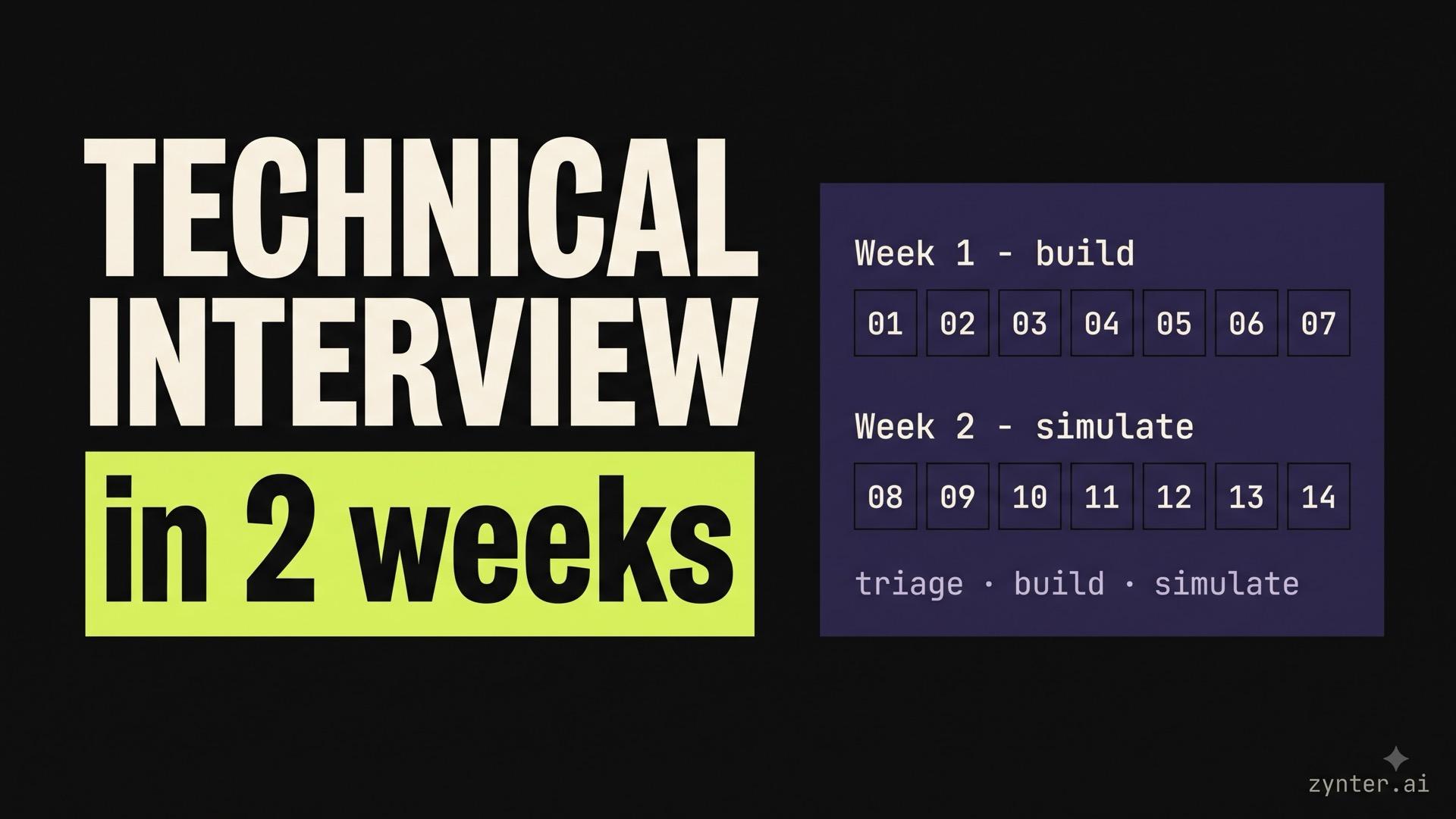
How to Prepare for a Technical Interview in 2 Weeks (Mock Interview Plan)
Two weeks until your technical interview? This is the plan: triage to your actual loop, spend week one building the highest-frequency coding patterns and fundamentals, and week two running timed mock interviews out loud and acting on the debriefs. A day-by-day schedule for coding, system design, data engineering and behavioural rounds, the daily rhythm that makes it stick, and the mistakes that waste a two-week sprint.
Gowtham PotureddiNov 7, 20269 min read
data engineering
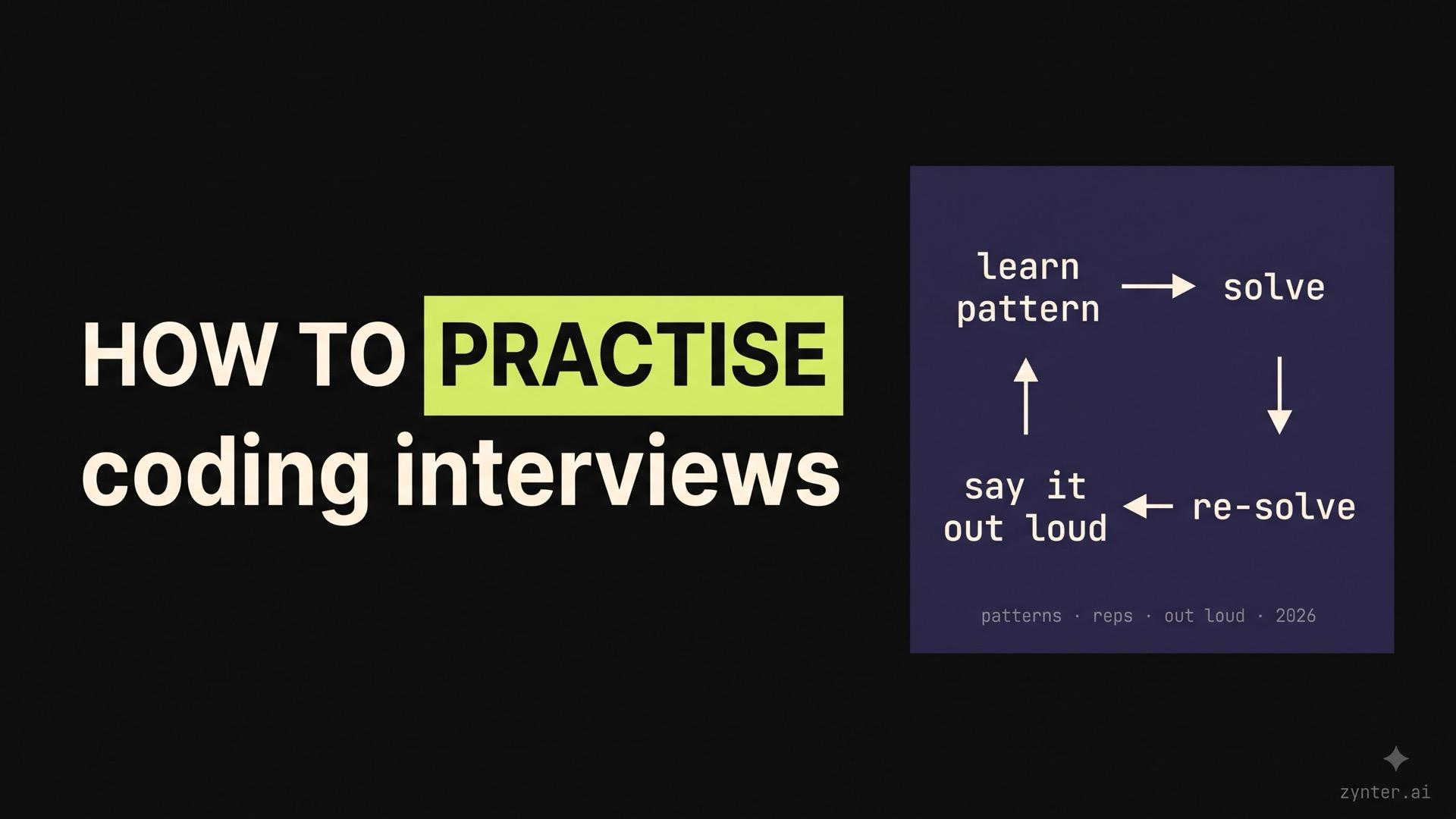
The Best Way to Practice for Coding Interviews in 2026
The best way to practice for coding interviews in 2026 is not to grind 500 problems. This guide gives the principles that actually build skill — learn patterns not problems, re-solve from scratch with spaced repetition, time-box attempts, interleave topics, and track progress by pattern — a weekly routine to follow, the real readiness signal, and the step most people skip: practising out loud against follow-ups.
Gowtham PotureddiNov 7, 20268 min read
data engineering
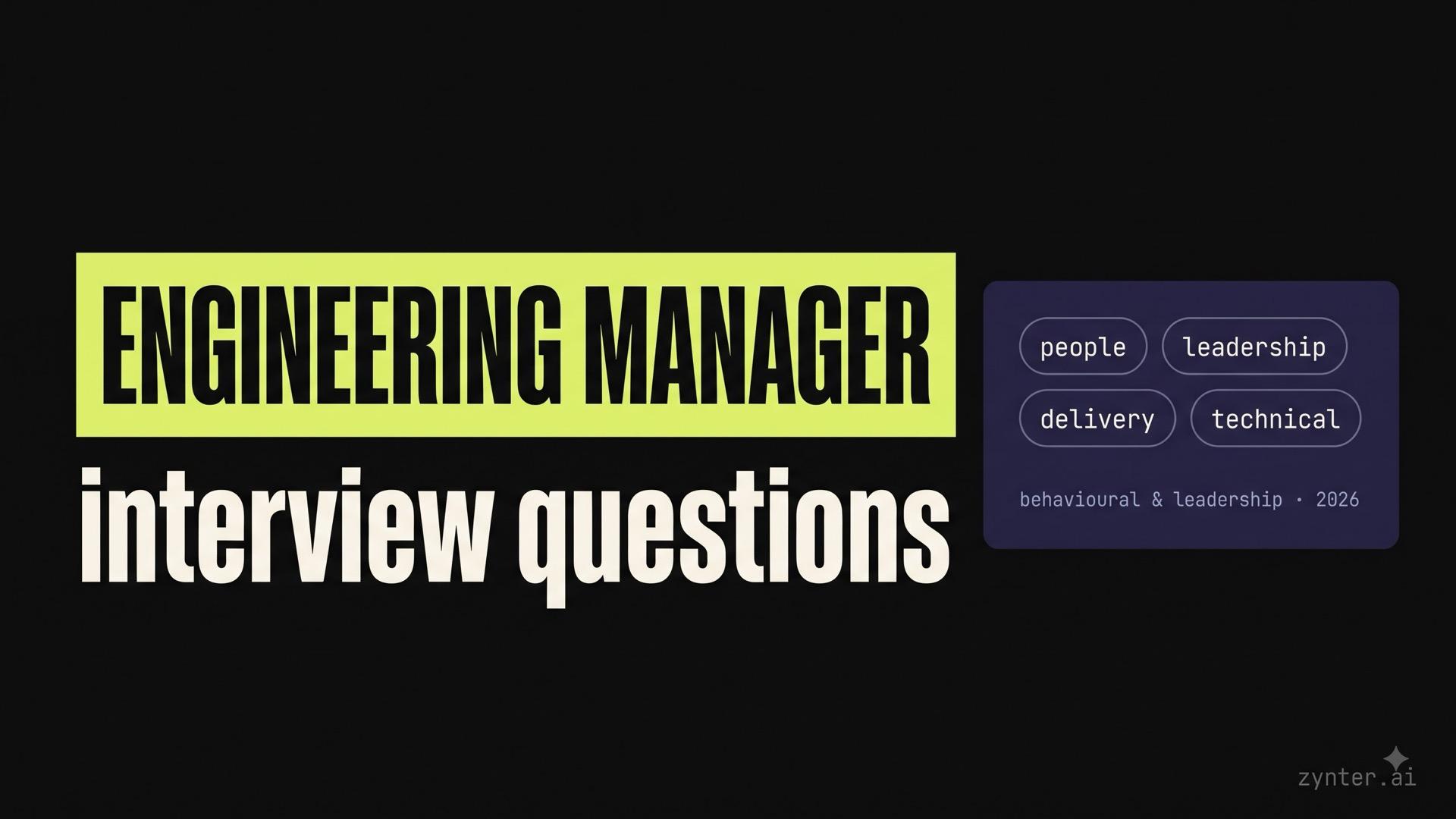
Engineering Manager Interview Questions: Behavioral & Leadership (2026)
Engineering manager interviews are won on leadership stories, not algorithms. This 2026 guide covers the four areas an EM loop tests — people management, leadership, delivery and technical depth — the questions that come up most, how to answer them with STAR stories that match what the company expects from its managers, and why you have to rehearse them out loud under follow-ups before they hold up.
Gowtham PotureddiNov 7, 20269 min read
data engineering
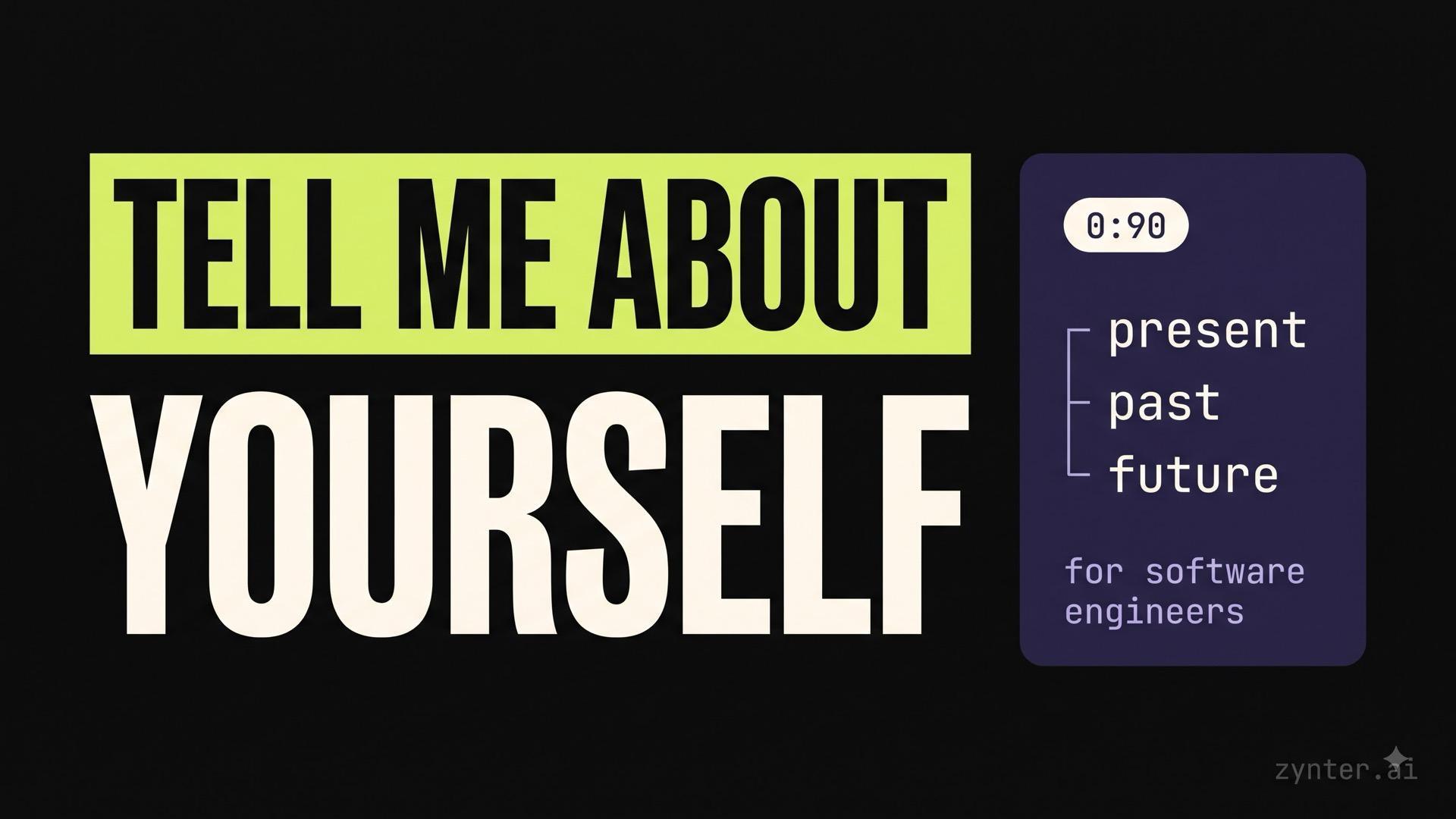
\Tell Me About Yourself\: Best Answers for Software Engineers
\Tell me about yourself\ is the first question in almost every interview and the one that sets the tone — and most software engineers answer it by reciting their CV. This guide gives the present-past-future formula, a worked 90-second example for engineers, how to tailor it to the role, the mistakes that waste the opener, and why you have to rehearse it out loud before it sounds natural under a clock.
Gowtham PotureddiNov 7, 20268 min read
design system
AI Mock Interview: How to Practice Coding & System Design Out Loud
Most candidates do not freeze on the code — they freeze on the follow-up. This guide explains the AI mock interview: a voice interviewer that asks follow-ups while you write and run real code or draw a system design, then hands you a scored debrief — and how to use it to practise coding and system design out loud. How it compares to grinding problems, reading guides, human mocks and live interview copilots, and how to get the most from each session.
Gowtham PotureddiNov 7, 202610 min read
design systemdata engineering
Data Engineering Interview Questions: Complete Prep Guide (2026)
A complete 2026 prep guide to the data engineering interview — the five-round loop (behavioural plus SQL, Python, data modelling and pipeline design), the skill areas and the questions each one tests, the SQL and modelling topics that come up most, the pipeline and big-data concepts senior rounds weight, and the one thing that separates a hire from a no-hire: explaining why your answer is right, where it breaks, and what you'd ask — out loud.
Gowtham PotureddiNov 7, 202610 min read
design system
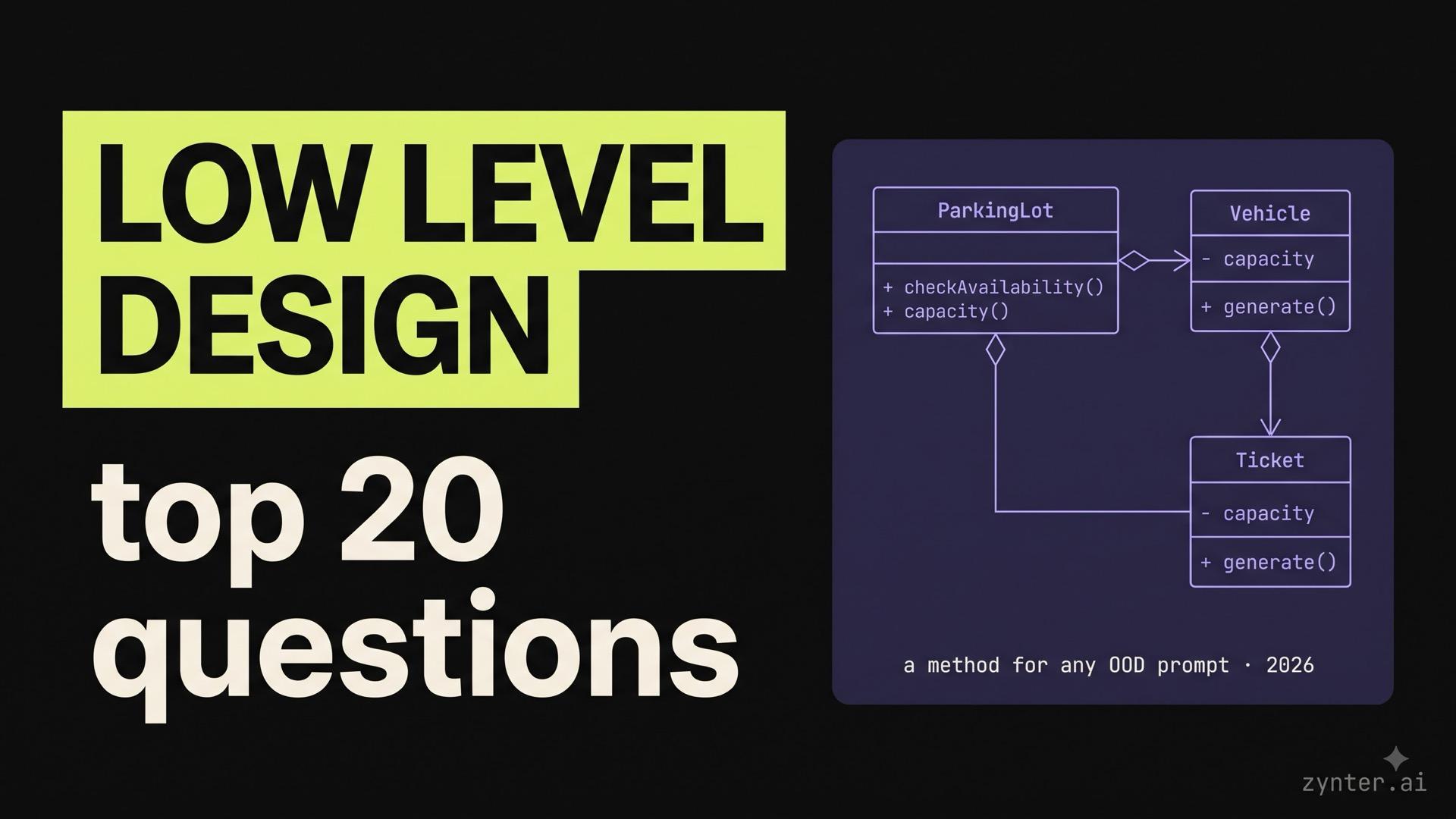
Low Level Design Interview Questions: Top 20 LLD Problems (2026)
The 20 low level design interview questions worth knowing in 2026, organised by difficulty from the parking lot to Splitwise and ride-sharing — plus a repeatable five-step method that solves any of them: clarify the requirements, model the entities as classes, define the interfaces, apply the right SOLID principles and design patterns, and handle the concurrency race. The patterns that recur, the follow-ups that decide the round, and how to practise an LLD answer out loud.
Gowtham PotureddiNov 7, 20269 min read
design system
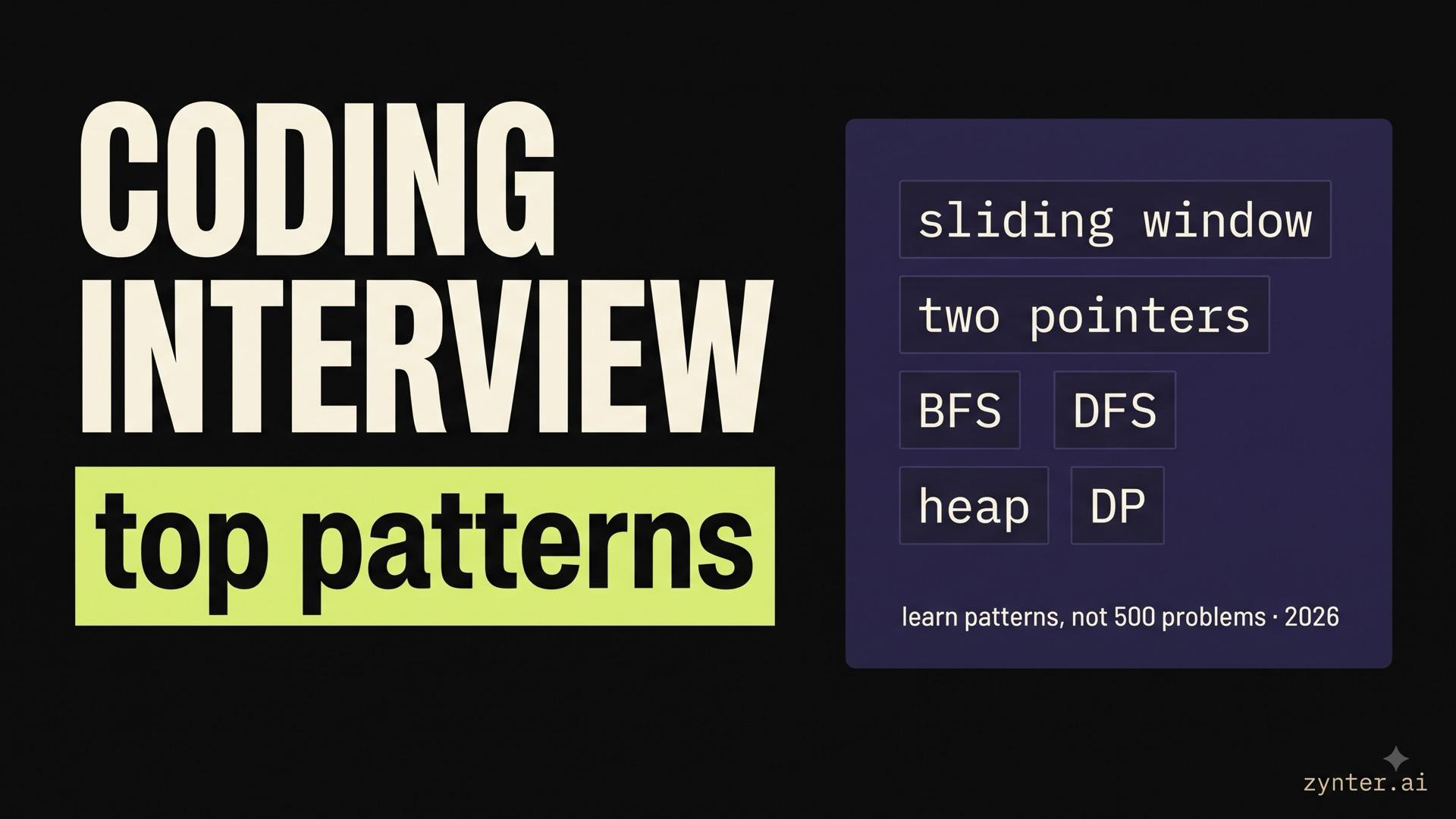
Coding Interview Questions: Top Patterns to Master in 2026
The coding interview is not 500 questions — it is a finite set of patterns, and this 2026 guide covers the ones that solve most of them. The tell for each pattern (sliding window, two pointers, BFS/DFS, heaps, binary search, backtracking, dynamic programming), a recognition cheat sheet that maps a problem statement to its pattern, the order to learn them in, and how to turn naming a pattern into a defended solution out loud.
Gowtham PotureddiNov 7, 20269 min read
design system
System Design Interview Cheat Sheet: Core Concepts, Patterns & Templates (2026)
A one-page system design interview cheat sheet for 2026 — the answer template to structure any round, the numbers to know cold (latency, powers of two, QPS and storage estimation, availability nines), a component reference for when to reach for a cache, queue, shard or replica, the core concepts in a line each (CAP, consistency, consistent hashing, caching strategies), and the patterns that match read-heavy, write-heavy and strong-consistency workloads.
Gowtham PotureddiNov 6, 20268 min read
design system
How to Prepare for a System Design Interview: A Complete 2026 Guide
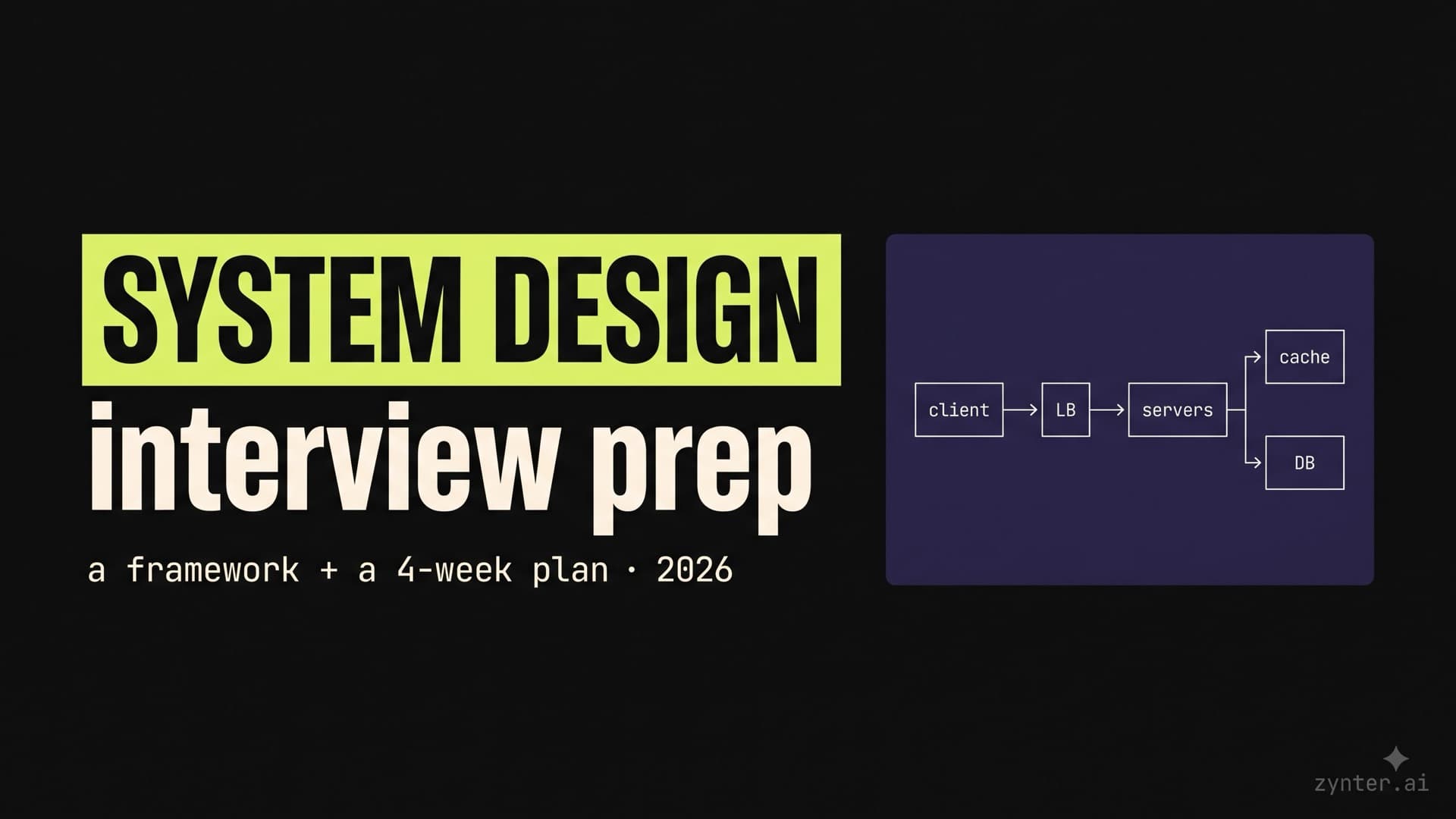
A complete 2026 guide to preparing for the system design interview — the repeatable framework for any prompt (clarify requirements, estimate scale, design the API, draw the high-level architecture, deep dive, and wrap up on trade-offs), the building blocks worth learning cold, a four-week study plan, the common mistakes that sink candidates, and why practising out loud against follow-ups is the step that turns knowledge into a pass.
Gowtham PotureddiNov 6, 202611 min read
design system
STAR Method: How to Answer Behavioral Interview Questions (With Examples)
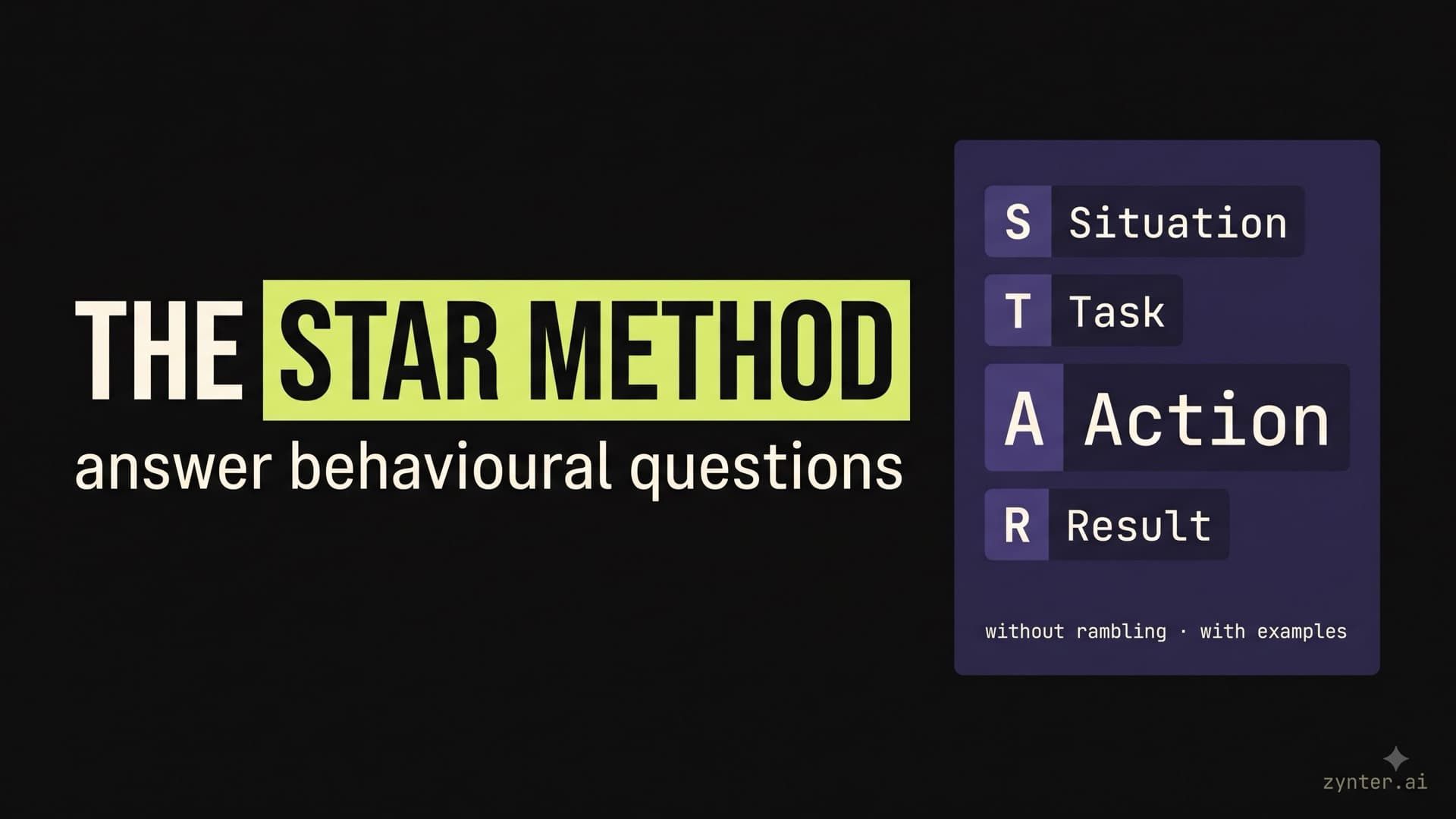
The STAR method explained for software engineers — what Situation, Task, Action and Result each mean, how to weight them so you lead with what you did and close with a quantified result, the behavioural questions it answers, two worked examples, and the mistakes that sink STAR answers out loud. Plus how to turn a written framework into an answer that survives follow-ups.
Gowtham PotureddiNov 6, 20269 min read
design system
Amazon Leadership Principles Interview Questions and Sample Answers (2026)
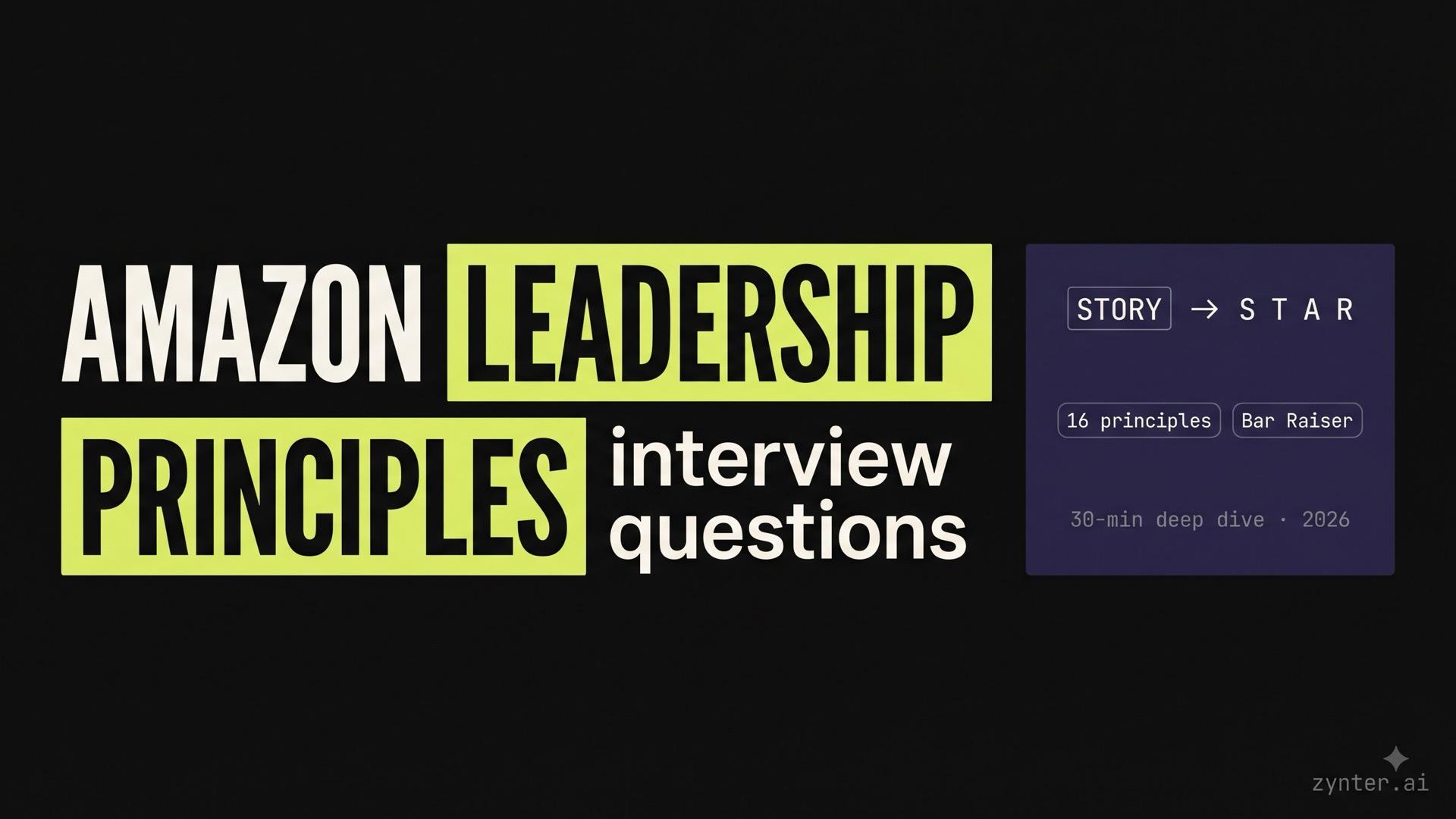
How Amazon's Leadership Principles interview really works in 2026 — the 16 principles behind every behavioural question, the Bar Raiser who decides the loop, and how to build STAR answers that survive the deep-dive follow-ups. The principles that carry the most stories, a sample STAR answer, the questions and follow-ups that catch people, and how to rehearse a one-story deep dive out loud.
Gowtham PotureddiNov 6, 202610 min read
data engineering
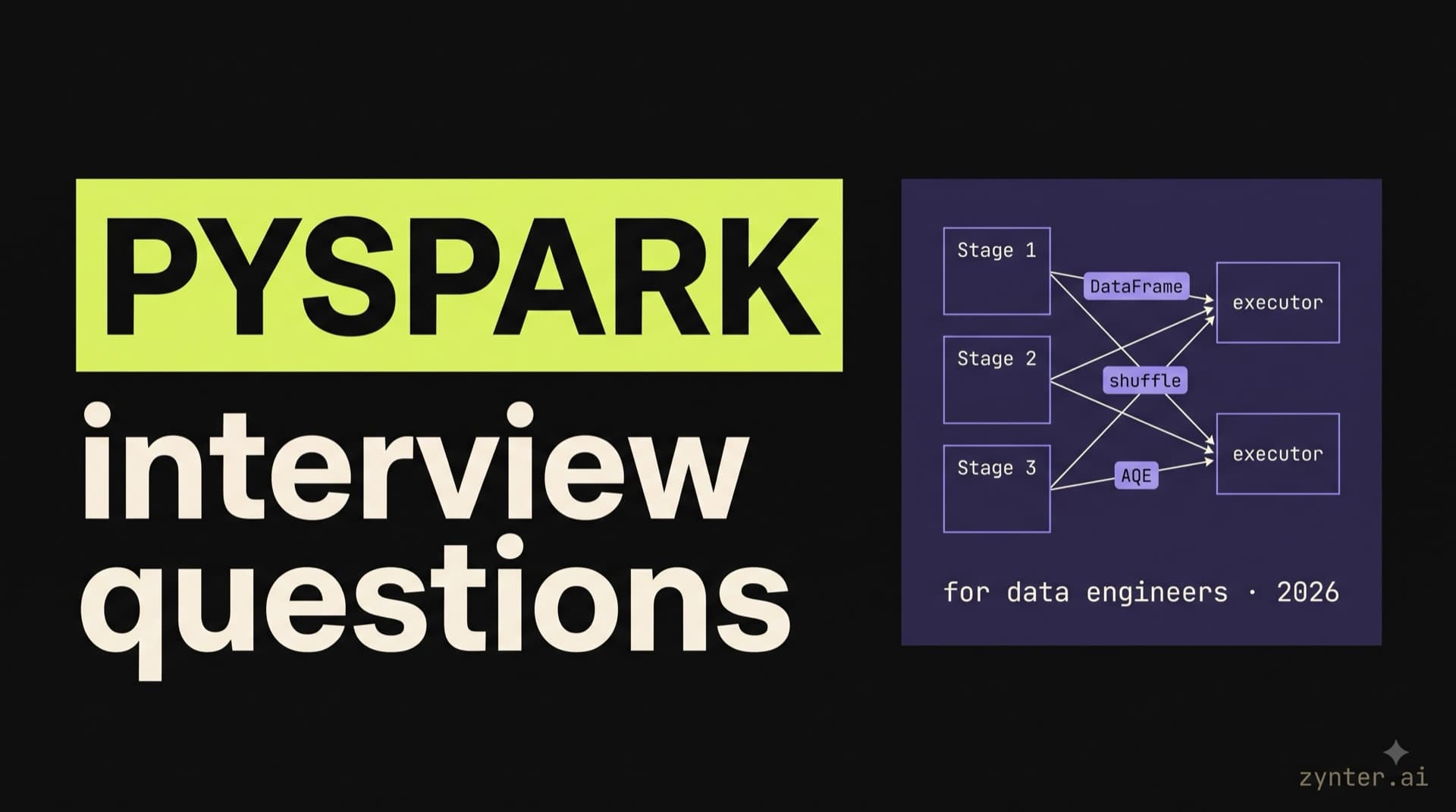
PySpark Interview Questions and Answers for Data Engineers (2026)
A 2026 guide to the PySpark interview questions data engineers actually face — how Spark runs your code with lazy evaluation and narrow versus wide transformations, RDD versus DataFrame, the joins and data-skew problems that make or break the round, the optimisation levers from broadcast joins to repartition versus coalesce and AQE, and the senior scenario where a ten-minute job suddenly takes two hours. Plus how to practise explaining it out loud.
Gowtham PotureddiNov 1, 202610 min read
data engineering
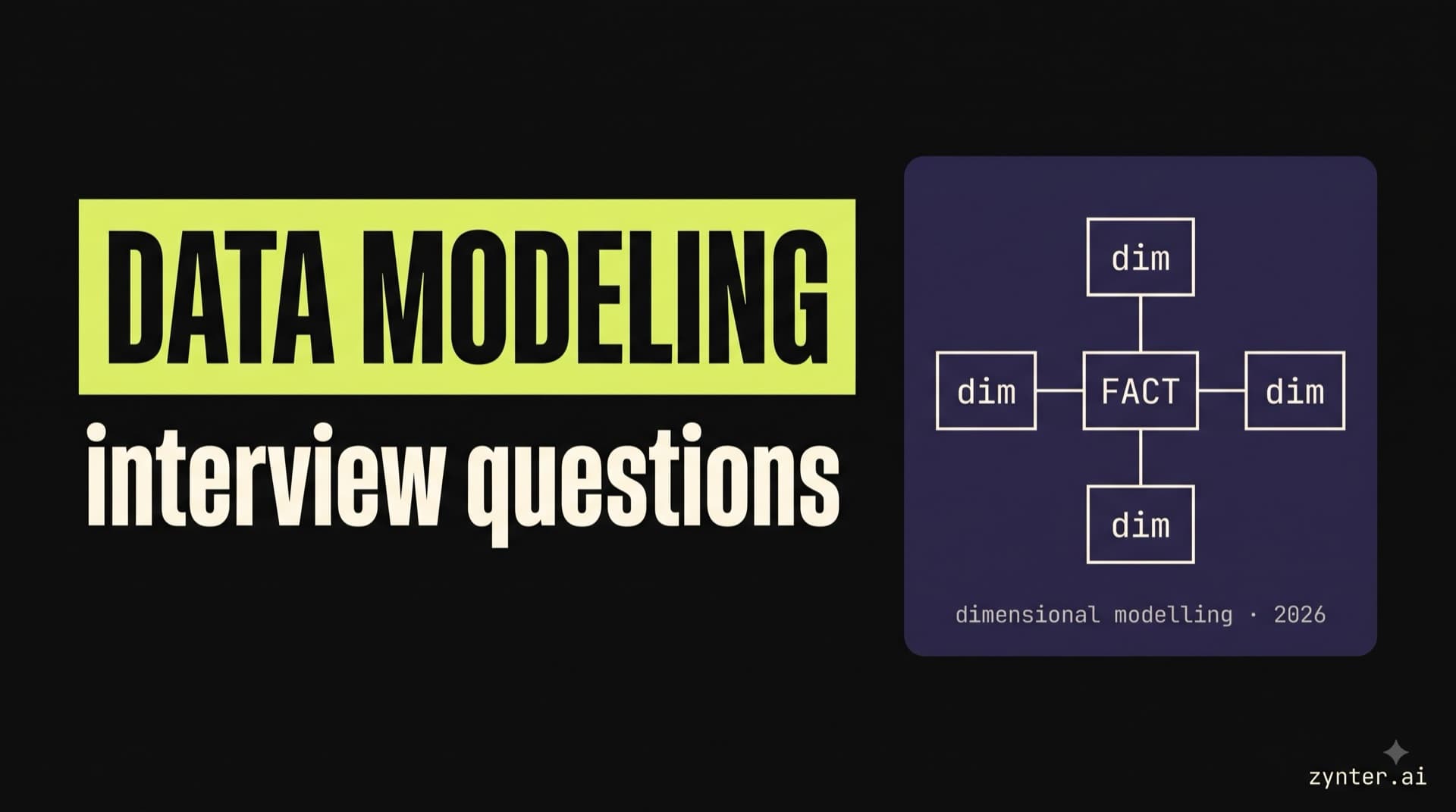
Data Modeling Interview Questions: A Dimensional Modeling Guide (2026)
A dimensional modelling guide to the data modeling interview questions data engineers actually face in 2026 — facts and dimensions, the grain decision that makes or breaks a fact table, the three fact types, star versus snowflake, slowly changing dimensions from Type 1 to Type 6, and the conformed, degenerate and junk dimensions that separate seniors. Plus the methodology interviewers want and how to defend a schema out loud.
Gowtham PotureddiNov 1, 202611 min read
data engineering
Netflix Data Engineer Interview Questions: SQL Set Walkthrough (2026)
How the Netflix data engineer interview really runs in 2026 — a genuinely hard SQL set on real playback and subscriber data, built on window functions, sessionization and deduping out-of-order events, where thinking out loud is scored as much as the answer, plus the culture round on Impact and Courage that rejects strong engineers with vague stories. A walkthrough of the SQL patterns Netflix tests, the fail signals to avoid, and a plan to practise both out loud.
Gowtham PotureddiNov 1, 20269 min read
data engineering
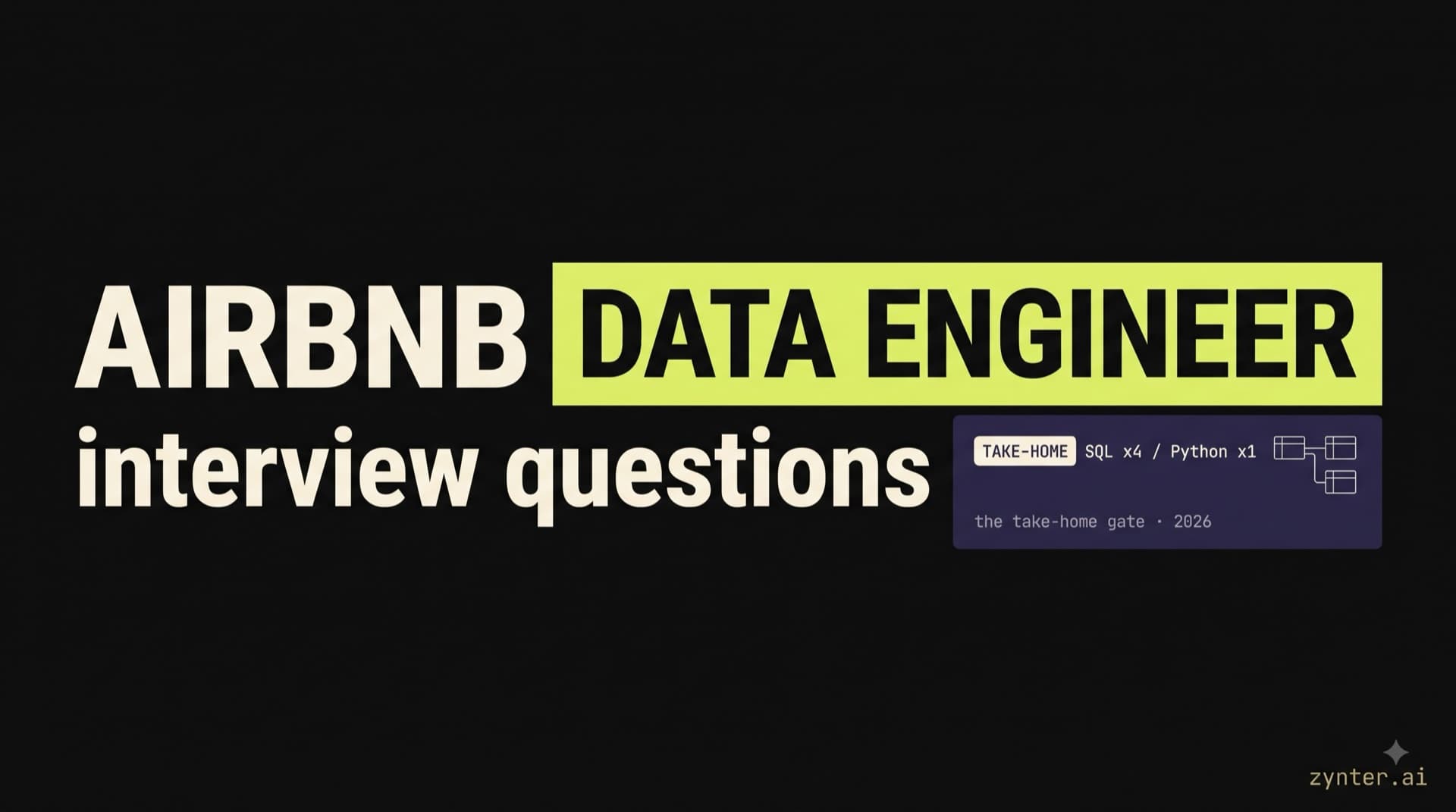
Airbnb Data Engineer Interview Questions and Take-Home Guide (2026)
How the Airbnb data engineer interview really runs in 2026 — a SQL-heavy take-home of three to four SQL questions and a Python question that you must almost ace to advance, then a modelling-heavy virtual onsite with an analytical SQL round, distinct data-coding and general-coding rounds, an Airflow and ETL system-design round, and business questions. The SQL and data-modelling Airbnb tests, the take-home trap, and a plan to practise the onsite out loud.
Gowtham PotureddiNov 1, 20269 min read
design system
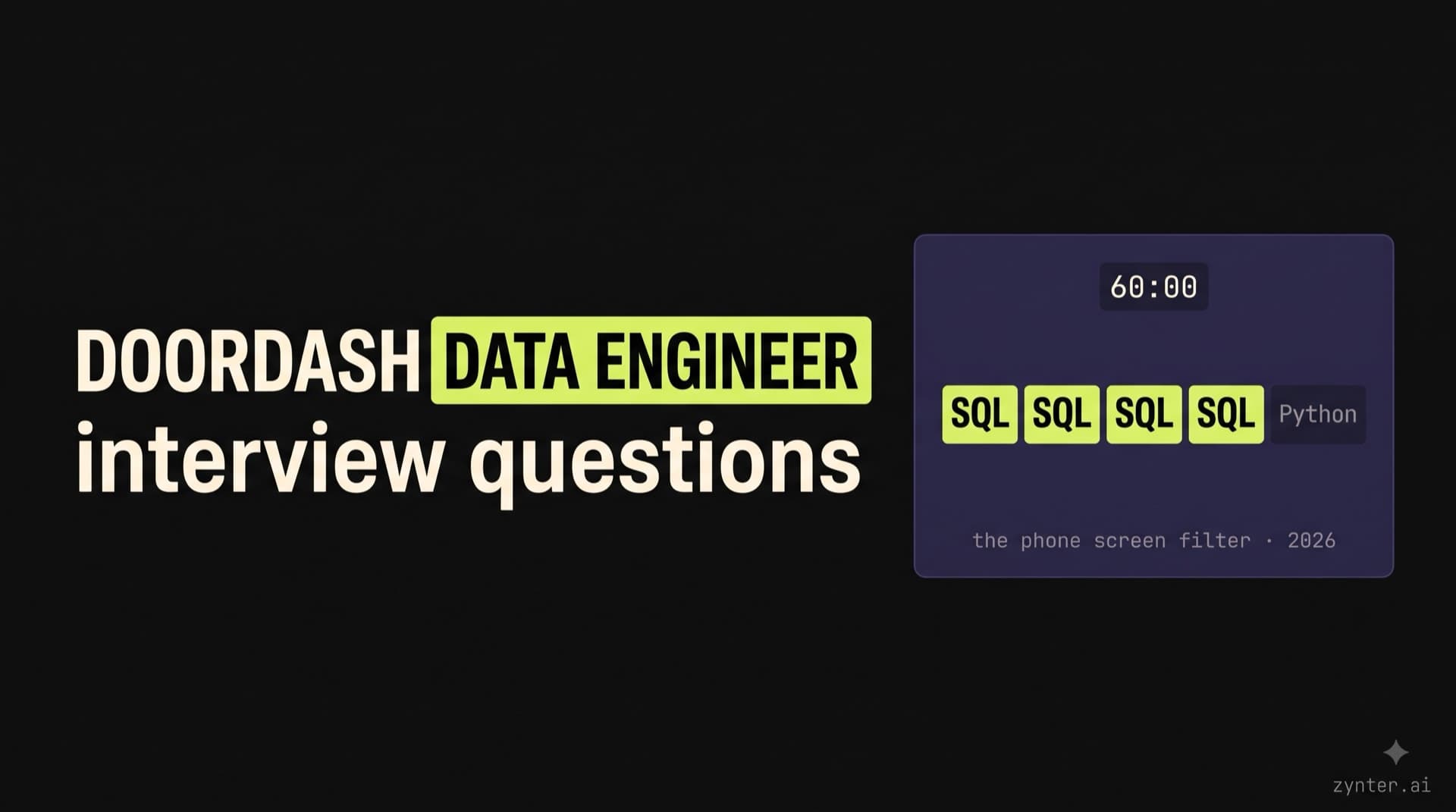
DoorDash Data Engineer Interview Questions: SQL & Python Screens (2026)
How the DoorDash data engineer interview really runs in 2026 — a SQL-heavy phone screen of four SQL questions and one Python question in 60 minutes that filters out roughly half of candidates on speed alone, then a loop that adds data modelling, architecture and a business-partner round where you must explain a pipeline choice in plain language. The SQL and Python DoorDash tests, the time-based aggregations it leans on, and a plan to practise the screen out loud.
Gowtham PotureddiNov 1, 20269 min read
design system
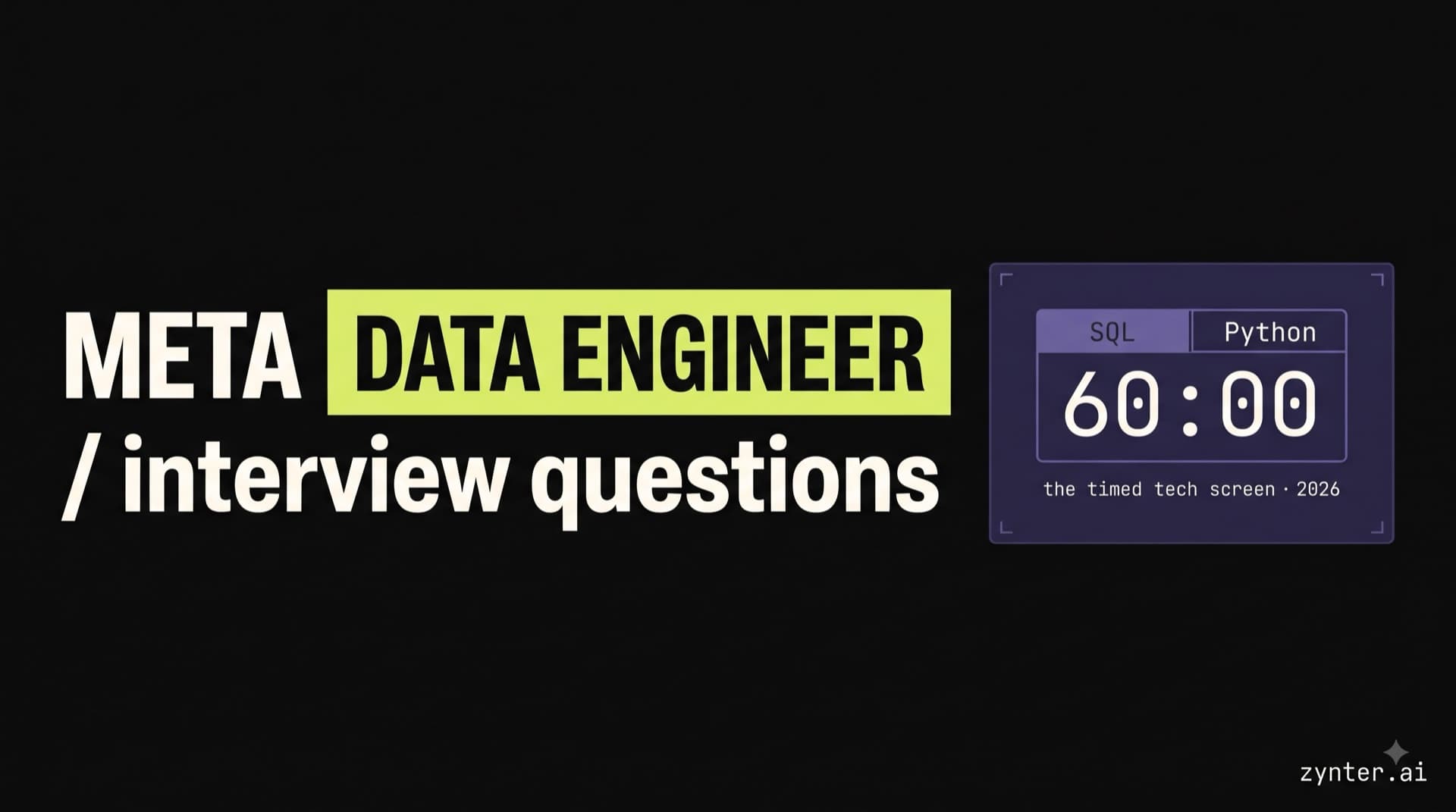
Meta Data Engineer Interview Questions: SQL + Python Tech Screen (2026)
How the Meta data engineer interview really runs in 2026 — a recruiter screen that locks your coding language, a timed 60-minute SQL-and-Python tech screen where pace, not difficulty, decides it, and an onsite of full-stack rounds that move from product sense to a data model to SQL and Python on one scenario. The SQL and Python each round tests, the follow-ups that catch people, and a prep plan to practise the screen out loud.
Gowtham PotureddiNov 1, 202610 min read
design system
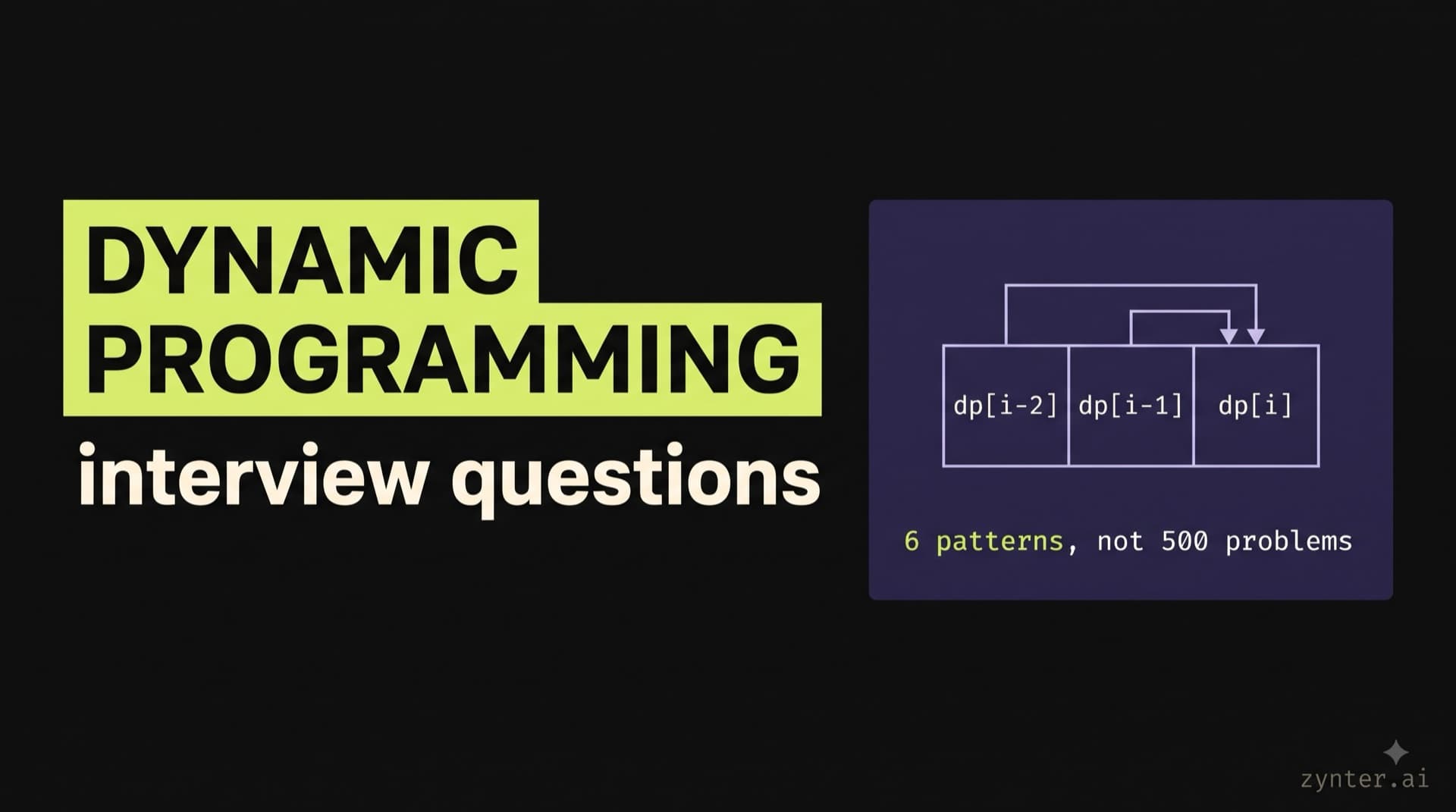
Dynamic Programming Interview Questions: Patterns, Templates & How to Spot Them (2026)
Dynamic programming interview questions are not fifty separate puzzles — they are a handful of patterns wearing different costumes. This 2026 guide covers the DP skeleton, the pattern families (Fibonacci-style, knapsack, LCS, palindromic, LIS) with the one-line tell and a template for each, how to spot the pattern in 30 seconds, and the follow-ups that decide the round — why backwards, drop a dimension, memoise or tabulate — plus how to practise it out loud.
Gowtham PotureddiNov 1, 202612 min read
design system
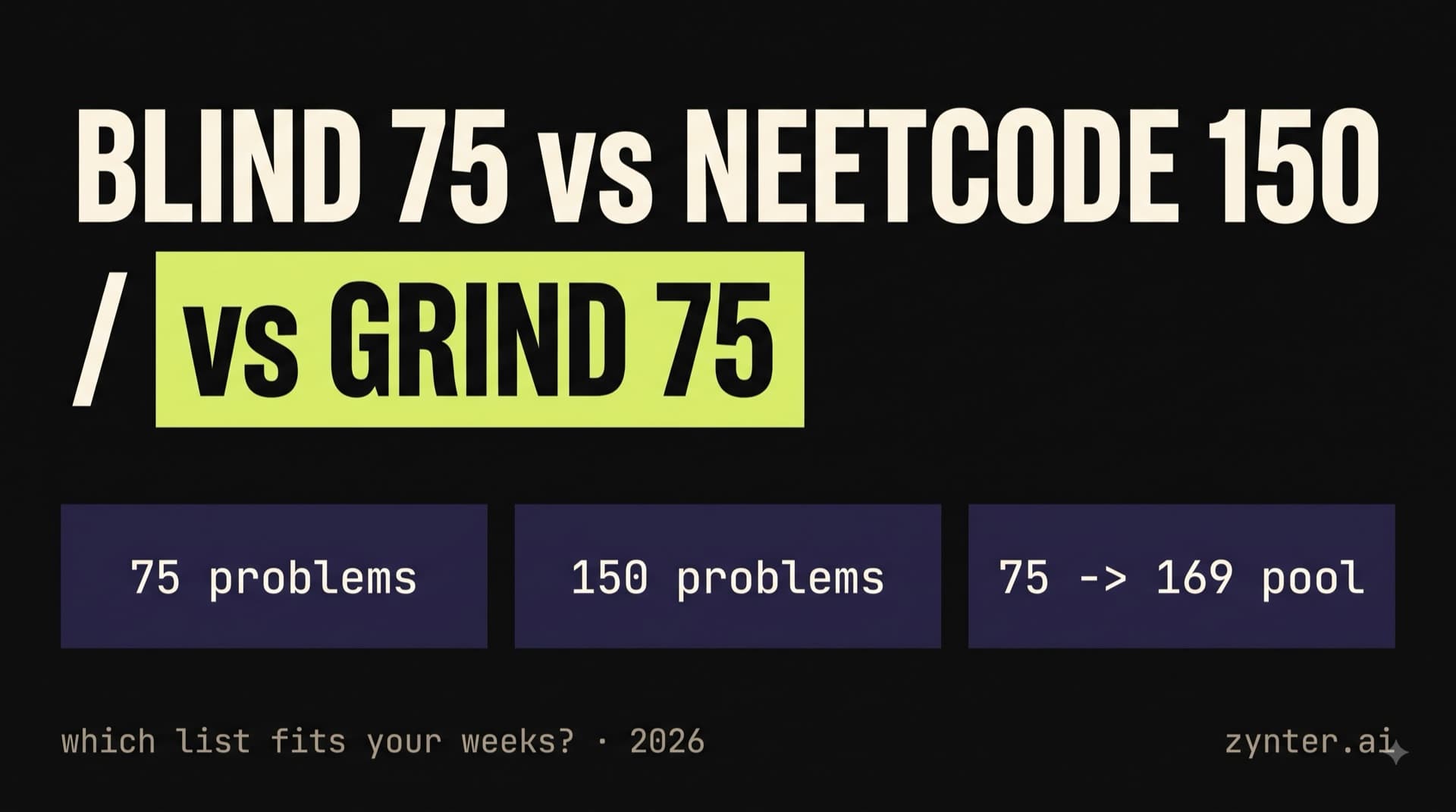
Blind 75 vs NeetCode 150 vs Grind 75: Which Should You Use? (2026)
Blind 75, NeetCode 150 and Grind 75 compared for 2026 — who made each list, how many problems, how they are structured, and which one fits your weeks and your level. Blind 75 for a fast refresh, Grind 75 for a fixed interview date, NeetCode 150 for the deepest pattern coverage. Plus the part no list trains: picking the pattern when nothing is labelled and defending your answer out loud under follow-ups — and a simple plan to practise that.
Gowtham PotureddiNov 1, 202613 min read
design system
Uber Coding Interview Questions and Prep Guide (2026)
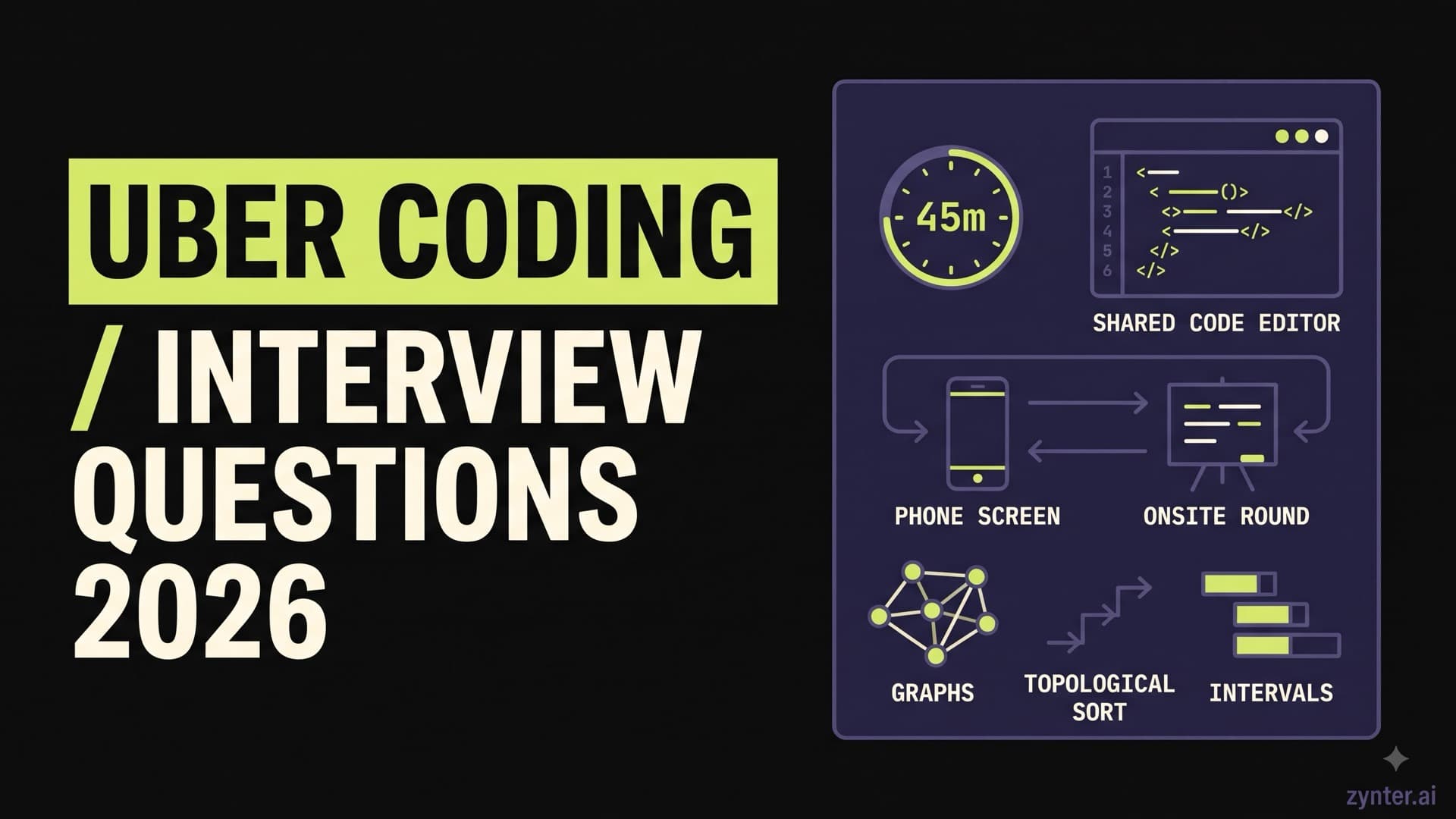
How the Uber coding interview really runs in 2026 — a 45-minute phone screen and a 45-minute onsite coding round, live with an interviewer — the patterns Uber leans on (graphs and topological sort, intervals and scheduling, trees and backtracking), what Uber looks for (graph fluency, scale-aware reasoning and clean code under a tight clock), the follow-ups that decide the round, and a two-week prep plan to practise it out loud.
Gowtham PotureddiOct 28, 202612 min read
design system
Bloomberg Coding Interview Questions and Prep Guide (2026)
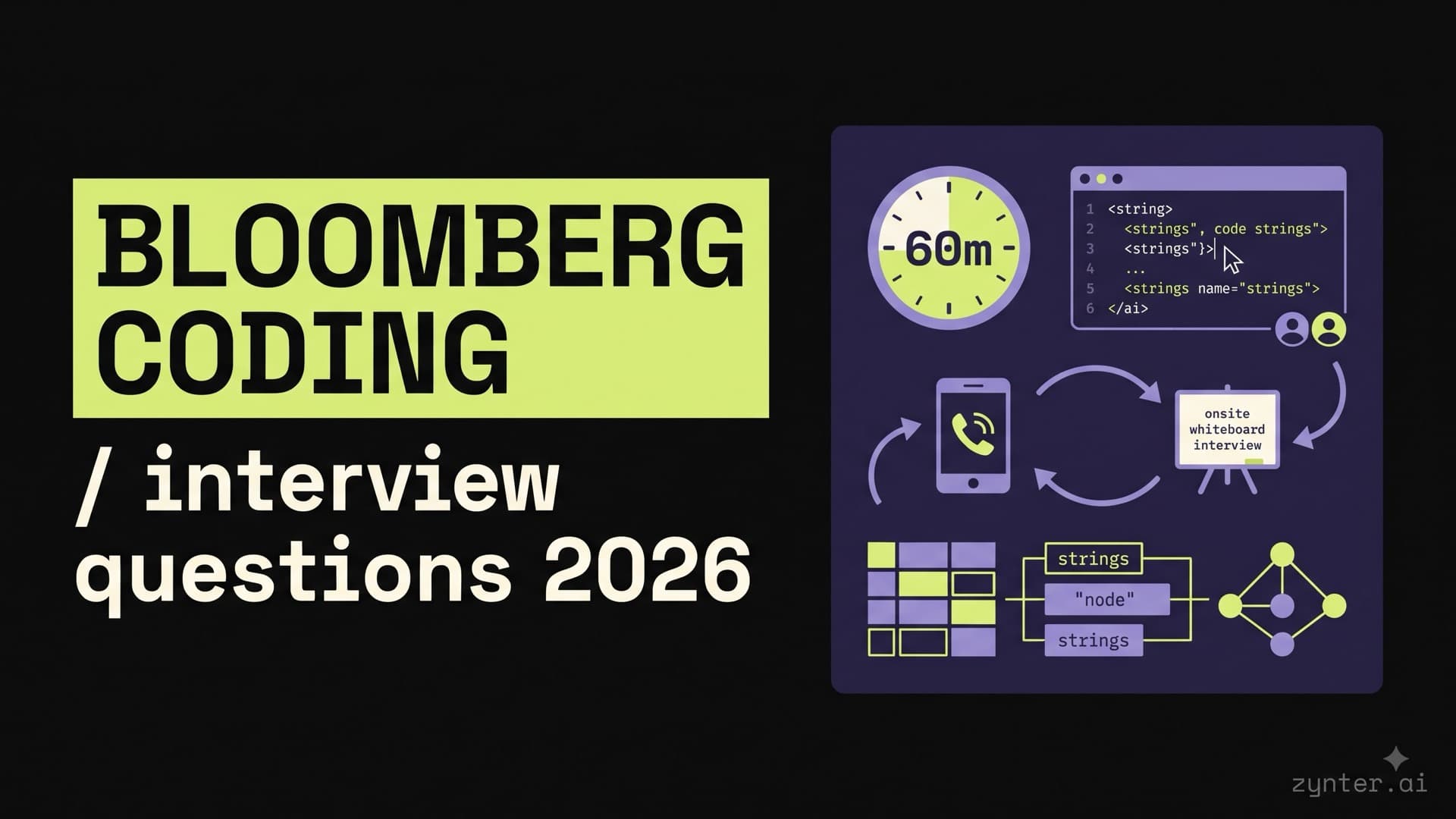
How the Bloomberg coding interview really runs in 2026 — a 60-minute phone screen and a 60-minute onsite coding round, live with an interviewer — the patterns Bloomberg leans on (grids and matrices with BFS/DFS, strings and hashing, intervals and graphs), what Bloomberg looks for (strong data-structure instincts, practical correctness and thorough edge-case handling), the follow-ups that decide the round, and a two-week prep plan to practise it out loud.
Gowtham PotureddiOct 28, 202611 min read
design system
Microsoft Coding Interview Questions and Prep Guide (2026)
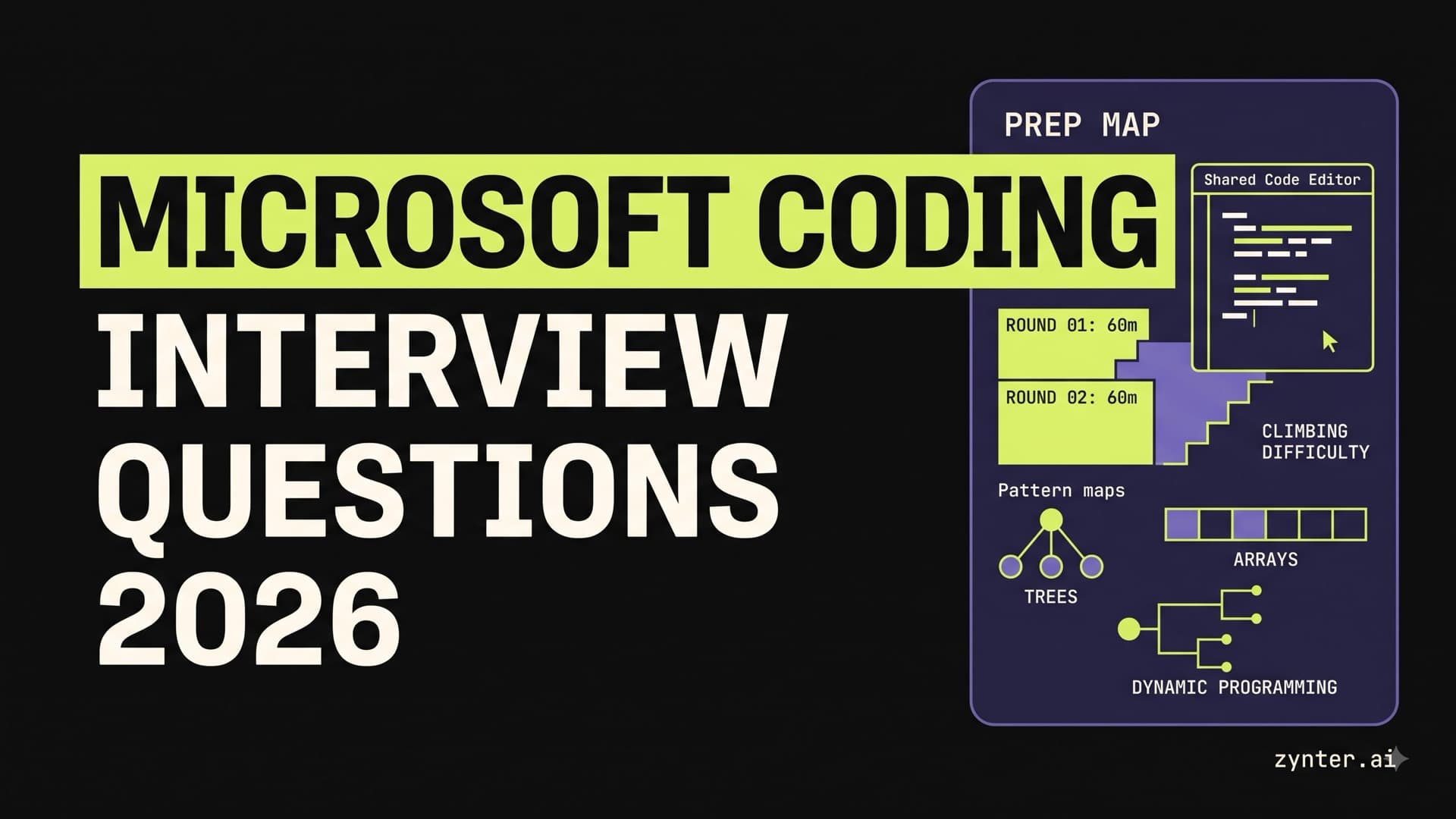
How the Microsoft coding interview really runs in 2026 — two 60-minute rounds that climb in difficulty, live with an interviewer — the patterns Microsoft leans on (dynamic programming, trees and binary search trees, arrays and matrices, stacks and intervals), what Microsoft looks for (solid fundamentals, clear communication and practical clean code), the follow-ups that decide the round, and a two-week prep plan to practise it out loud.
Gowtham PotureddiOct 28, 202611 min read
design system
Apple Coding Interview Questions and Prep Guide (2026)
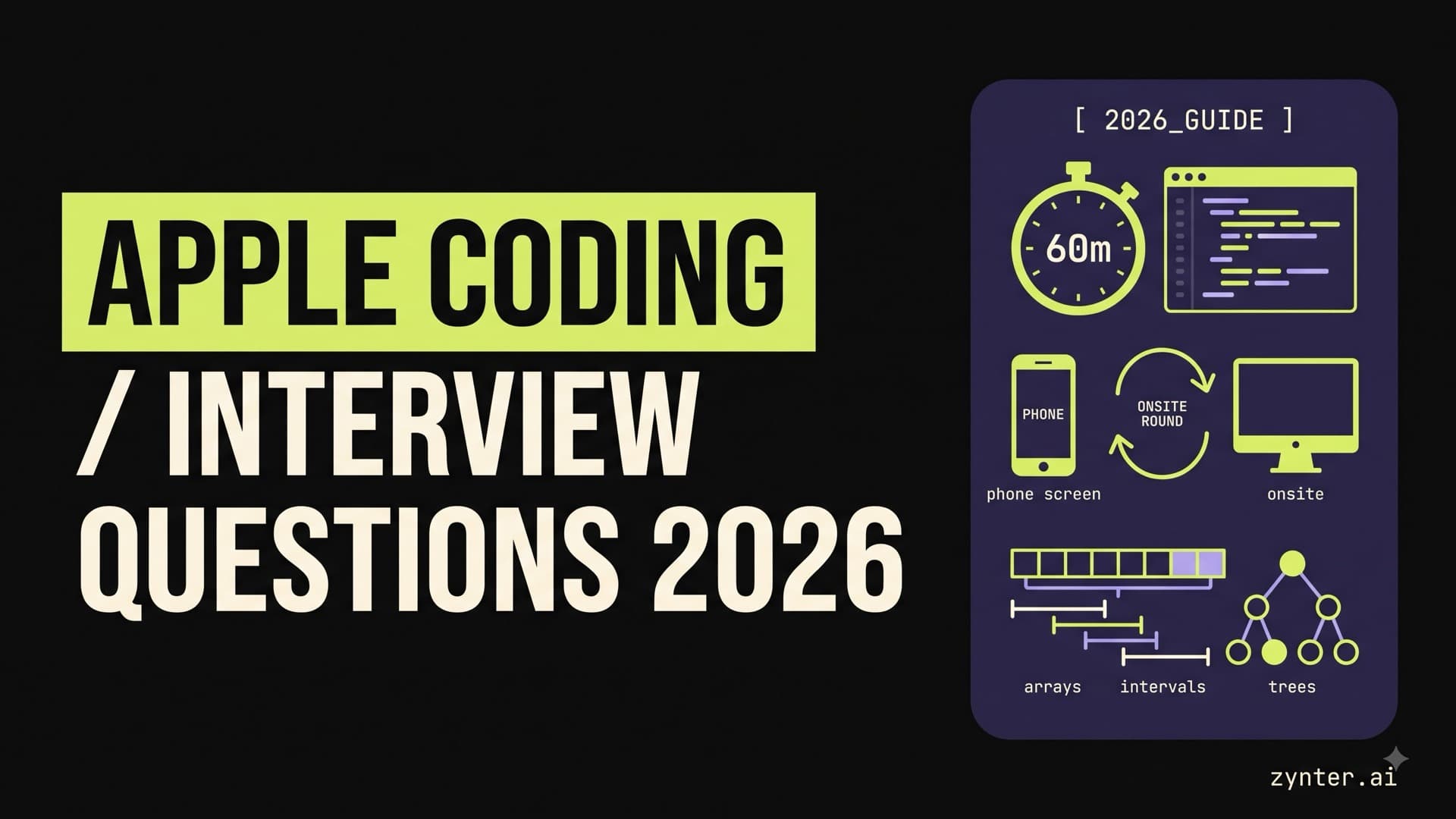
How the Apple coding interview really runs in 2026 — a 60-minute phone screen and a 60-minute onsite coding round, live with an interviewer, on team-specific loops — the patterns Apple leans on (arrays and strings, intervals, trees and classic data-structure problems), what Apple looks for (careful, correct code and strong fundamentals), the follow-ups that decide the round, and a two-week prep plan to practise it out loud.
Gowtham PotureddiOct 28, 202612 min read
design system
Meta Coding Interview Questions (2026): Phone Screen & Onsite Guide
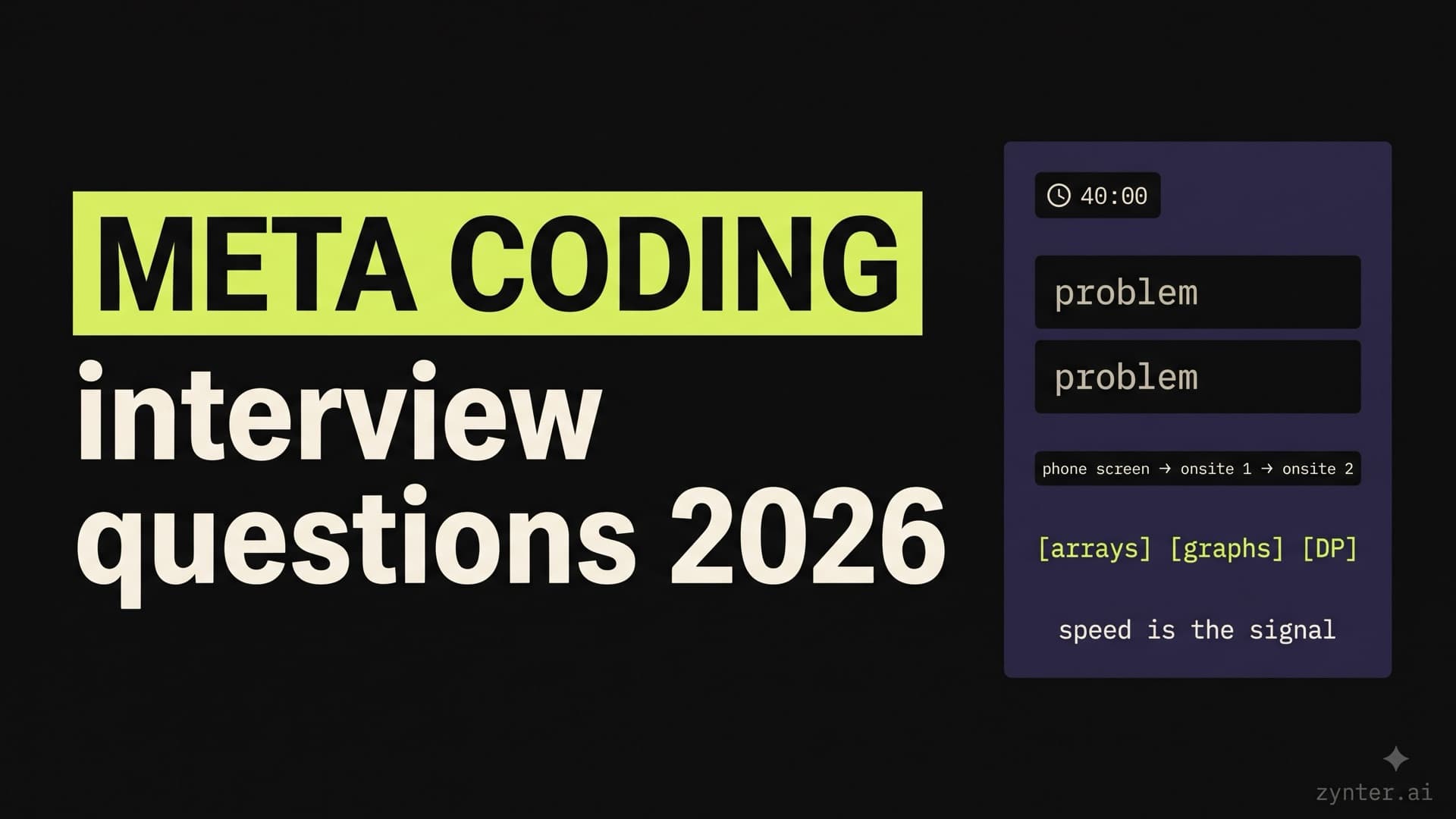
How the Meta coding interview really runs in 2026 — a 40-minute phone screen and two 40-minute onsite rounds, usually two problems each, where speed and clean code under a tight clock are the signal — the patterns Meta leans on (arrays and strings, graphs, trees, dynamic programming), what the interviewer probes after each submission, and a two-week prep plan to practise talking and typing at once, out loud.
Gowtham PotureddiOct 27, 202613 min read
design system
Google Coding Interview Questions (2026): Prep Guide & Patterns
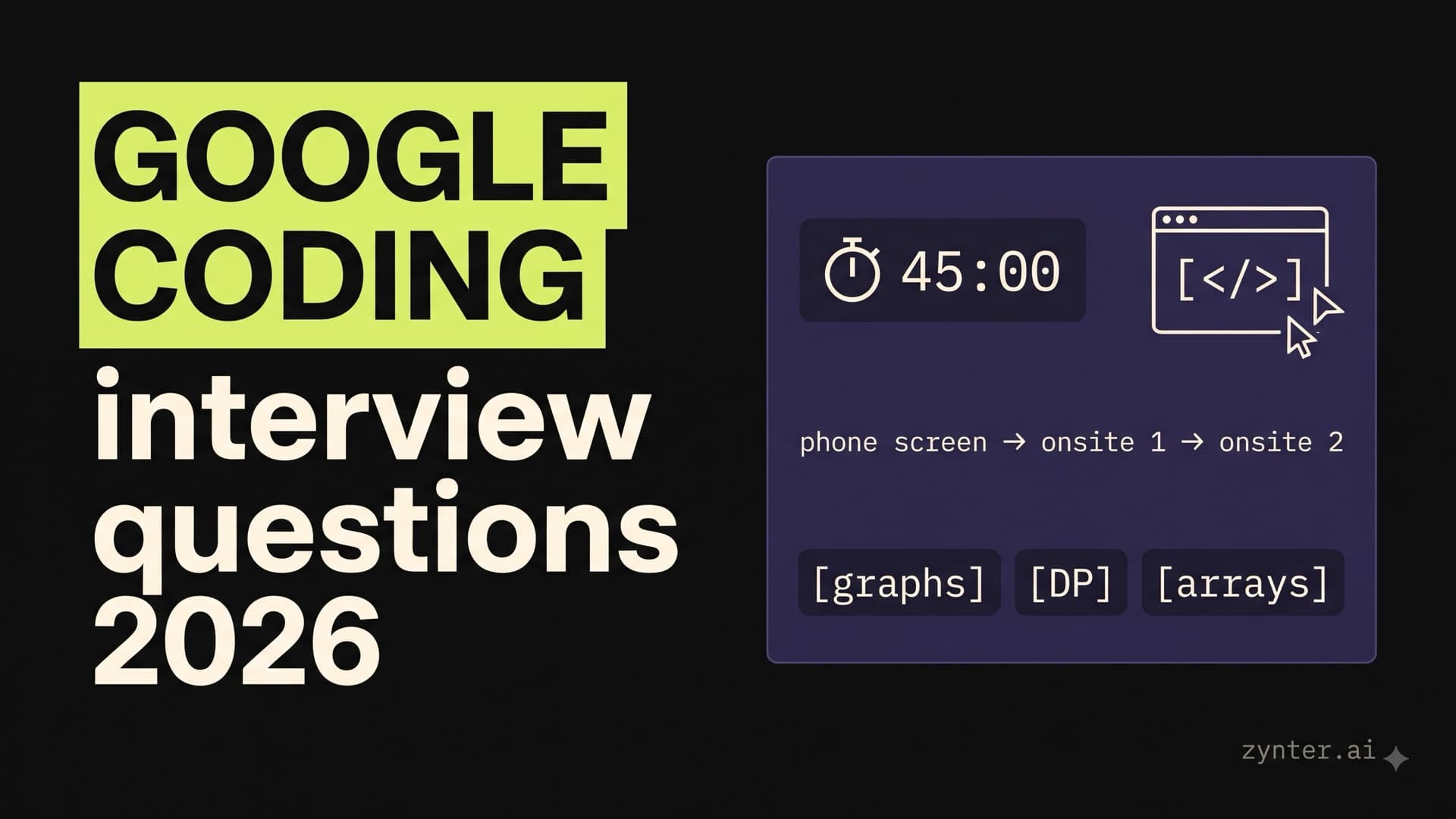
How the Google coding interview really runs in 2026 — a 45-minute phone screen and two 45-minute onsite coding rounds, live with an interviewer — the patterns Google leans on (graphs, dynamic programming, and tricky array, string and interval problems), what Google looks for (algorithmic depth, clean code, and generalising the problem), the follow-ups that decide the round, and a two-week prep plan to practise it out loud.
Gowtham PotureddiOct 27, 202613 min read
design system
Amazon Online Assessment (OA) Questions and Prep Guide (2026)
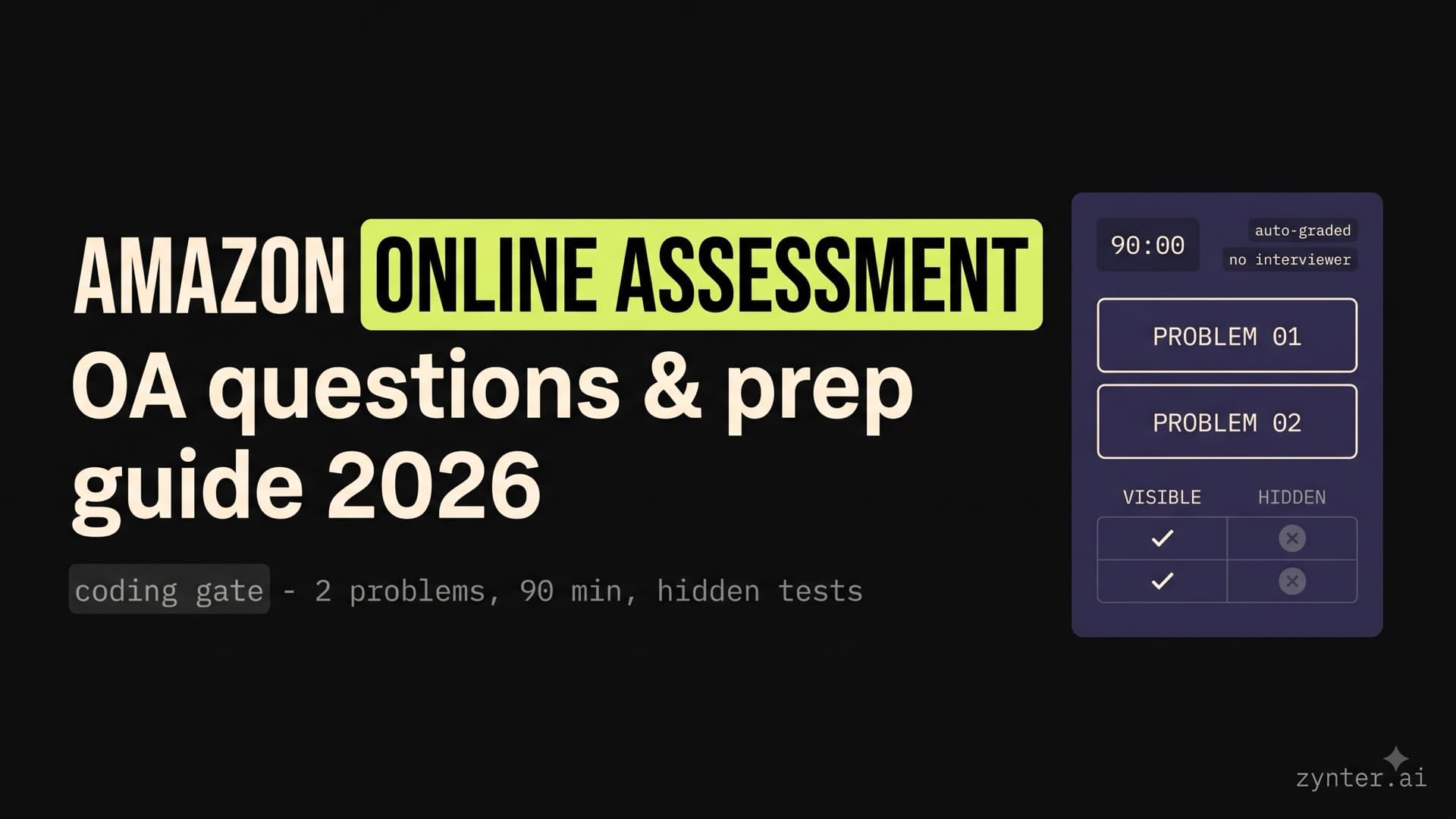
How the Amazon Online Assessment (OA) really runs in 2026 — a timed, auto-graded coding test of two problems in 90 minutes, checked against visible and hidden test cases — the question types it leans on (arrays and strings, graphs with BFS/DFS, dynamic programming, matrices and heaps), the pacing strategy that decides it, and how it fits before the phone screen and onsite, plus a two-week prep plan to practise it out loud.
Gowtham PotureddiOct 27, 202613 min read
design system
Design Patterns Interview Questions: Top Patterns with Examples
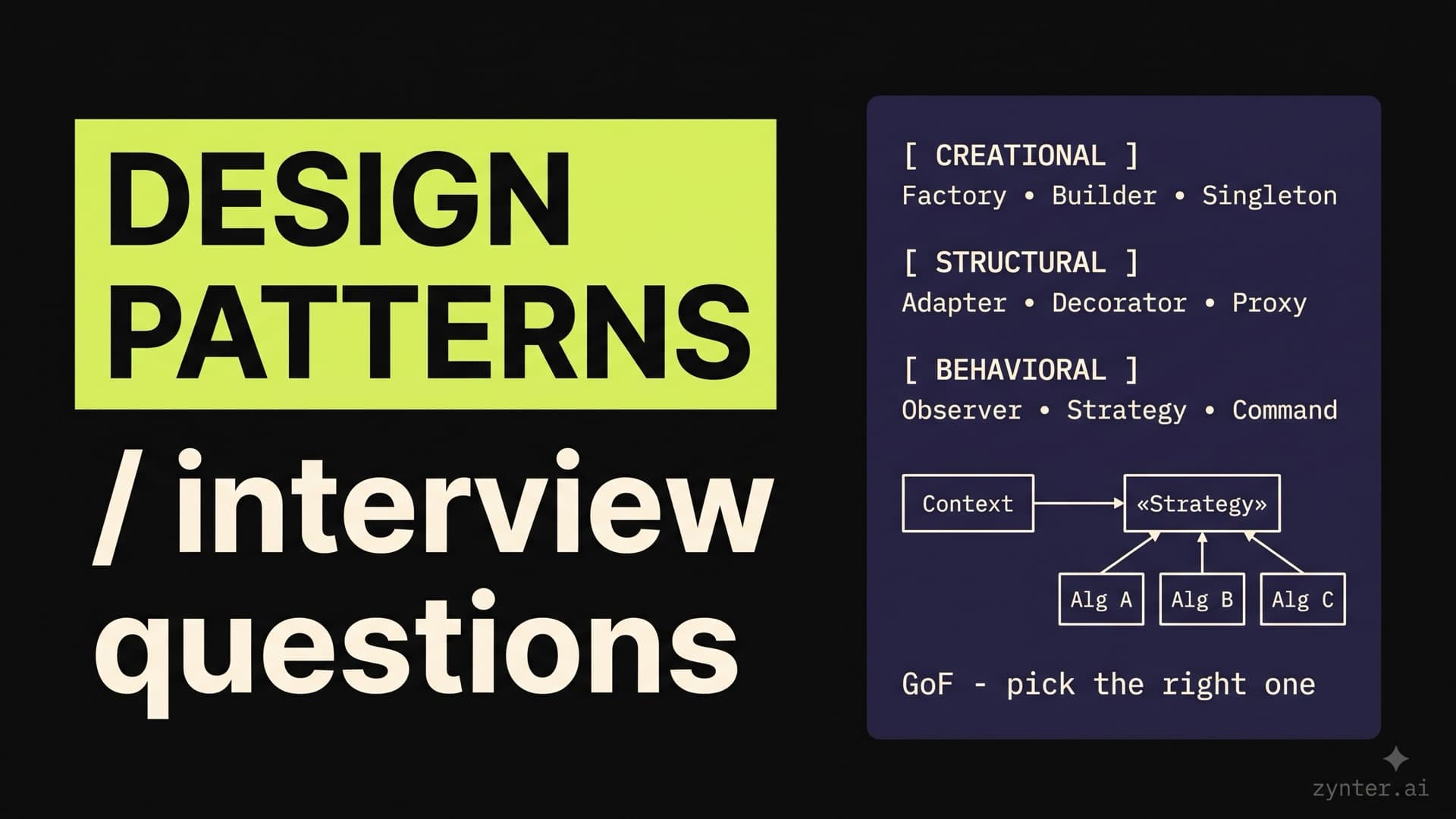
The design patterns interview questions that actually get asked — the three families (creational, structural, behavioral) and the handful that recur in object-oriented design rounds: Strategy, Factory, Singleton, Observer, State and Decorator — each with its intent, a short example and the trade-off an interviewer probes, plus how patterns show up as the solutions behind a low-level design round and why forcing one is a red flag.
Gowtham PotureddiOct 27, 202615 min read
design system
SOLID Principles Explained with Examples (OOD Interview Guide)
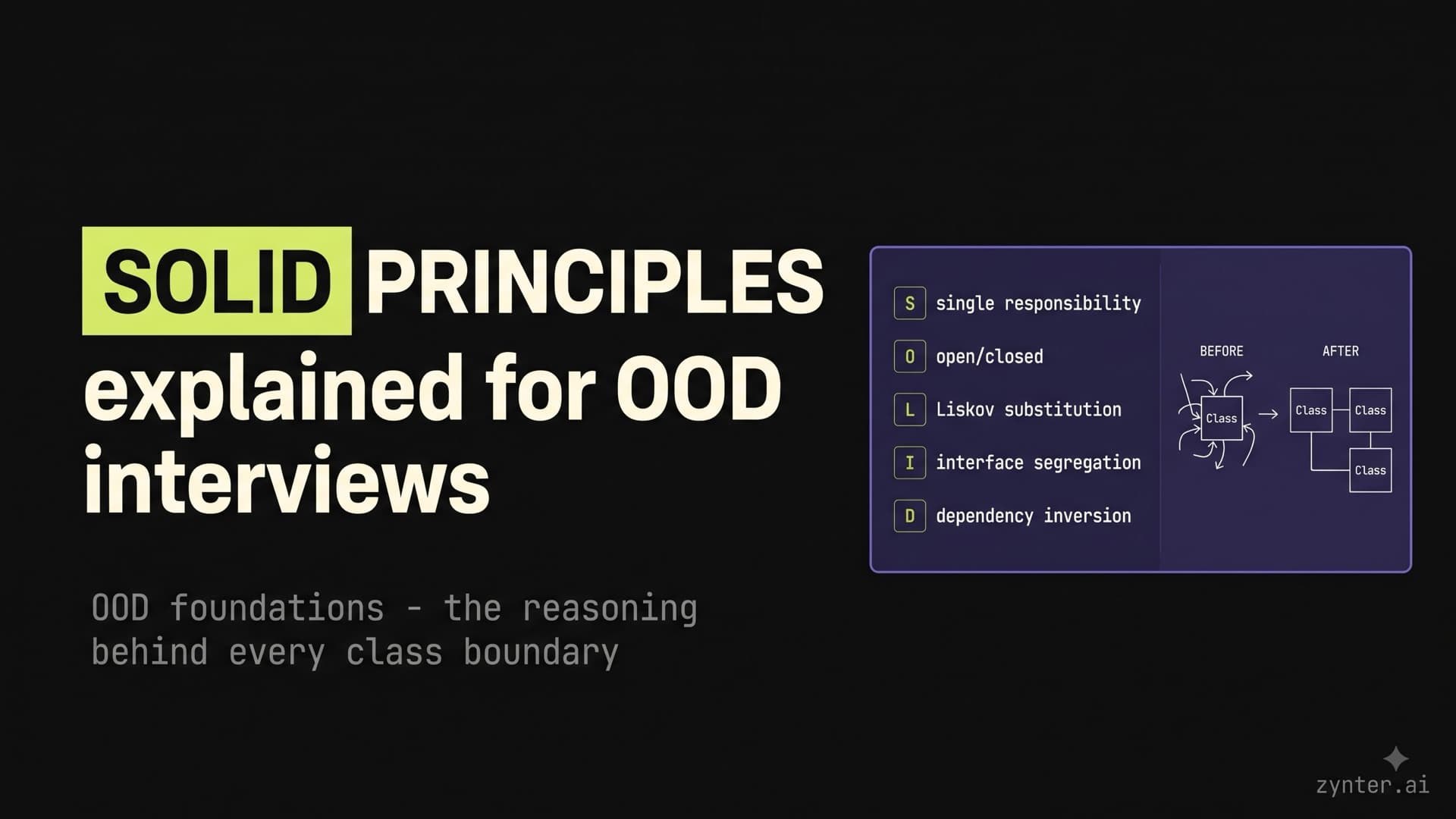
The SOLID principles explained with examples for an object-oriented design interview — single responsibility, open/closed, Liskov substitution, interface segregation and dependency inversion — each with a before-and-after that shows the smell and the fix, plus how SOLID shows up as the reasoning behind a low-level design round and the follow-ups an interviewer asks to check you can apply it, not just recite it.
Gowtham PotureddiOct 26, 202615 min read
Design a Rate Limiter (Low-Level Design): OOD Interview Question
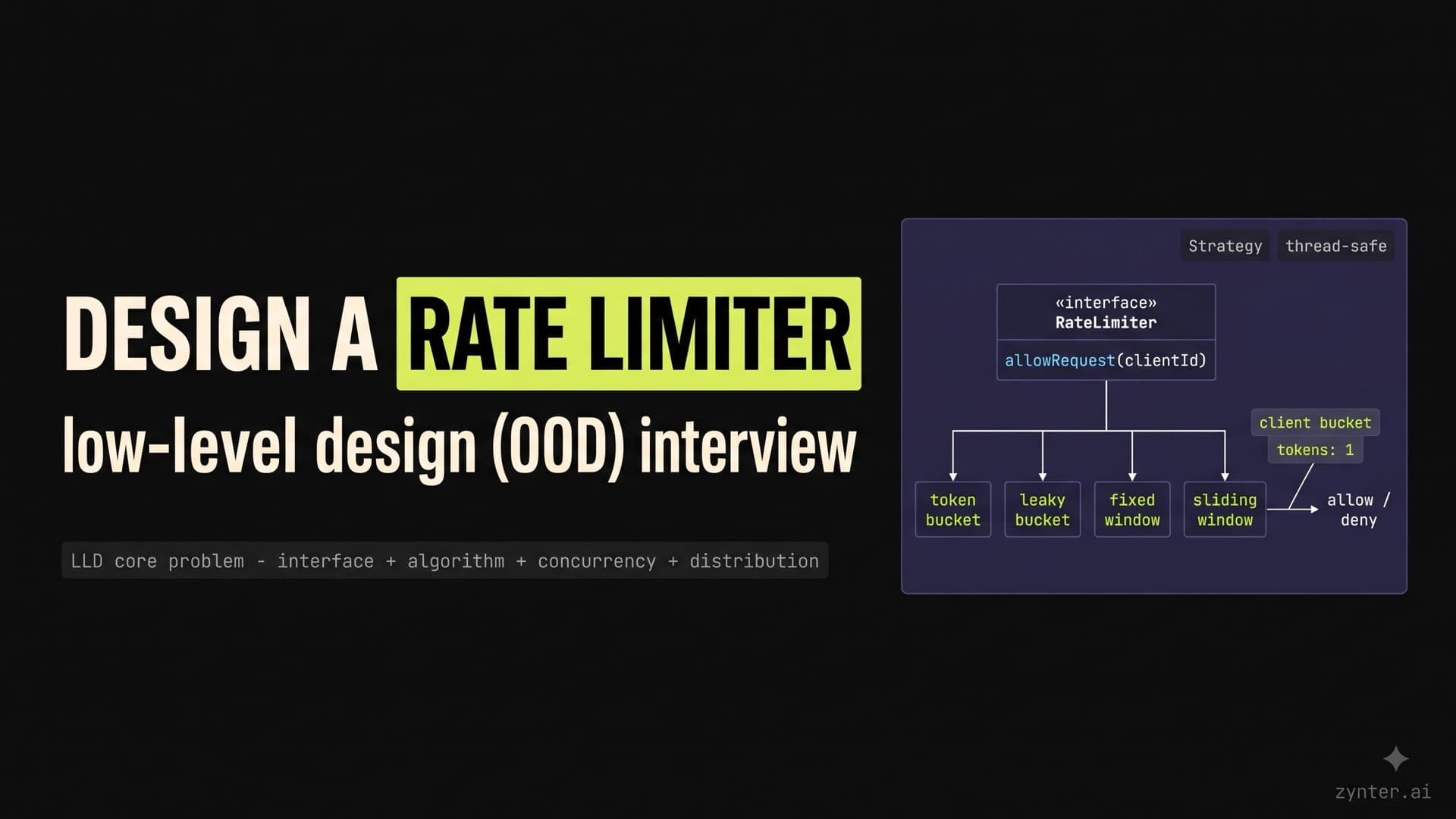
How to design a rate limiter in a low-level design (OOD) interview — clarify the requirements, model the core classes (RateLimiter, Rule, a per-client bucket), and defend the decisions interviewers probe: the algorithm behind the limiter (token bucket, leaky bucket, fixed and sliding window), keeping it extensible with the Strategy pattern, the thread-safety race on the last token, and how it works across many servers — with the follow-ups you answer out loud.
Gowtham PotureddiOct 26, 202617 min read

design system
Design a Movie Ticket Booking System: LLD Interview Question
How to design a movie ticket booking system in a low-level design interview — clarify the requirements, model the core classes (City, Cinema, Screen, Show, Seat, Booking), sketch the relationships and key methods, and defend the decisions interviewers actually probe: atomic seat locking so two users can't grab the same seat, the booking state machine, lock expiry mid-payment, and pricing by seat type — with the follow-ups you answer out loud.
Gowtham PotureddiOct 26, 202619 min read
design system
Design an ATM: Object-Oriented Design Interview Question
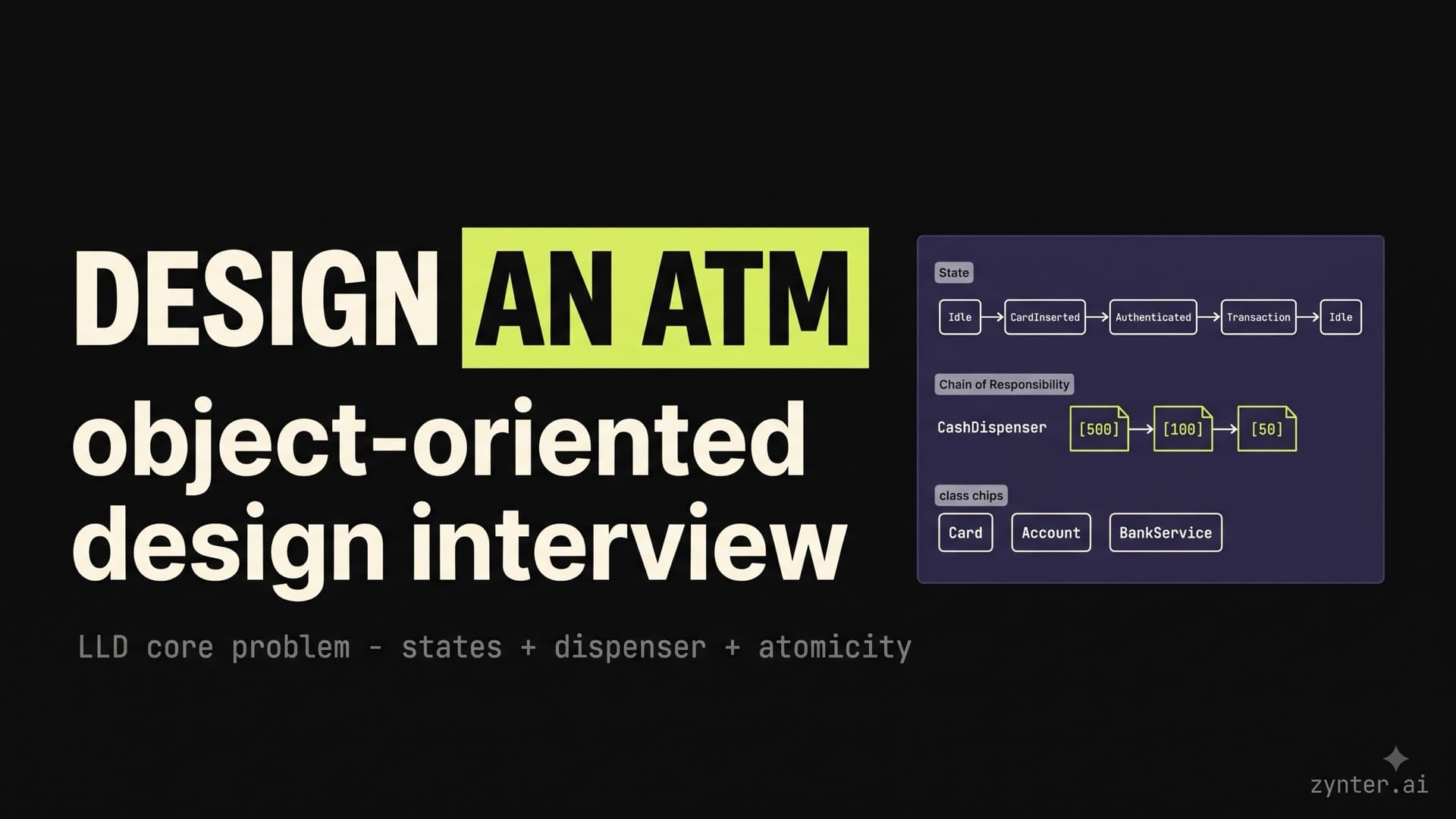
How to design an ATM in an object-oriented design interview — clarify the requirements, identify the core classes (ATM, Card, Account, BankService, CashDispenser, Transaction), model the session as a State machine, and defend the decisions interviewers probe: the State pattern for the flow, a Chain of Responsibility for dispensing notes, and transaction atomicity when the dispenser jams after the account is debited — with the follow-ups you answer out loud.
Gowtham PotureddiOct 26, 202618 min read
design system
Design Splitwise: Low-Level Design Interview Question
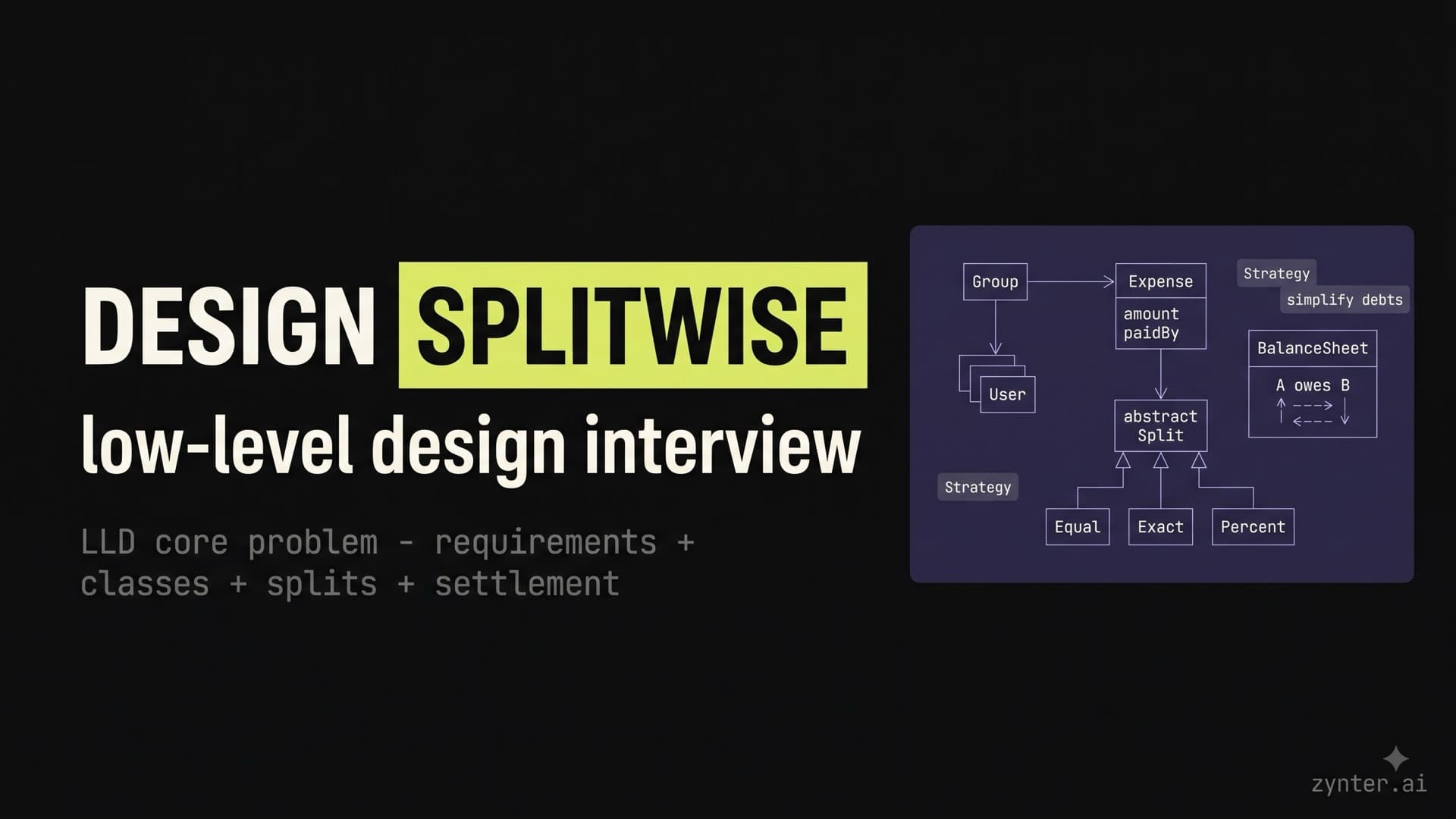
How to design Splitwise in a low-level design (OOD) interview — clarify the requirements, identify the core classes (User, Group, Expense, the Split hierarchy, BalanceSheet, ExpenseManager), sketch the relationships and key methods, and defend the decisions interviewers actually probe: polymorphic split types (equal, exact, percent), the directed balance map, and the simplify-debts algorithm that settles a group in the fewest transactions — with the follow-ups you answer out loud.
Gowtham PotureddiOct 26, 202617 min read
design system
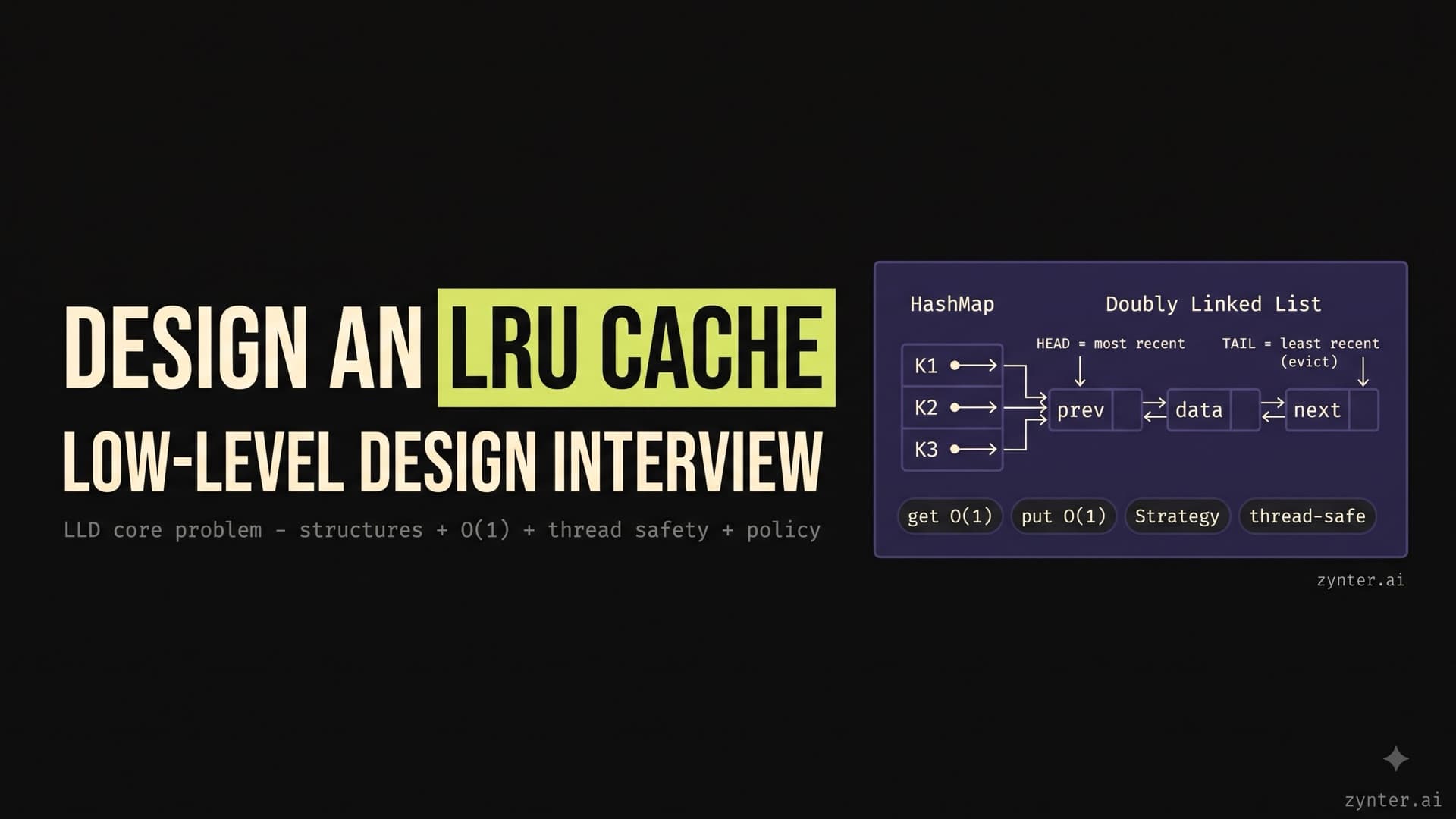
Design an LRU Cache: Low-Level Design Interview Question
How to design an LRU cache in a low-level design interview — the requirement that forces the design (get and put both O(1)), the hash map plus doubly linked list that delivers it, why a plain queue or array fails, and the decisions interviewers probe: thread safety, a pluggable eviction policy (LRU vs LFU) behind a Strategy, and TTL expiry — framed as class design, not a LeetCode solve, with the follow-ups you answer out loud.
Gowtham PotureddiOct 26, 202618 min read
design system
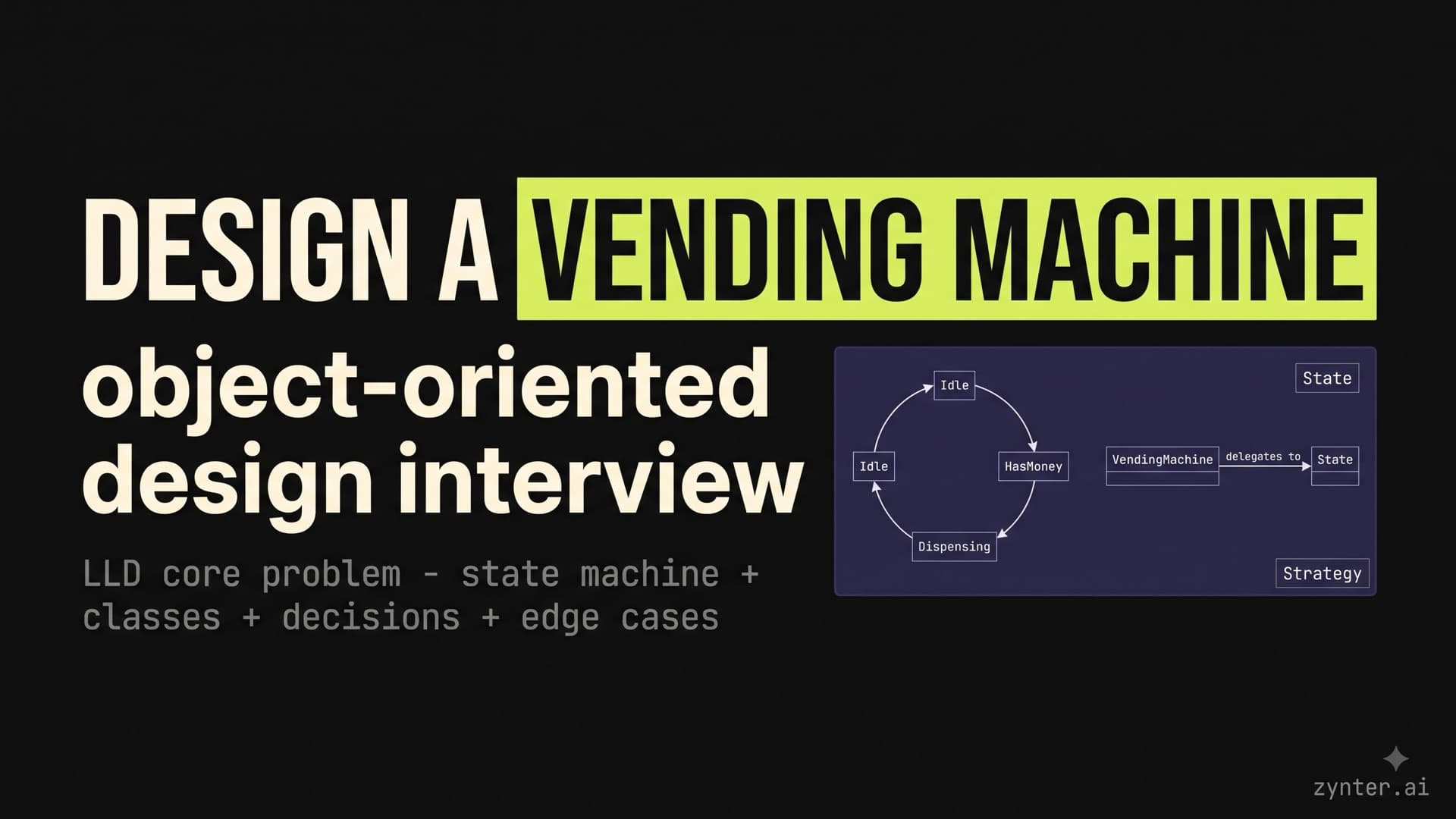
Design a Vending Machine: OOD Interview Question and Answer
How to design a vending machine in an object-oriented design interview — clarify the requirements, model the machine as a state machine with the State pattern (idle, has-money, dispensing), sketch the core classes (VendingMachine, State, Inventory, Product), and defend the decisions interviewers probe: why State beats a status flag, change-making, and the edge cases — out of stock after payment, insufficient funds, no exact change — with the follow-ups you answer out loud.
Gowtham PotureddiOct 26, 202618 min read
design system
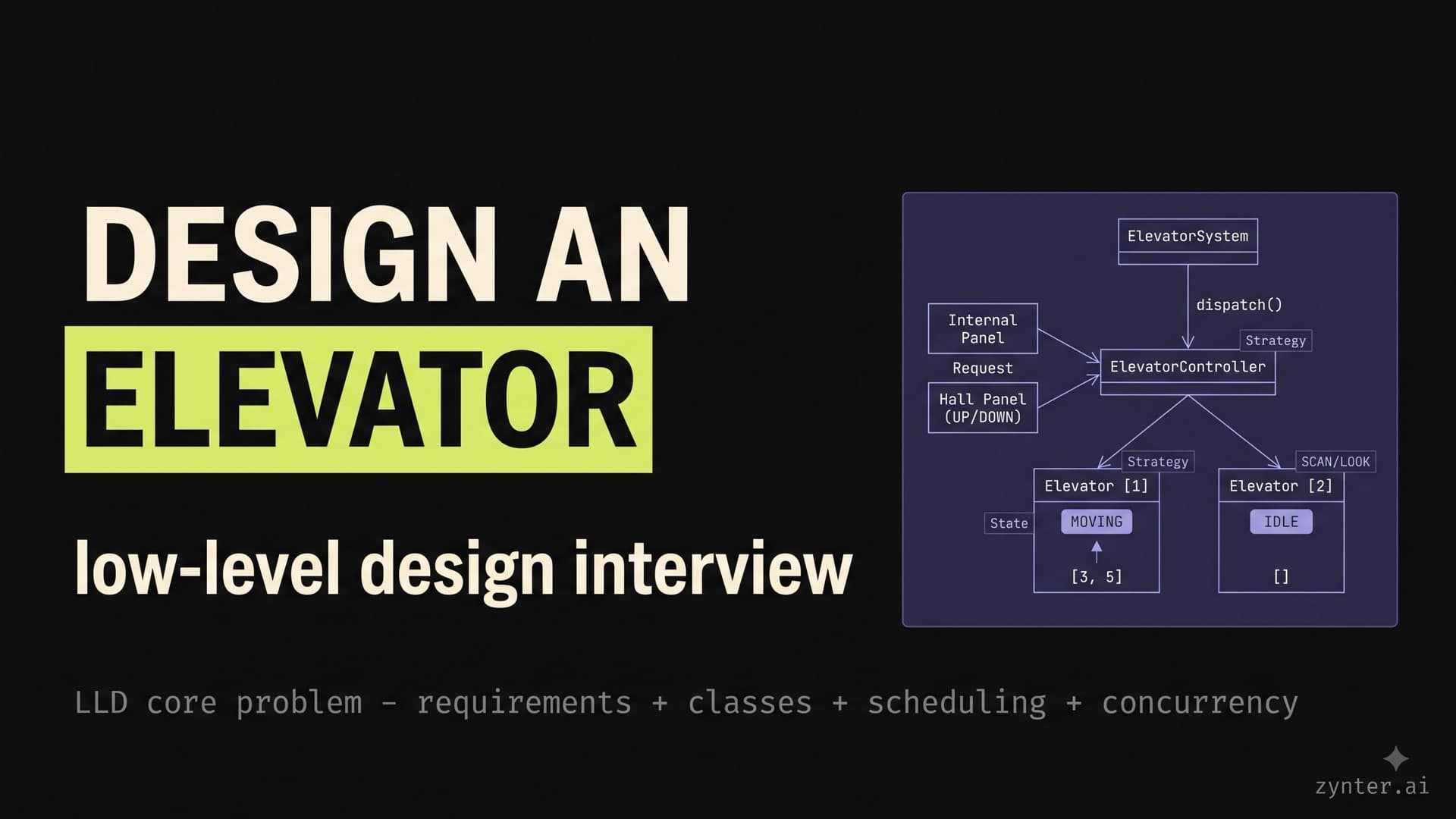
Design an Elevator System: Low-Level Design Interview Question
How to design an elevator system in a low-level design (OOD) interview — clarify the requirements, identify the core classes (ElevatorSystem, Elevator, ElevatorController, Request), sketch the relationships and key methods, and defend the decisions interviewers actually probe: the scheduling algorithm (FCFS vs SCAN/LOOK), which car serves a request, the elevator as a state machine, and concurrent button presses — with the follow-ups you answer out loud.
Gowtham PotureddiOct 26, 202617 min read
design system
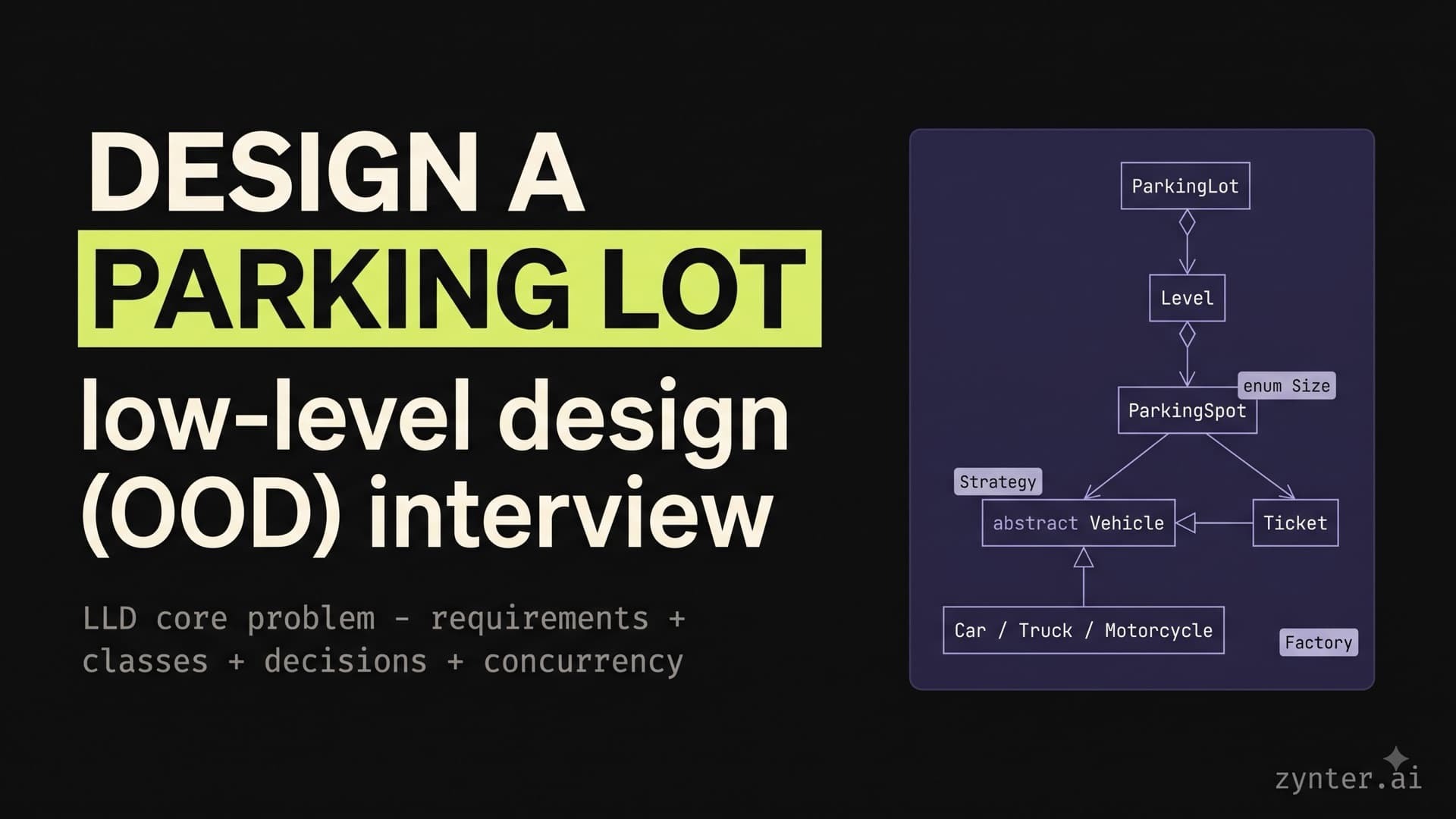
Design a Parking Lot: Low-Level Design (OOD) Interview Question
How to design a parking lot in a low-level design (OOD) interview — clarify the requirements, identify the core classes (ParkingLot, Level, ParkingSpot, Vehicle, Ticket), sketch the relationships and key methods, and defend the decisions interviewers actually probe: spot assignment, pricing as a Strategy, extensibility for new vehicle types, and the concurrency race for the last spot — with the follow-ups you answer out loud.
Gowtham PotureddiOct 24, 202617 min read
design system
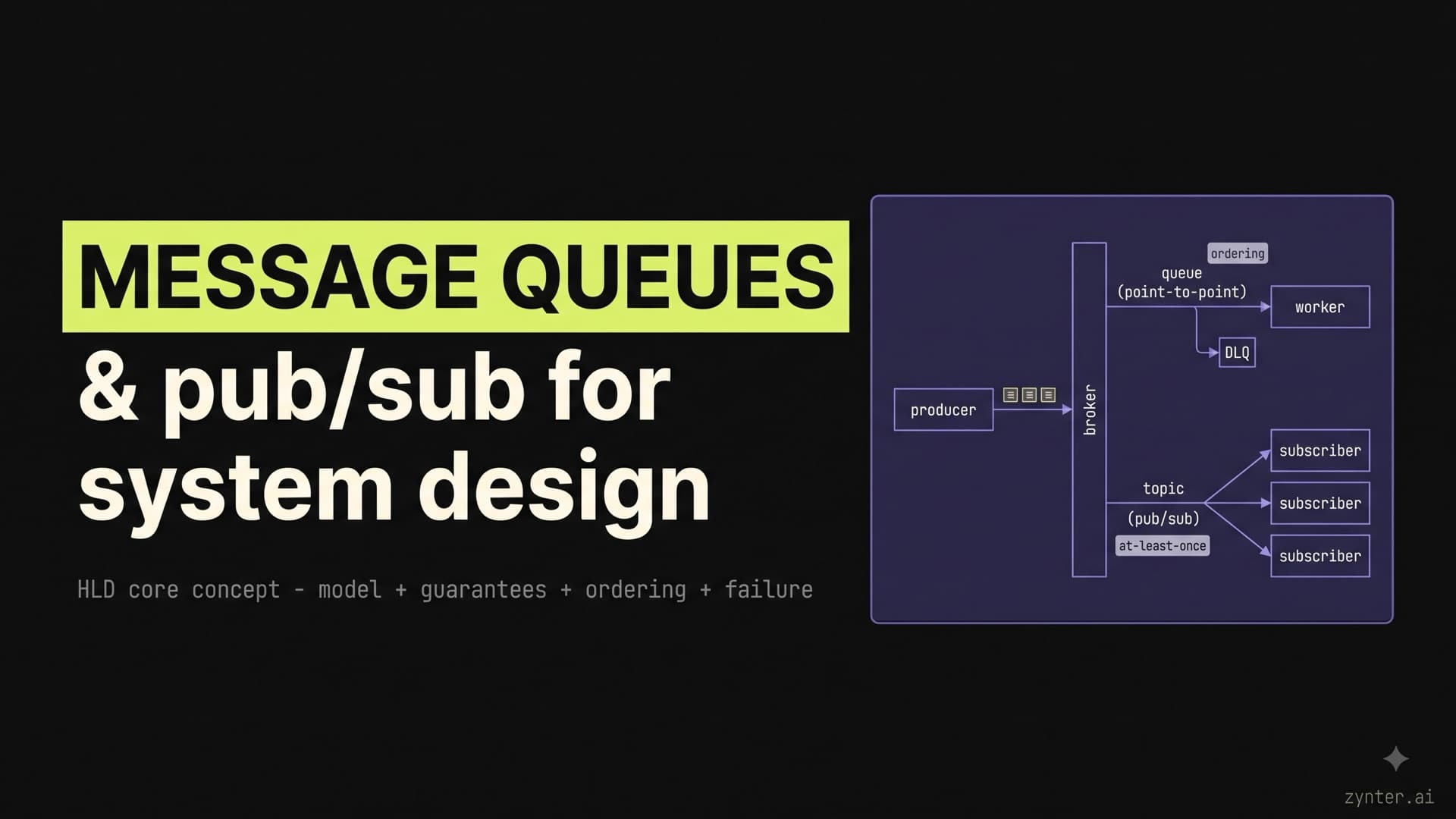
Message Queues and Pub/Sub Explained for System Design Interviews
How to reason about message queues and pub/sub in a system design interview — why asynchronous messaging decouples services, queue (point-to-point) vs publish/subscribe, the delivery guarantees that decide everything (at-most-once, at-least-once, exactly-once), and the hard parts interviewers probe: ordering, idempotency, backpressure, consumer groups and the dead-letter queue — with the follow-ups you answer out loud.
Gowtham PotureddiOct 24, 20261 min read
design system
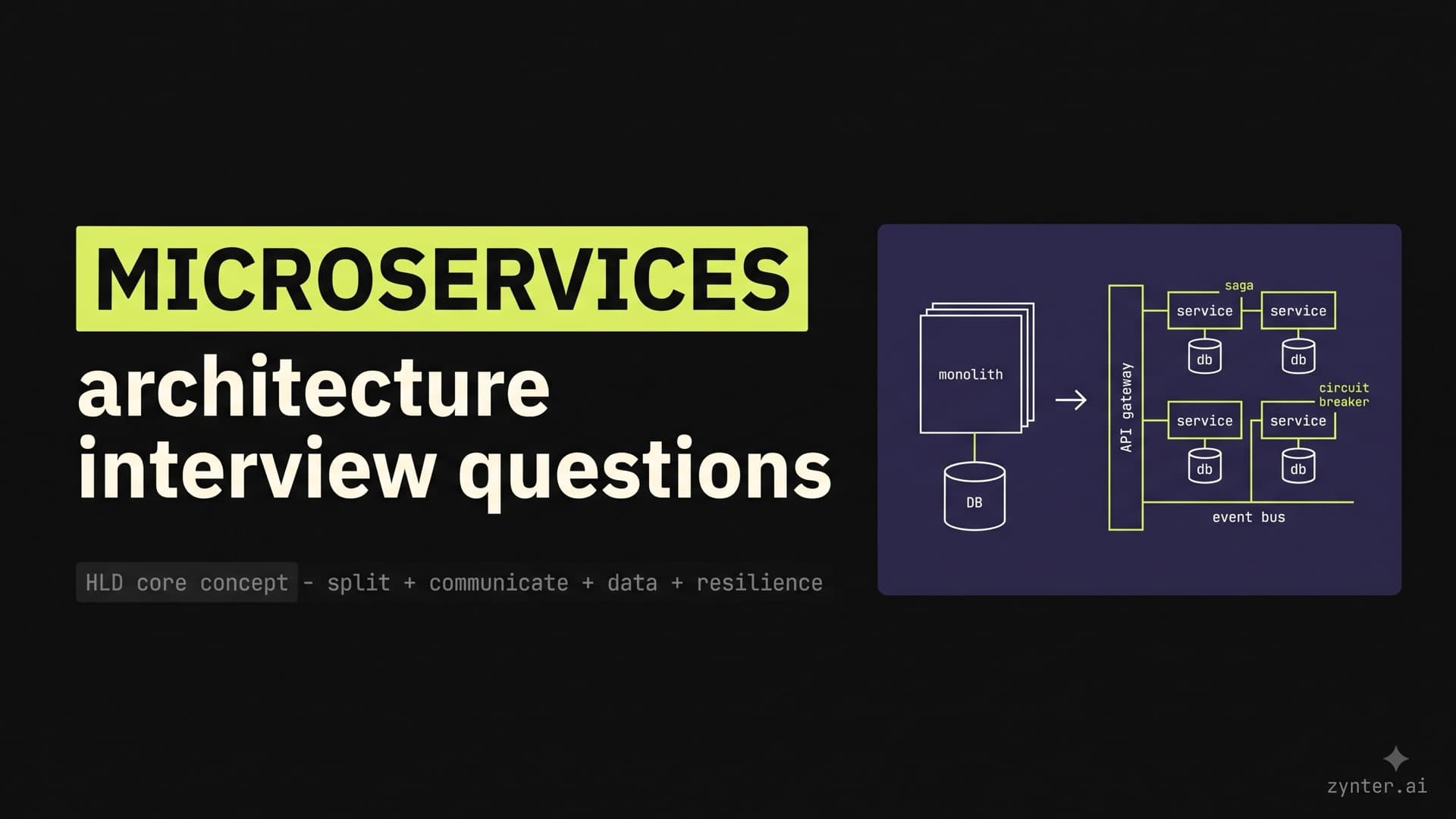
Microservices Architecture Interview Questions and Answers
The microservices architecture interview questions that actually get asked — monolith vs microservices and when the split is worth it, how to decompose by business capability, synchronous vs asynchronous communication, the API gateway and service discovery, database-per-service and the saga pattern for distributed transactions, and resilience with circuit breakers — each with the follow-up an interviewer asks next, and how to answer it out loud.
Gowtham PotureddiOct 24, 202619 min read
design system
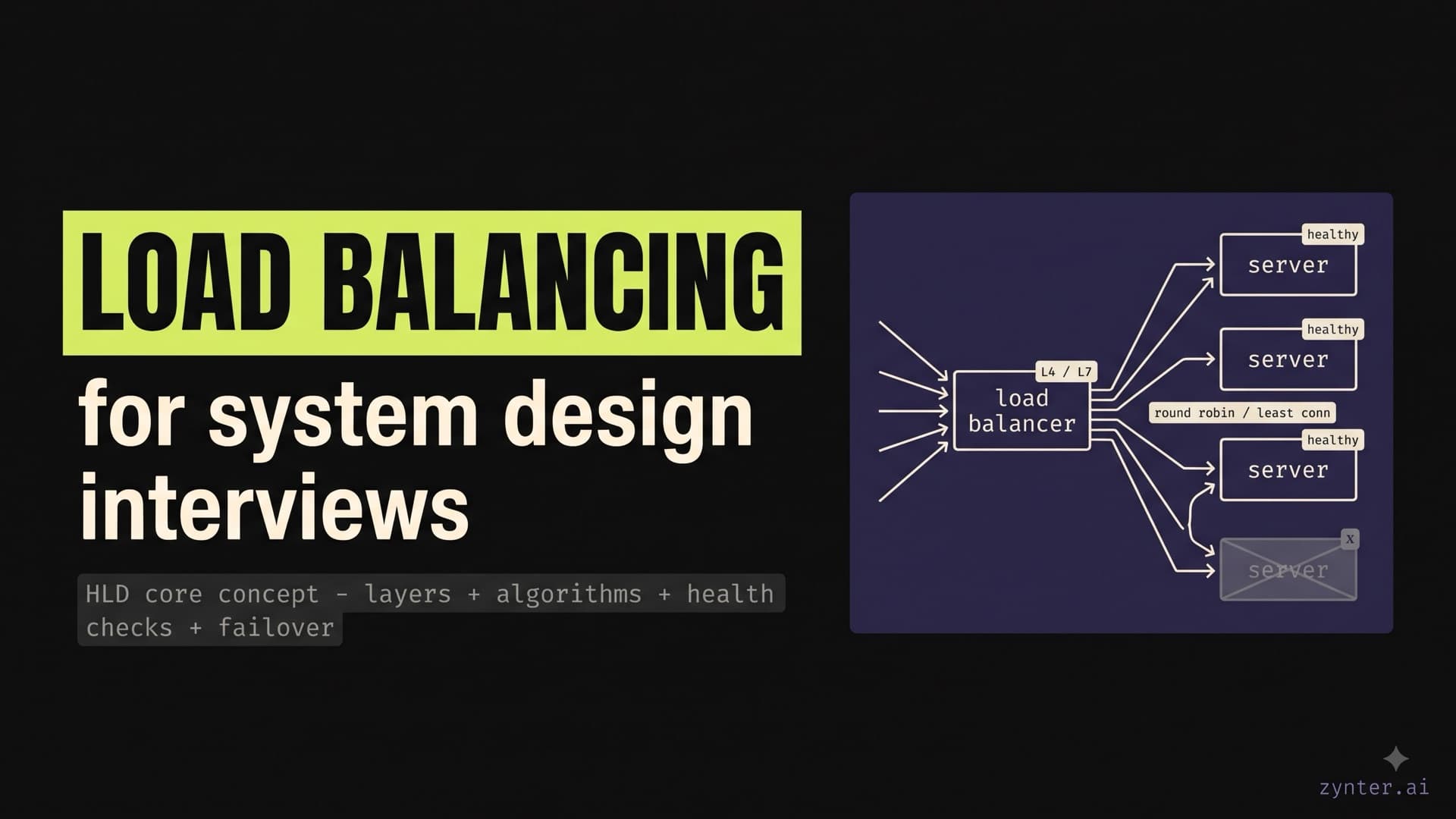
Load Balancing Explained for System Design Interviews
How to reason about load balancing in a system design interview — where the load balancer sits (Layer 4 vs Layer 7), the algorithms that spread traffic (round robin, weighted, least connections, least response time, IP hash and power of two choices), and the operational story interviewers probe: health checks, failover, sticky sessions and the load balancer as its own single point of failure — with the follow-ups you answer out loud.
Gowtham PotureddiOct 24, 202616 min read
design system
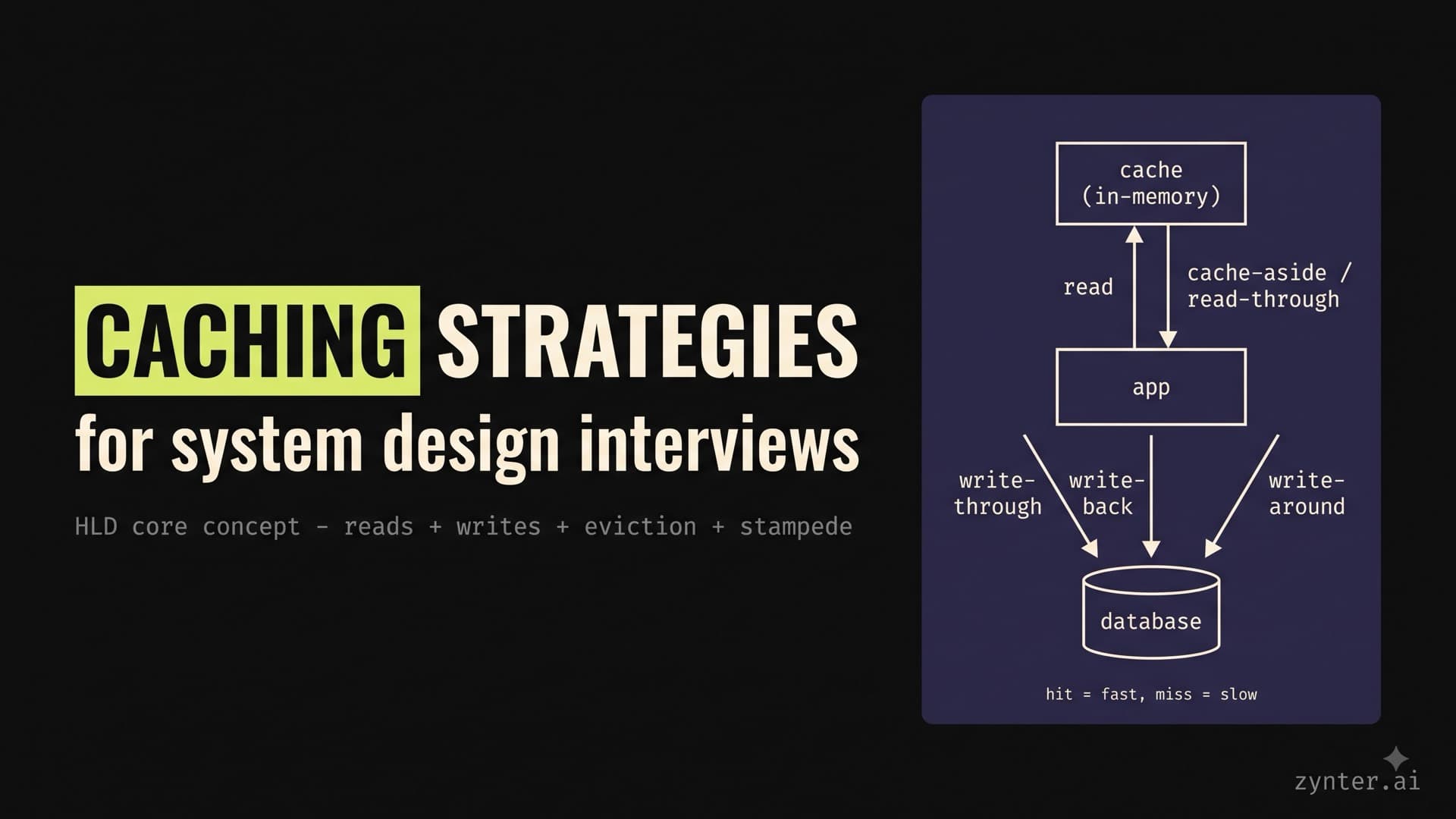
Caching Strategies for System Design Interviews (Cache-Aside, Write-Through)
How to choose and defend a caching strategy in a system design interview — the read patterns (cache-aside and read-through), the write patterns (write-through, write-back and write-around) and the trade-offs that decide them, plus eviction policies (LRU, LFU, TTL) and the failures interviewers probe: cache invalidation, the thundering-herd stampede when a hot key expires, and hot-key hotspots — with the follow-ups you answer out loud.
Gowtham PotureddiOct 19, 202617 min read
design system
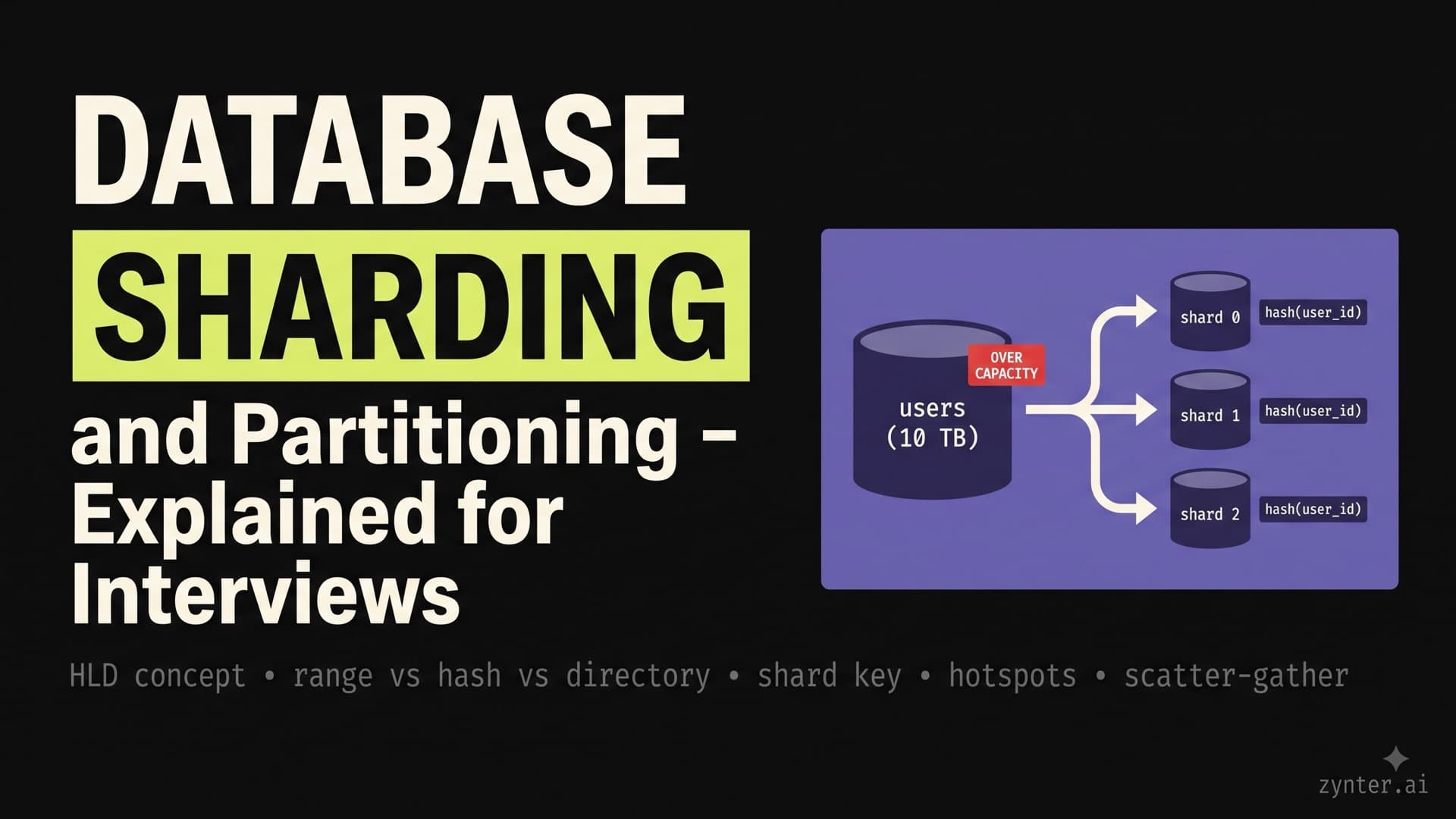
Database Sharding and Partitioning Explained for Interviews
How database sharding and partitioning work, and how to justify them in a system design interview — what vertical and horizontal partitioning actually mean, why sharding scales writes and storage when read replicas can't, the three strategies (range, hash and directory) and their trade-offs, how to choose a shard key that avoids hotspots, and what cross-shard joins, transactions and resharding cost you.
Gowtham PotureddiOct 19, 202616 min read
design system
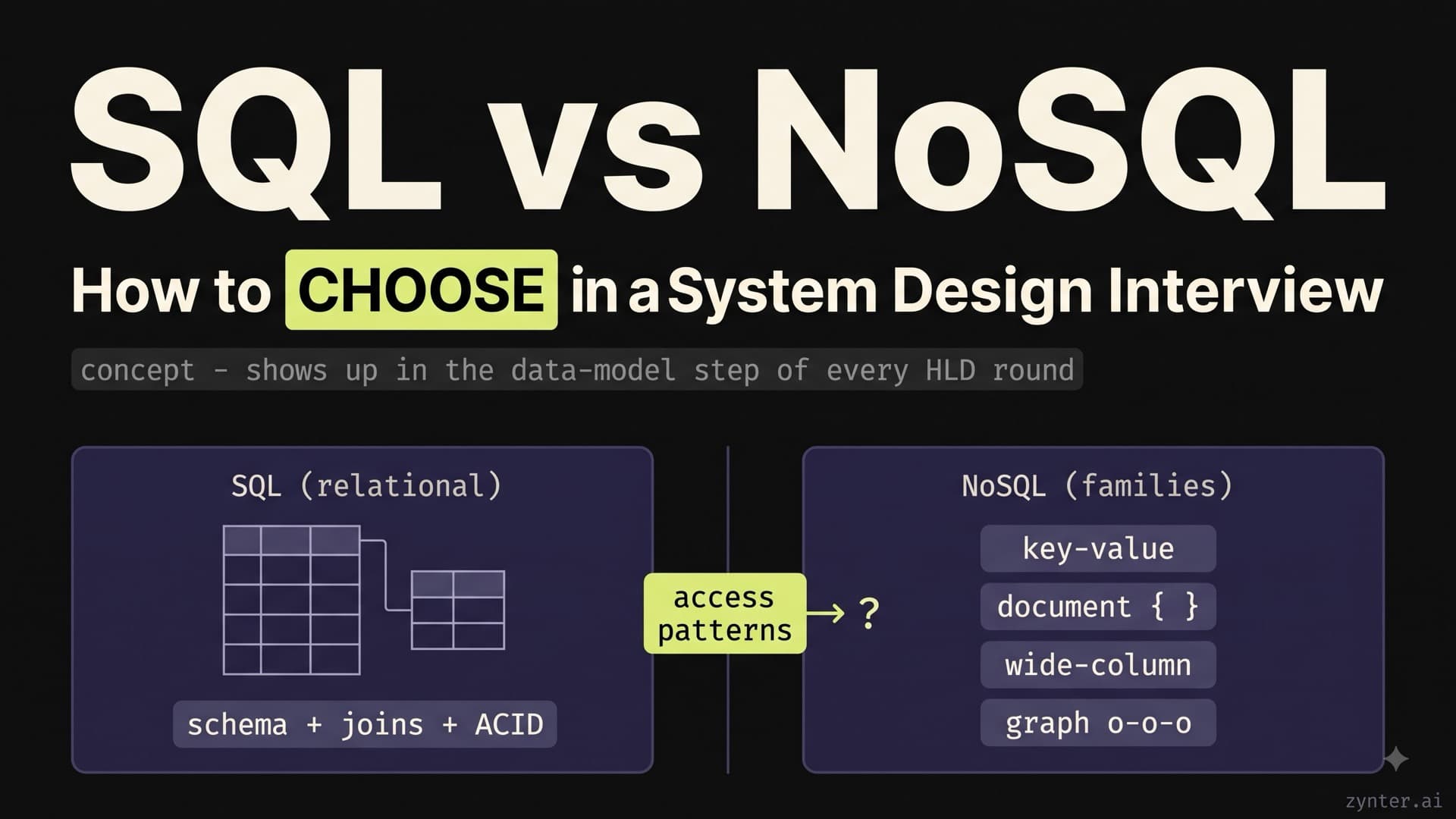
SQL vs NoSQL: How to Choose in a System Design Interview
How to answer SQL vs NoSQL in a system design interview — not as a war over which database is better, but as a decision driven by access patterns. What a relational database gives you (schema, joins, ACID, strong consistency), what the four NoSQL families trade for horizontal scale and a flexible schema, and a requirement-to-choice framework you can reason through out loud, with a worked storage example and the follow-ups the interviewer uses to test whether you really understand the trade-off.
Gowtham PotureddiOct 19, 202616 min read
design system
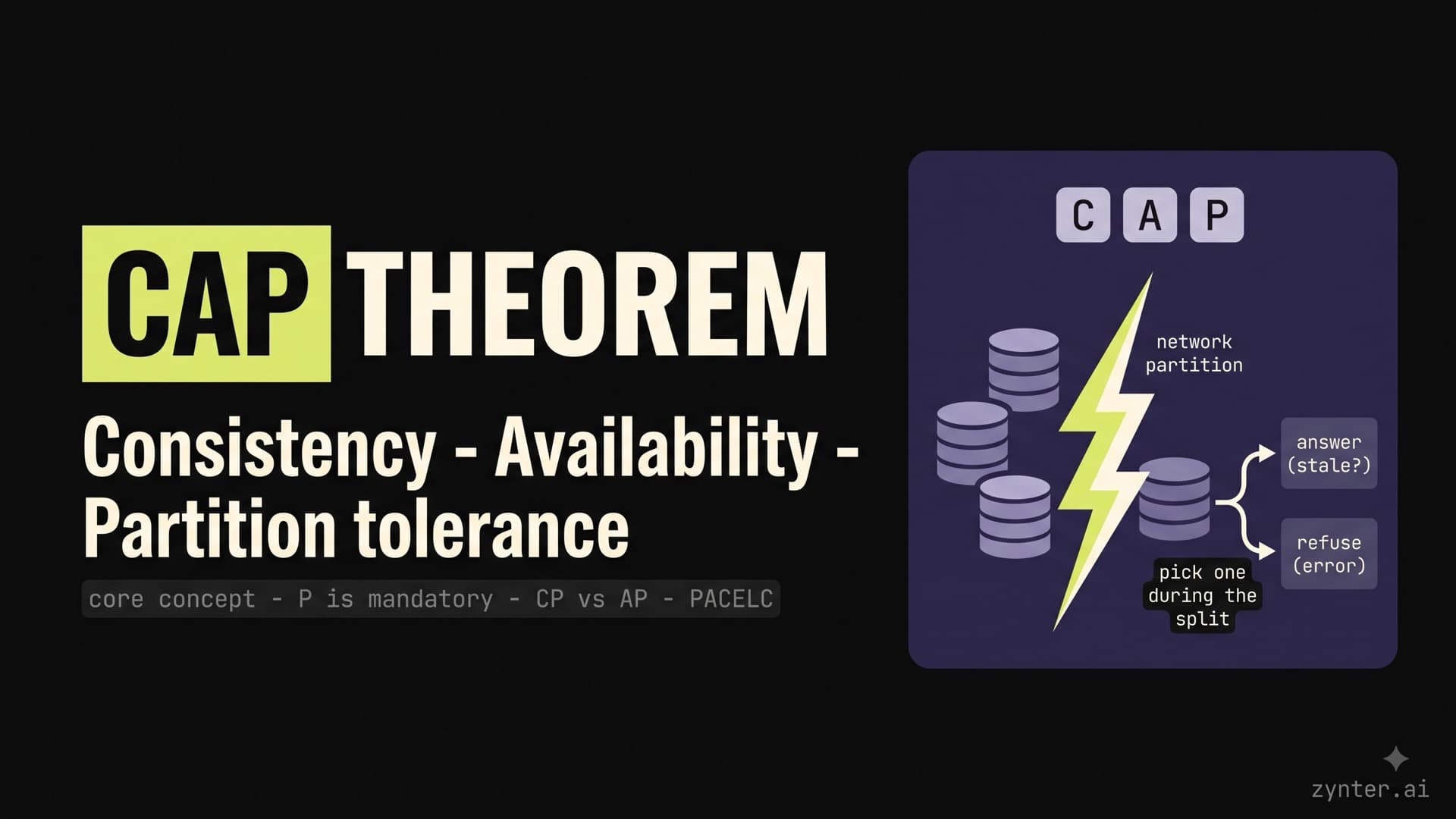
CAP Theorem Explained: Consistency, Availability & Partition Tolerance
The CAP theorem explained for system design interviews — what consistency, availability and partition tolerance actually mean (CAP's consistency is linearizability, not ACID), why you cannot have all three, and why the real choice is CP vs AP during a network partition because partition tolerance is not optional. Covers busting the \"pick two\" myth, how real databases classify, PACELC, and how to use CAP to justify a data-store choice out loud.
Gowtham PotureddiOct 19, 202614 min read
design system
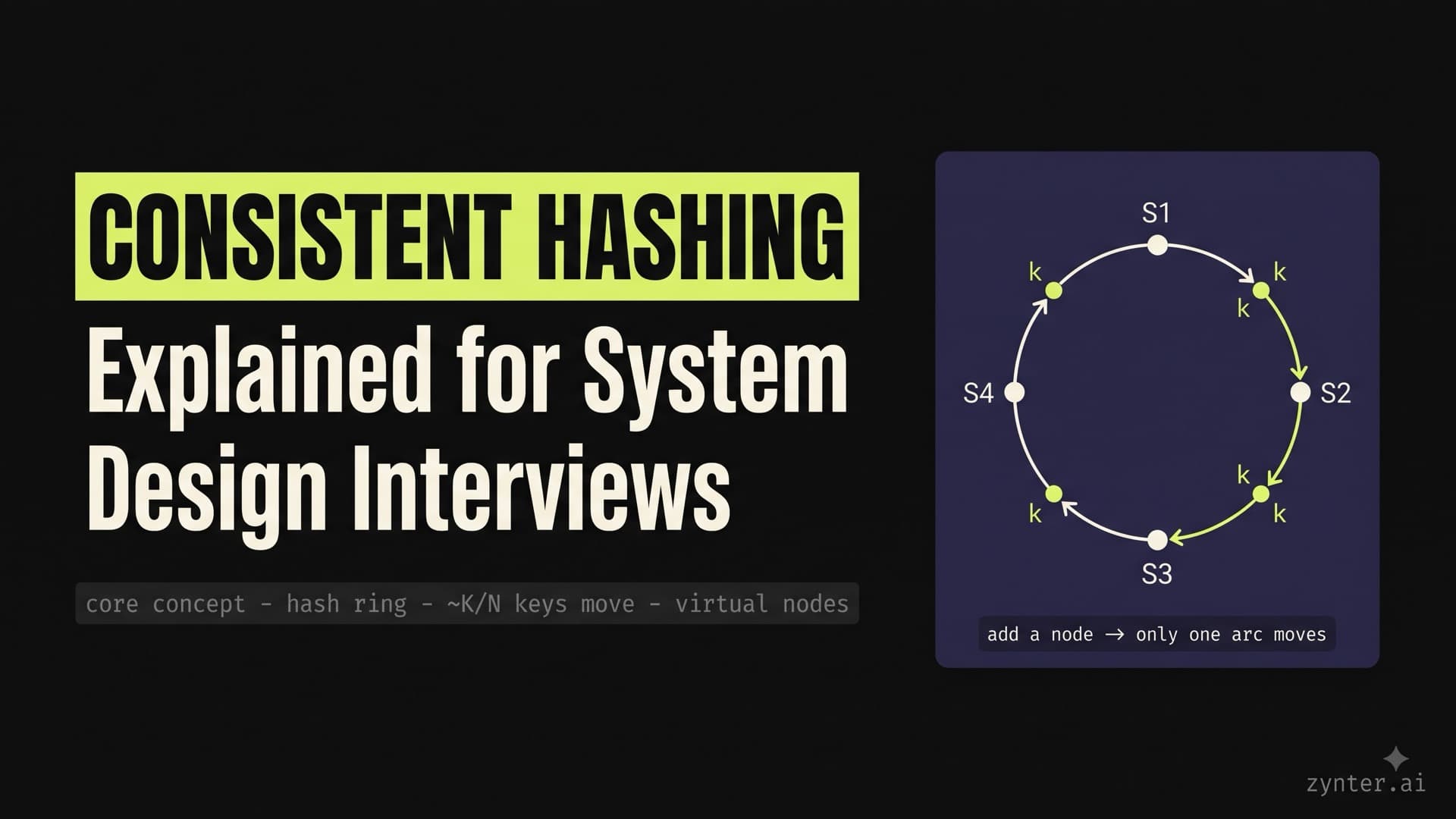
Consistent Hashing Explained for System Design Interviews
Consistent hashing explained for system design interviews: why hashing keys with hash(key) % N remaps almost every key the moment you add or remove a server, how the hash ring moves only about K/N keys on a membership change, and how virtual nodes keep the load balanced and shrink the blast radius when a node dies — plus where it shows up (Dynamo, Cassandra, distributed caches, CDNs) and how to explain it out loud under follow-ups.
Gowtham PotureddiOct 19, 202616 min read
design system
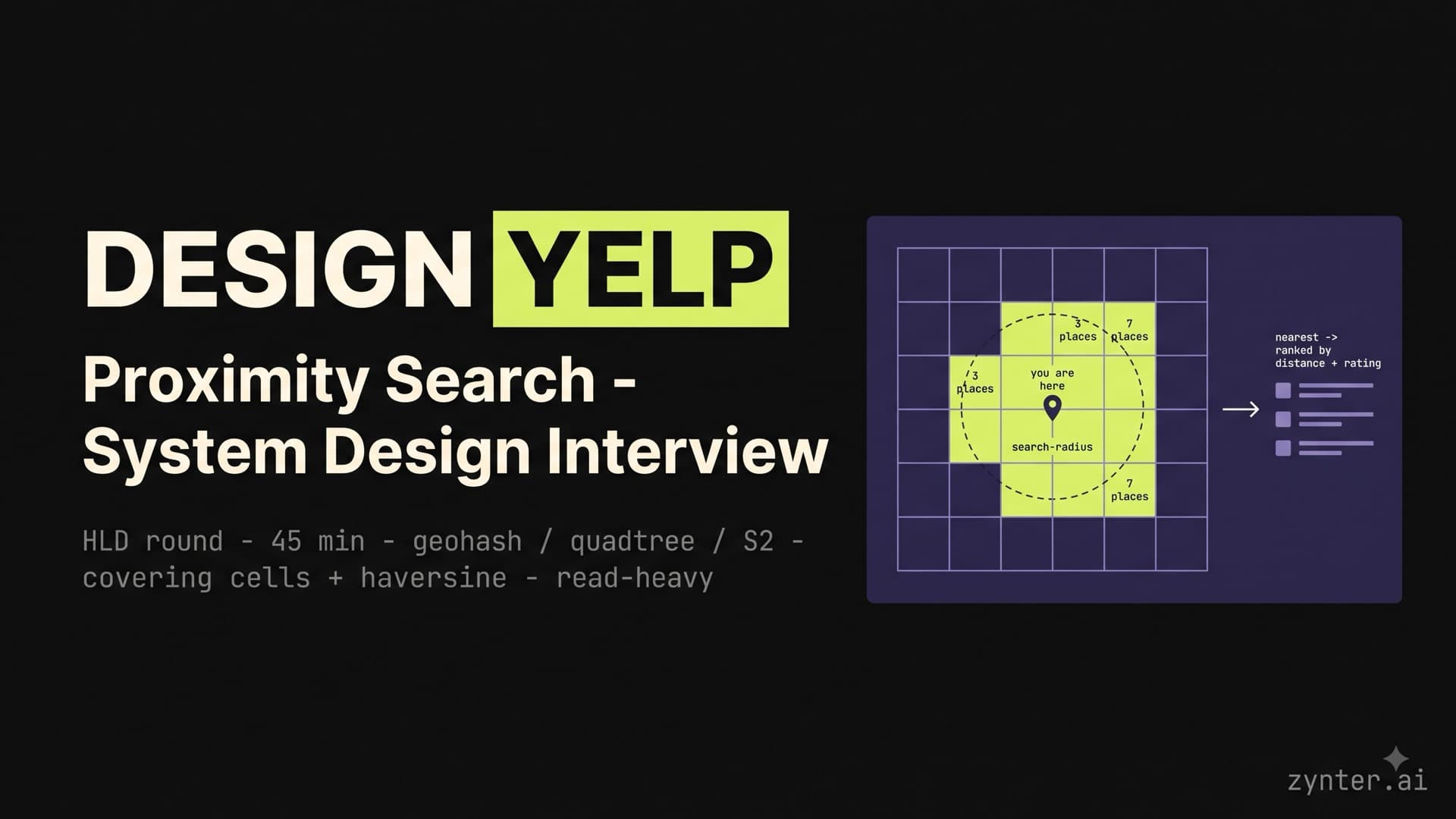
Design Yelp (Proximity Search): System Design Interview Question
How to design Yelp-style proximity search in a system design interview, the way the 45-minute \"find places near me\" round is actually run — requirements, estimation, architecture, and the deep dives that decide it: why nearby search is a geospatial range query you can't answer by scanning rows or a plain lat/long index, how geohash, quadtrees and Google S2 turn 2D proximity into a 1D cell key, and how covering cells, a haversine filter and uneven density are handled.
Gowtham PotureddiOct 19, 202624 min read
design system
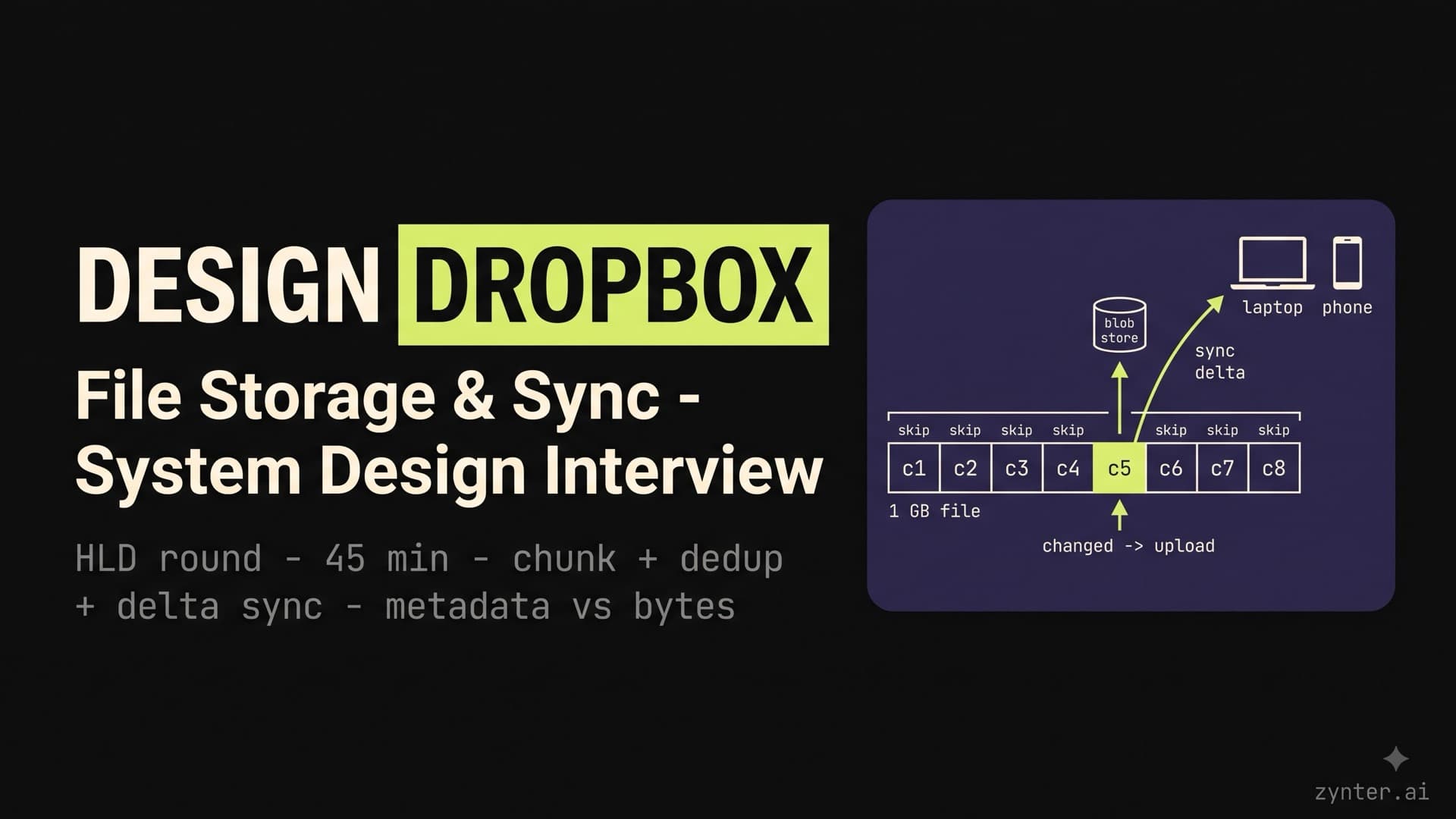
Design Dropbox (File Storage & Sync): System Design Interview
How to design Dropbox in a system design interview, the way the 45-minute file storage and sync round is actually run — requirements, estimation, the architecture, and the deep dives that decide it: why a file is an ordered list of content-addressed chunks, how chunking, dedup and delta sync move one chunk instead of a gigabyte, how a notification service makes a device pull only what it is missing, and how offline edits become a conflicted copy, not a silent overwrite.
Gowtham PotureddiOct 19, 202622 min read
design system
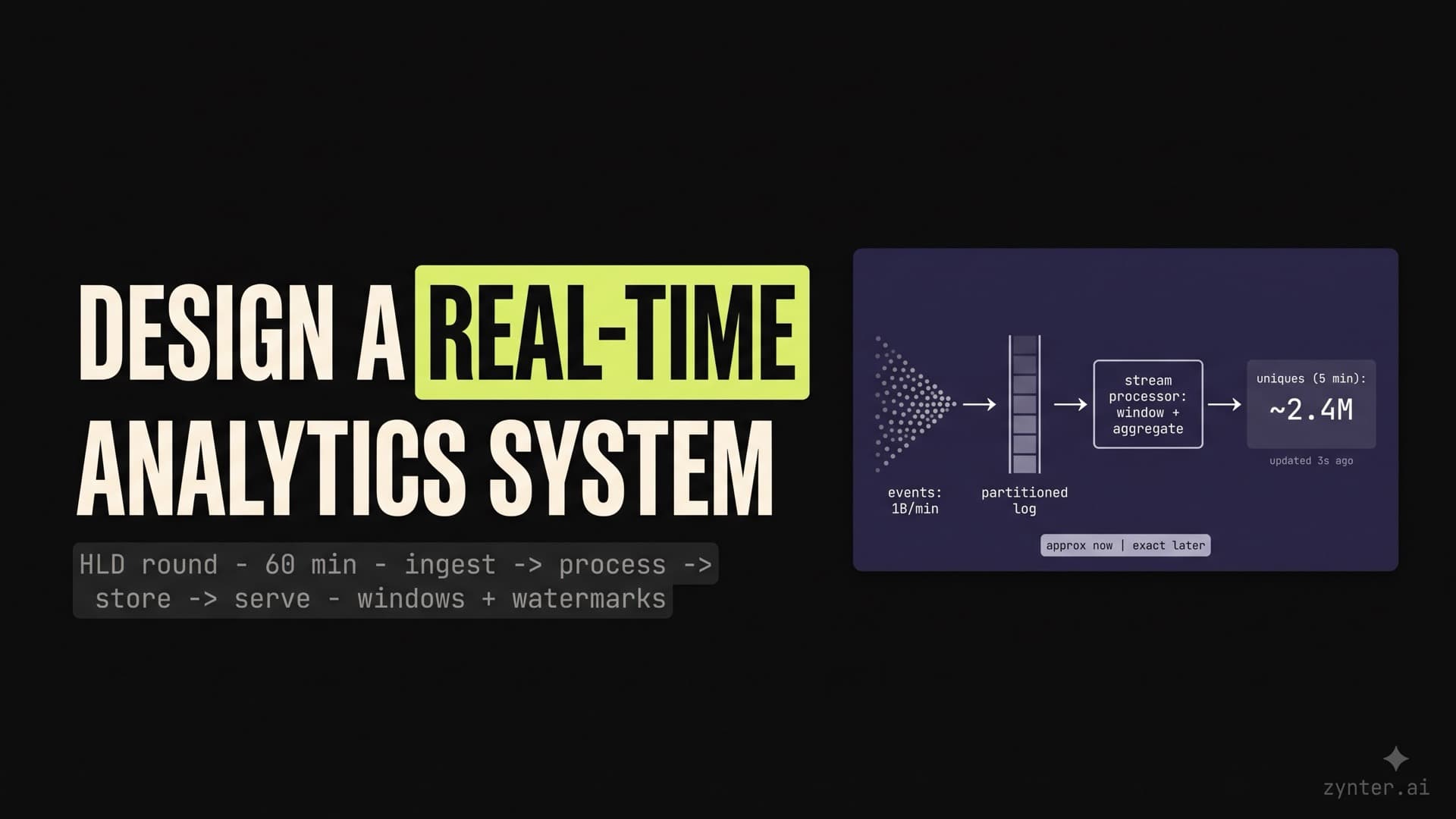
Design a Real-Time Analytics System: System Design Interview
How to design a real-time analytics system, the way the 60-minute system design round is actually run — requirements, estimation, the ingest-process-store-serve architecture, and the deep dives that decide it: how a partitioned Kafka log absorbs an event firehose, how a stream processor computes windowed aggregates over event time with watermarks and sketches like HyperLogLog, and how rollups in an OLAP store serve dashboards sub-second while lambda or kappa keeps the numbers right.
Gowtham PotureddiOct 19, 202623 min read
design system
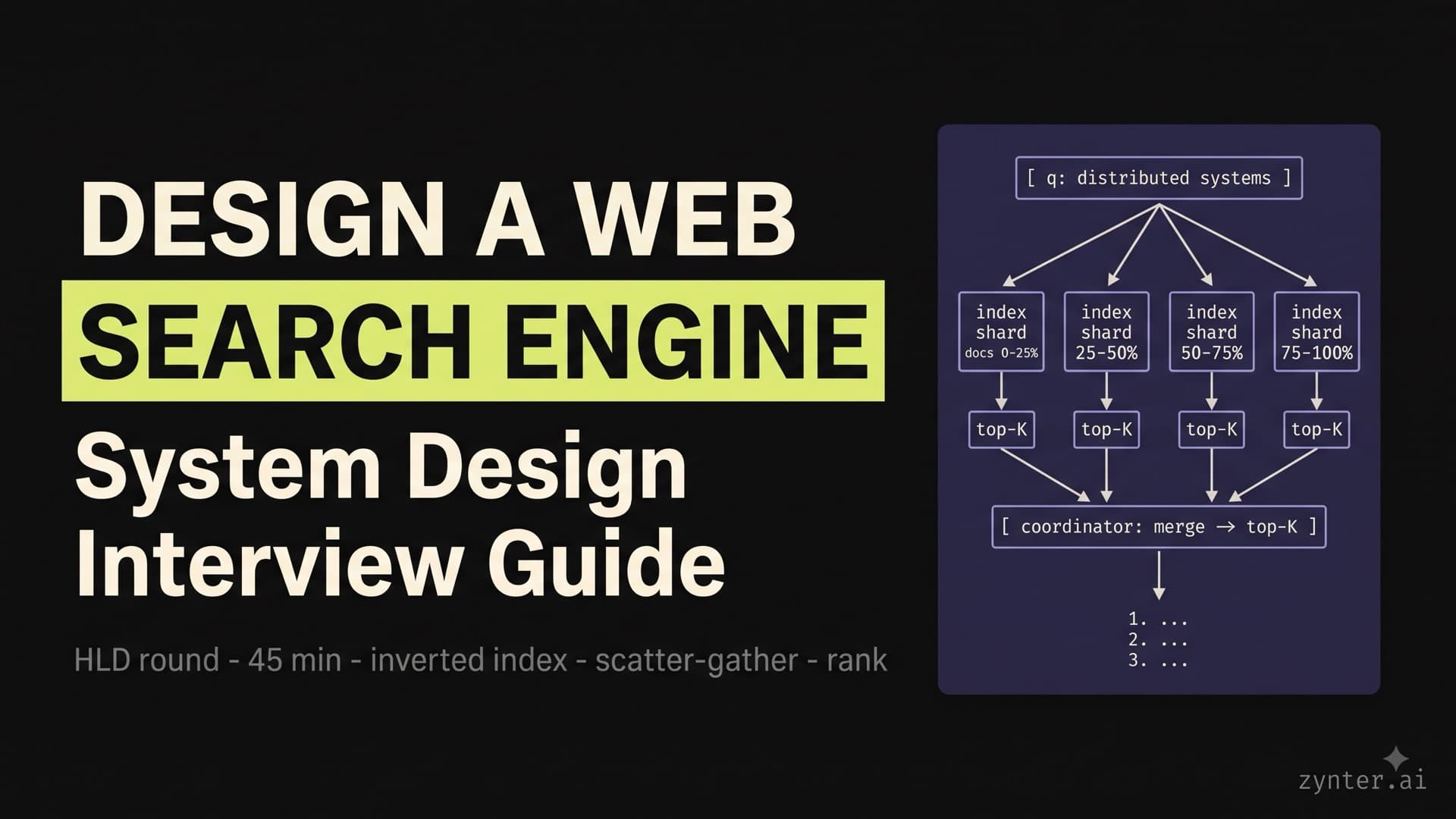
Design a Web Search Engine: System Design Interview Guide
How to design a web search engine in a system design interview, the way the 45-minute round is actually run — requirements, estimation, the indexing and query-serving architecture, and the deep dives that decide it: how an offline pipeline builds the inverted index, why a query over billions of documents is a document-sharded scatter-gather with per-shard top-K merged by a coordinator, why document sharding beats term sharding, and how TF-IDF, BM25 and link-authority signals rank the results.
Gowtham PotureddiOct 19, 202621 min read
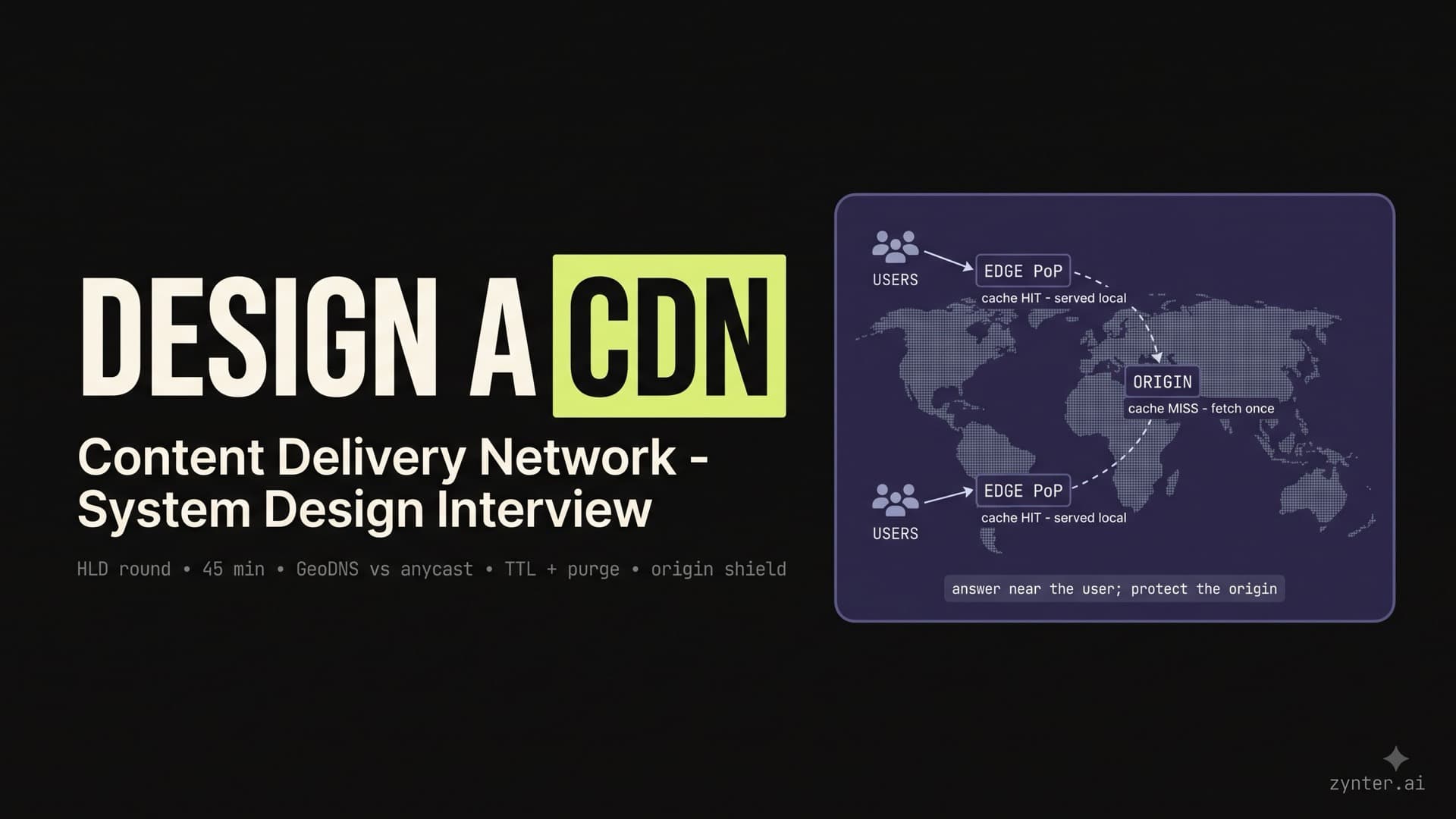
design system
Design a CDN: System Design Interview Question
How to design a CDN in a system design interview, the way the 45-minute content-delivery-network round is actually run — requirements, estimation, the edge-and-origin architecture, and the deep dives that decide it: how a client is routed to the nearest healthy edge with GeoDNS versus anycast, how cached objects stay fresh and are invalidated with TTLs, purges and versioned URLs, and how consistent hashing, request coalescing and an origin shield keep a viral spike from stampeding the origin.
Gowtham PotureddiOct 19, 202623 min read

design system
Design an Ad Click Aggregator: System Design Interview
How to design an ad click aggregator in a system design interview, the way the 45-minute round is actually run — requirements, estimation, the ingest-aggregate-query architecture, and the deep dives that decide it: why clicks are a scaling-writes firehose you buffer in a Kafka-style log, how a stream processor aggregates them over event-time windows into an OLAP store, and why a batch reconciliation layer (the lambda architecture) plus idempotency keep the counts accurate enough to bill on.
Gowtham PotureddiOct 18, 202622 min read
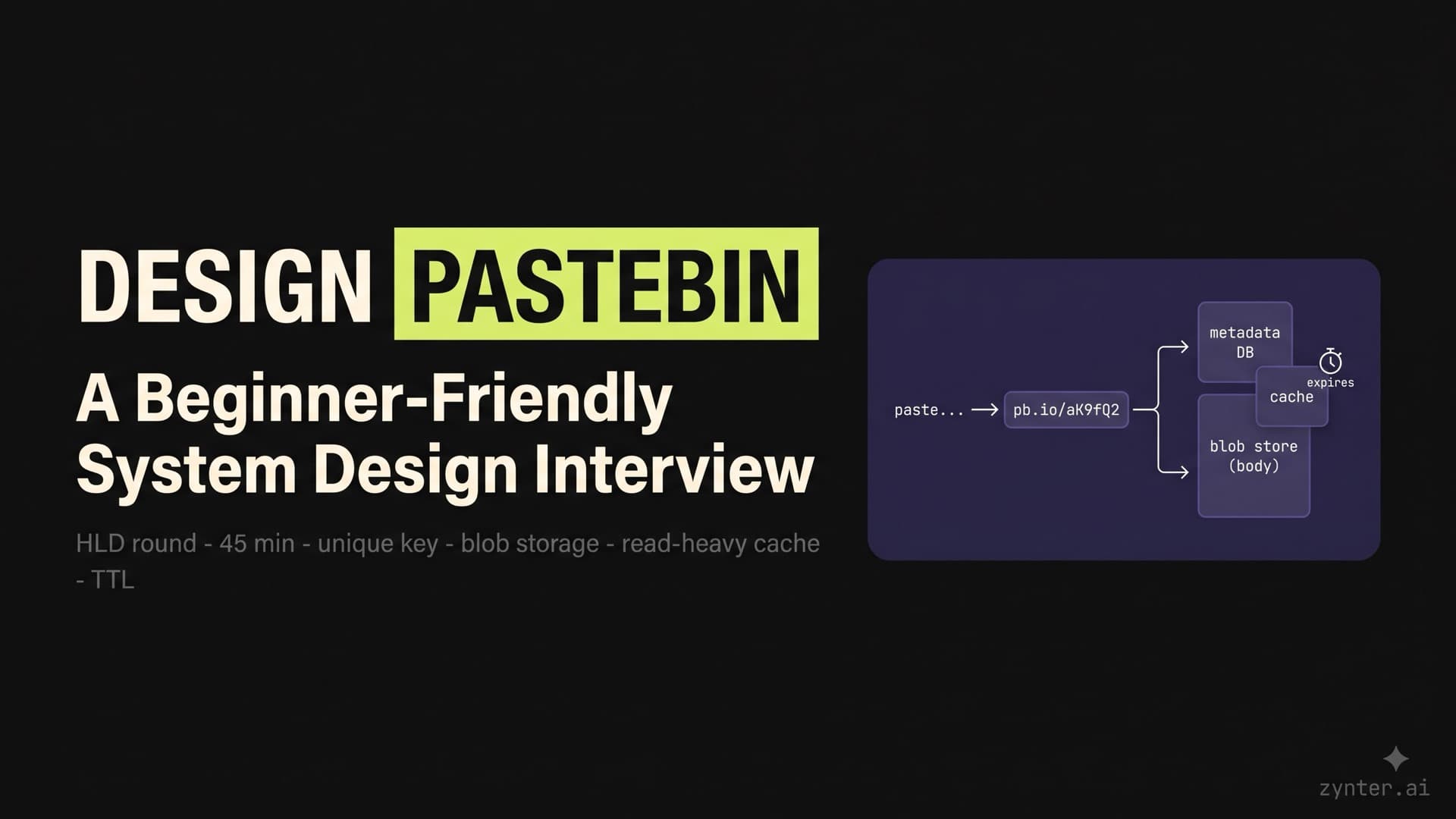
design system
Design Pastebin: A Beginner-Friendly System Design Interview Question
How to design Pastebin in a system design interview — the beginner-friendly 45-minute round run step by step: requirements, estimation, the write-and-read architecture, and the deep dives that decide it: how to generate a short unique key for each paste, why the large text body lives in blob storage separate from the metadata database and is served read-heavy through a cache and CDN, and how paste expiration and TTL cleanup keep the system small and cheap.
Gowtham PotureddiOct 18, 202620 min read
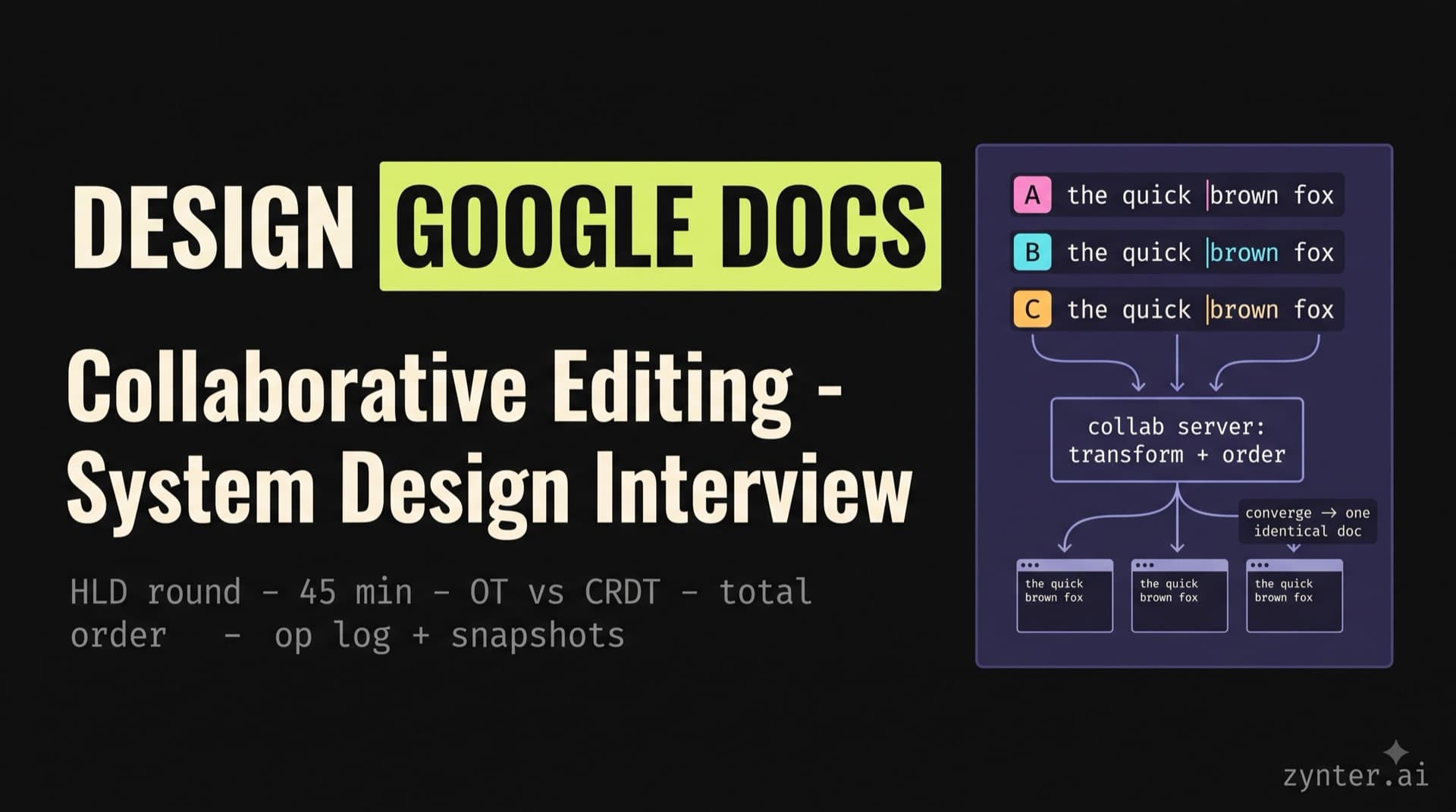
design system
Design Google Docs: Collaborative Editing System Design Interview
How to design Google Docs in a system design interview, the way the 45-minute collaborative-editing round is actually run — requirements, estimation, the collaboration-server architecture, and the deep dives that decide it: why concurrent edits are a convergence problem last-write-wins can't solve, how Operational Transformation and CRDTs make conflicts invisible, how a per-document server assigns a total order over websockets, and how an op log plus snapshots handle storage and reconnection.
Gowtham PotureddiOct 16, 202622 min read
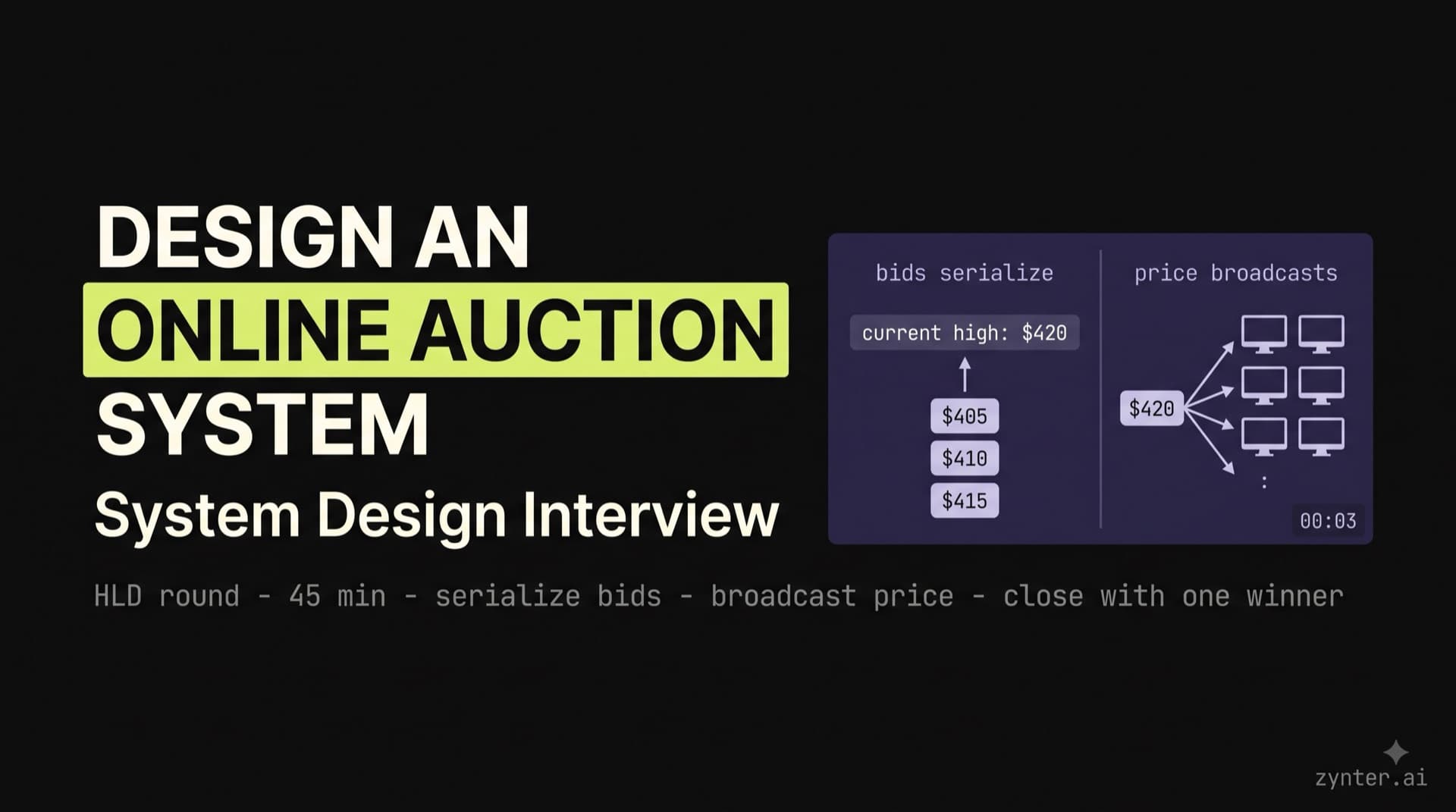
design system
Design an Online Auction System (eBay): System Design Interview
How to design an online auction system like eBay in a system design interview, the way the 45-minute round is actually run — requirements, estimation, the bid-broadcast-close architecture, and the deep dives that decide it: why the same item pulls two opposite ways, so bids must serialize against the current high with a compare-and-set while the price broadcasts to thousands over websockets, and how the close stays authoritative, idempotent and anti-sniping to pick exactly one winner.
Gowtham PotureddiOct 16, 202623 min read
design system
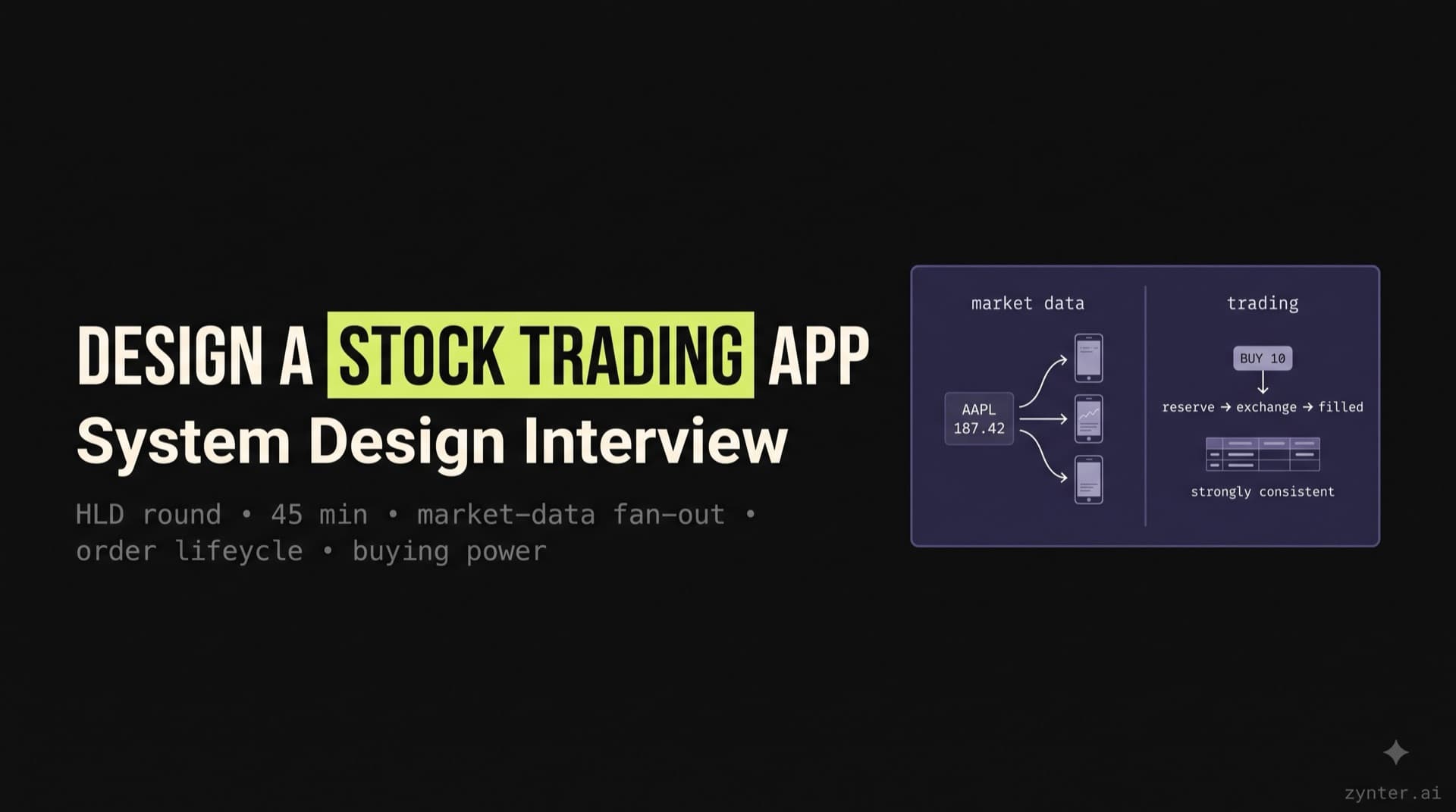
Design a Stock Trading App (Robinhood): System Design Interview
How to design a stock trading app like Robinhood in a system design interview, the way the 45-minute round is actually run — requirements, estimation, the market-data-and-trading architecture, and the deep dives that decide it: why it splits fast real-time market data from a strongly consistent trading path, how live quotes fan out to millions over pub-sub and websockets, why Robinhood is a brokerage that routes orders to an external exchange, and how buying power stays exactly-once on a ledger.
Gowtham PotureddiOct 16, 202622 min read
design system
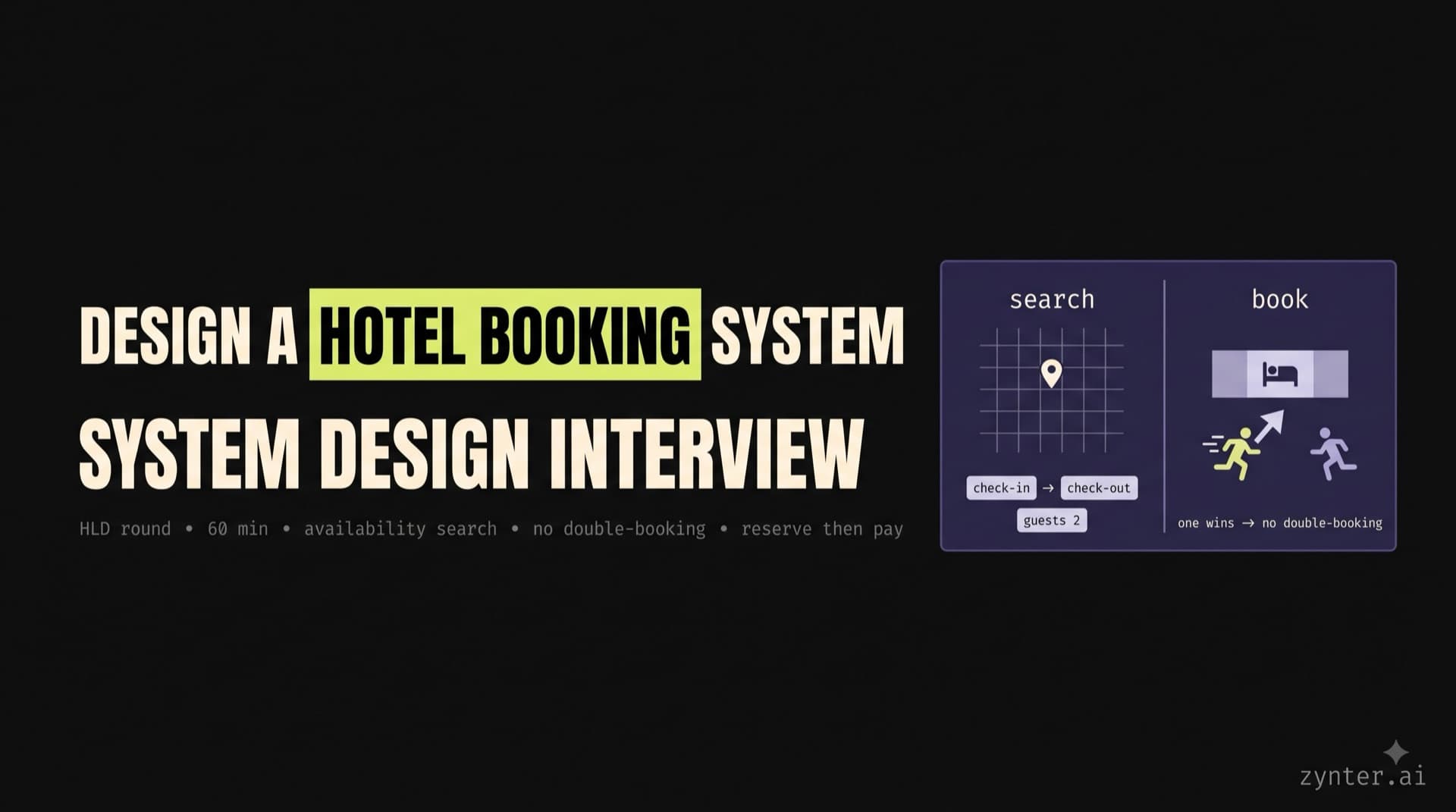
Design a Hotel Booking System (Airbnb): System Design Interview
How to design a hotel booking system like Airbnb in a system design interview, the way the 60-minute round is actually run — requirements, estimation, the search-and-booking architecture, and the deep dives that decide it: why it splits into a fast availability search and a strongly consistent booking core, how search finds rooms free for a date range off a replicated index, and how an atomic check-then-reserve with locking, idempotency keys and TTL holds stops double-booking.
Gowtham PotureddiOct 16, 202623 min read
design system
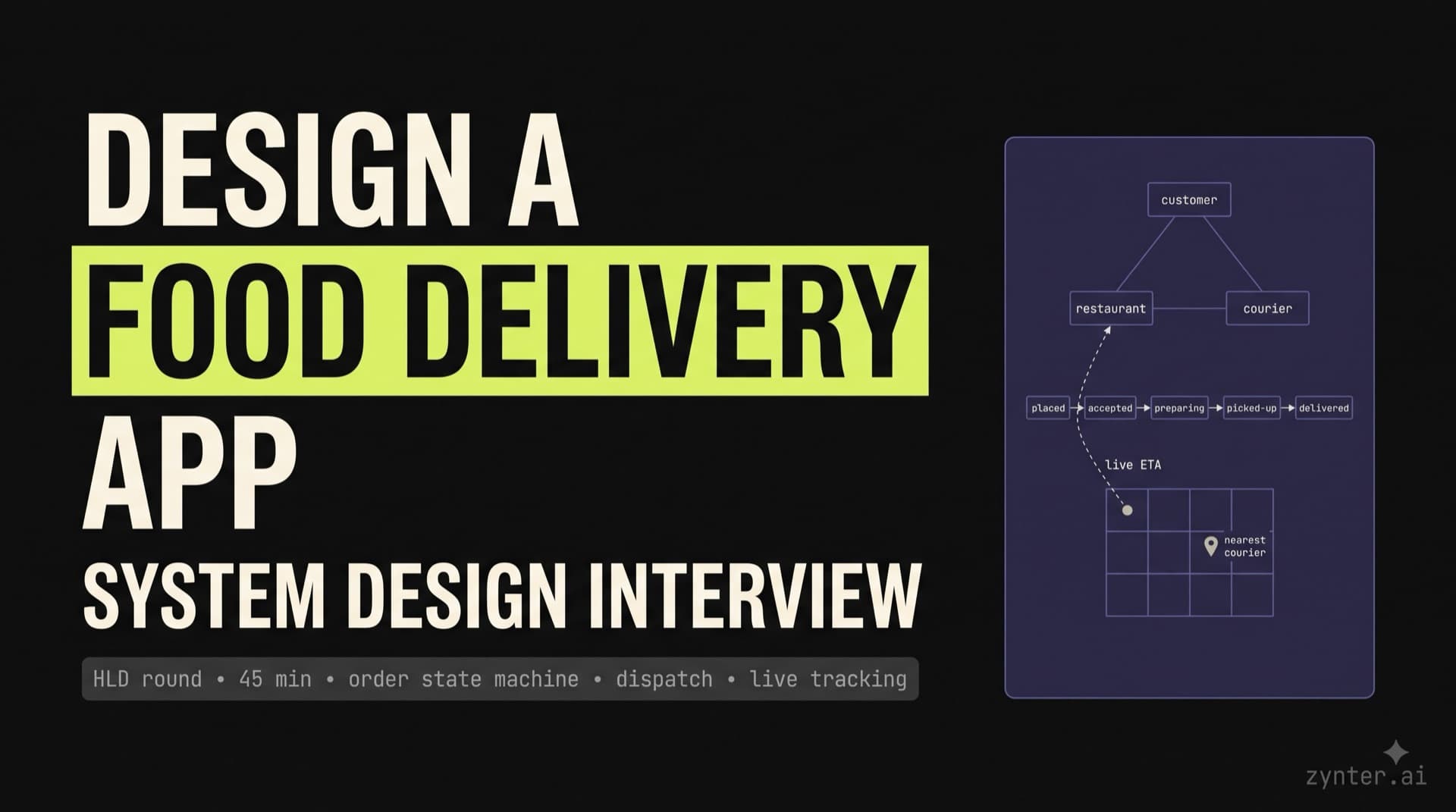
Design a Food Delivery App (DoorDash): System Design Interview
ow to design a food delivery app like DoorDash in a system design interview, the way the 45-minute messaging round is actually run — requirements, capacity estimation, the orders-dispatch-location architecture, and the deep dives that decide it: why it is a three-sided real-time system built on an order state machine, how courier matching uses a geospatial index to find the nearest driver, and how live location tracking streams GPS pings over pub-sub and websockets off the order database.
Gowtham PotureddiOct 16, 202621 min read
design system
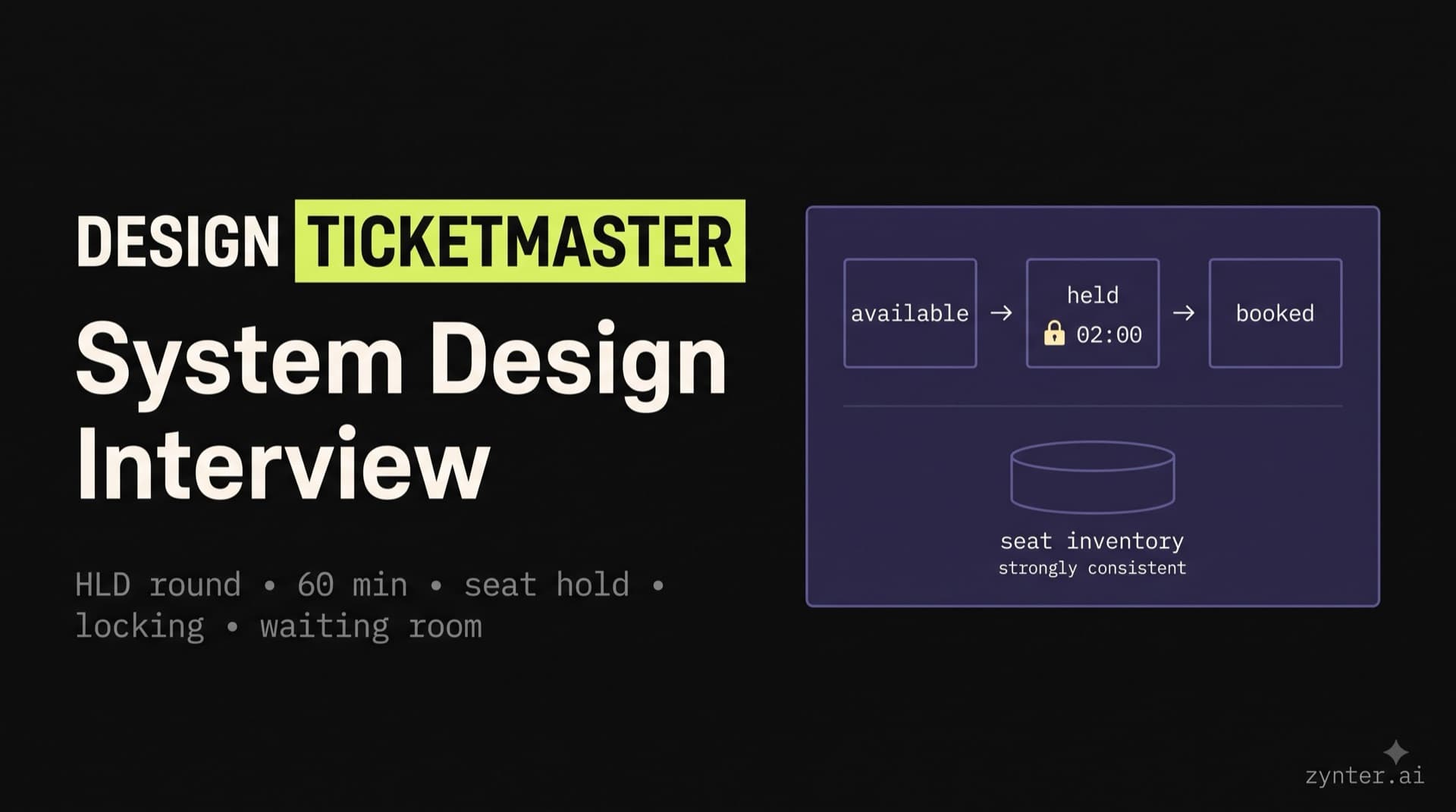
Design Ticketmaster: System Design Interview Walkthrough
How to design Ticketmaster in a system design interview, the way the 60-minute ticket booking round is actually run — requirements, capacity estimation, the read/write-split architecture, and the deep dives that decide it: why selling a finite set of seats to a flash-crowd is a concurrency problem, how seat holds and locking stop double-booking, how a virtual waiting room survives the thundering herd, and how idempotent payment with an expiry sweeper keeps bookings consistent.
Gowtham PotureddiOct 16, 202620 min read
design system
Design a Leaderboard and Top-K: System Design Interview Guide
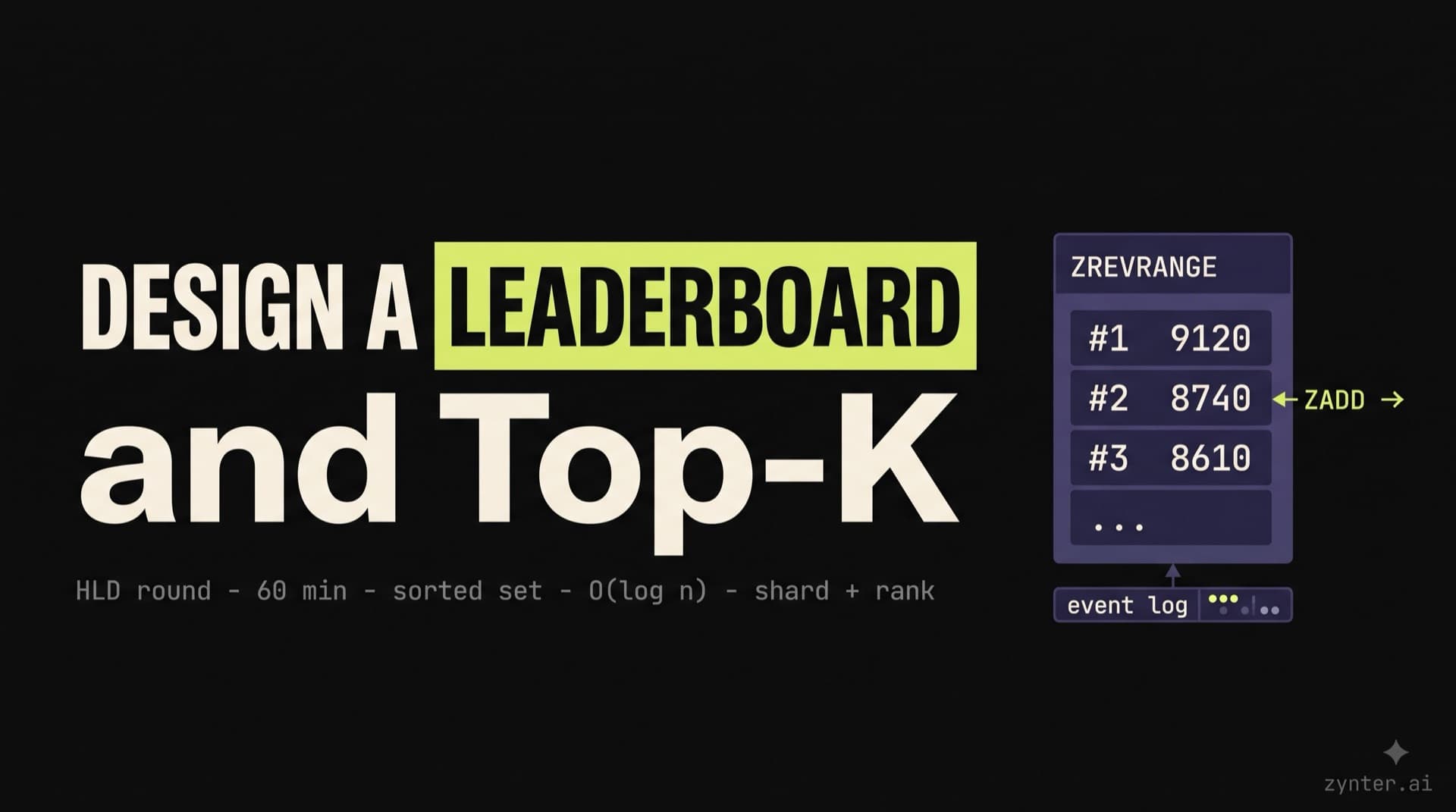
How to design a leaderboard and top-K in a system design interview, the way the 60-minute Amazon round is actually run — requirements, capacity estimation, the sorted-set architecture, and the deep dives that decide it: why a live leaderboard is a sorted-state-at-scale problem solved by a sorted set (Redis ZSET), how sharding turns top-K into a scatter-gather while exact global rank gets hard, and how a durable event log plus time-windowed keys keep the board correct and rebuildable.
Gowtham PotureddiOct 16, 202620 min read
design system
Design Google Maps: System Design Interview Question
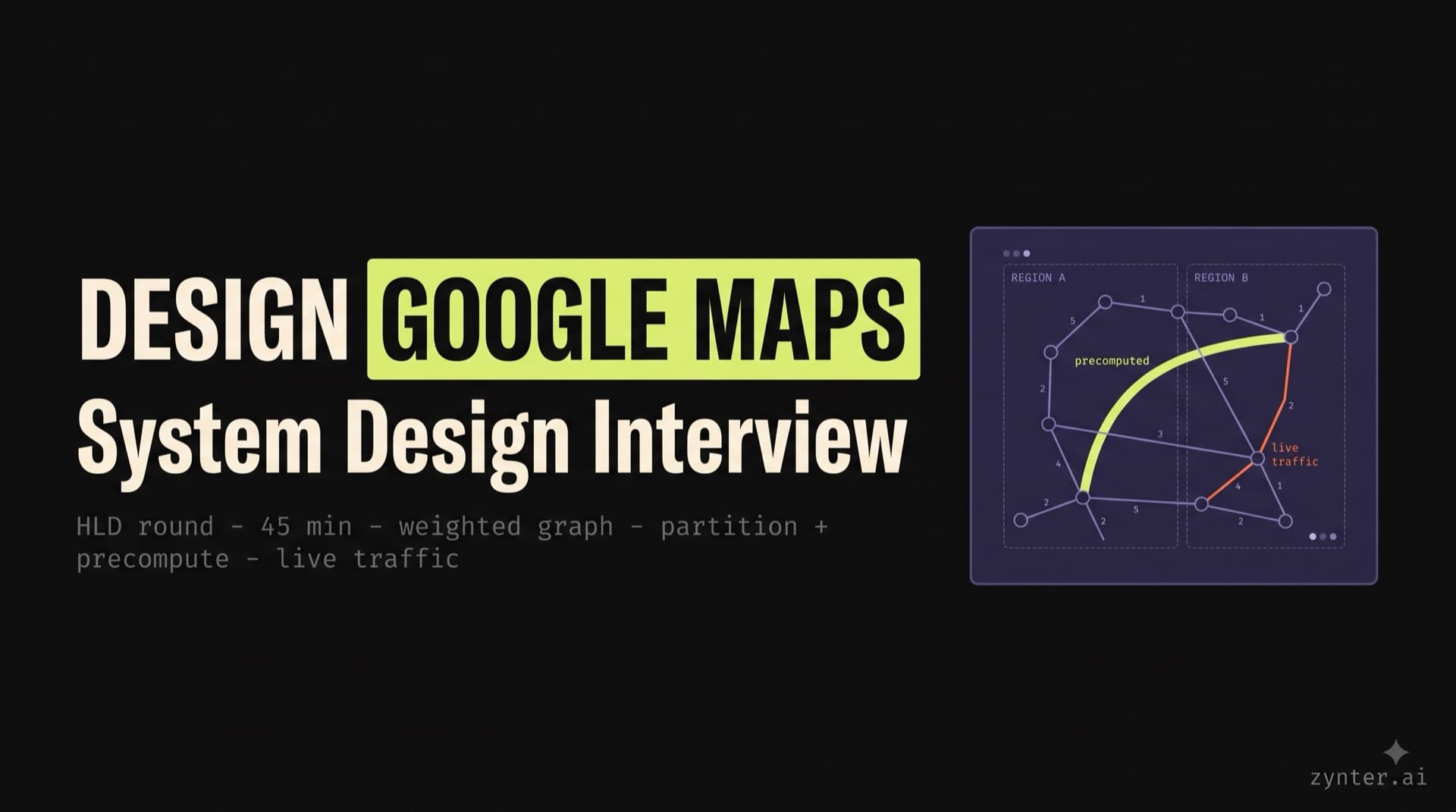
How to design Google Maps in a system design interview, the way the 45-minute navigation round is actually run — requirements, capacity estimation, the routing-traffic-tiles architecture, and the deep dives that decide it: why the road network is a weighted graph indexed spatially, why naive Dijkstra is too slow globally so you partition and precompute, and how live GPS pings map-match to segments and feed back as dynamic edge weights that reshape routes and ETAs in near real time.
Gowtham PotureddiOct 16, 202620 min read
design system
Design a Recommendation System: ML System Design Interview
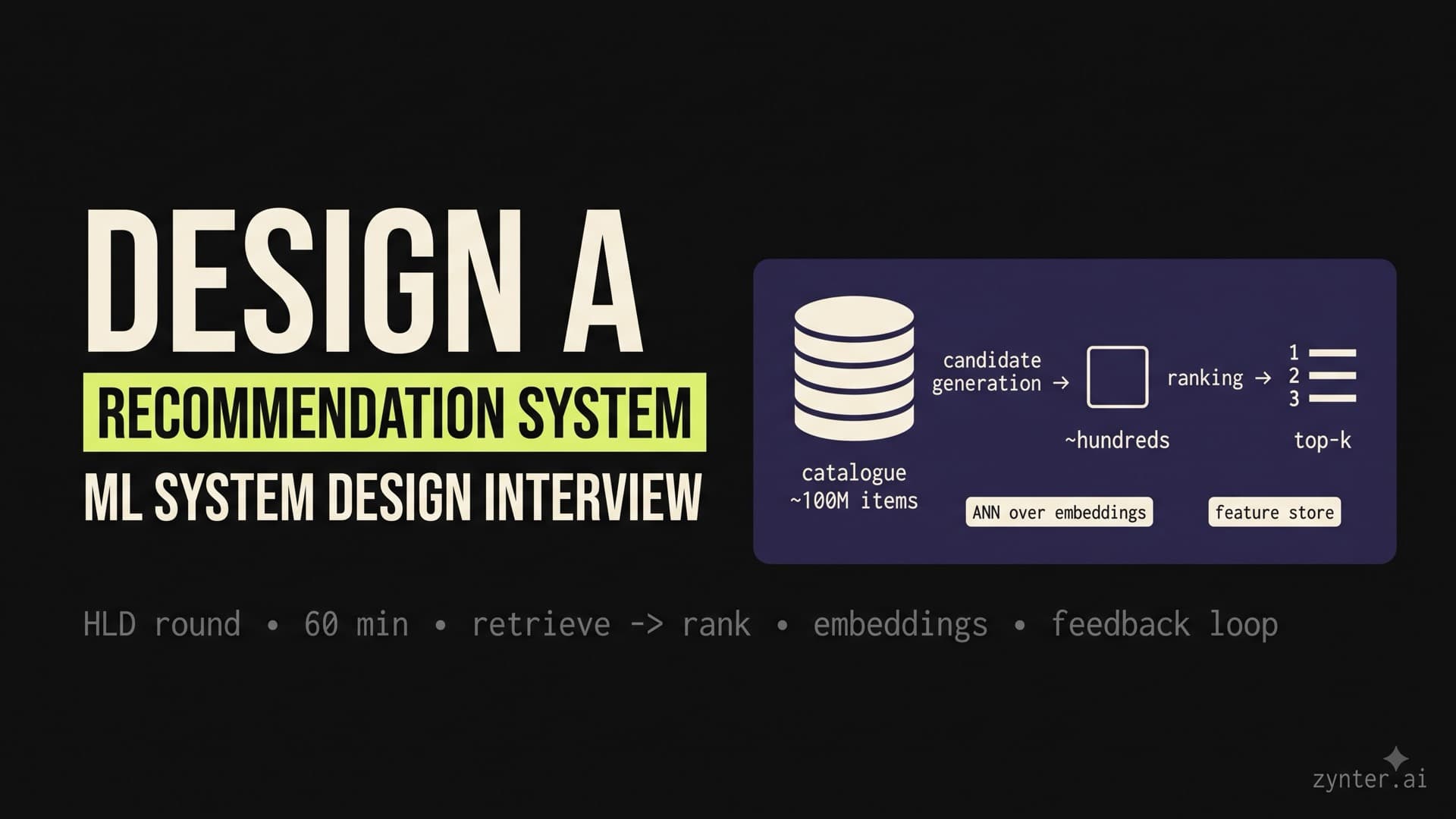
How to design a recommendation system in an ML system design interview, the way the 60-minute Netflix round is actually run — requirements, capacity estimation, the two-stage architecture, and the deep dives that decide it: why you cannot score millions of items per request, so it splits into candidate generation and a ranking model, how embeddings and an ANN index retrieve candidates, a feature store and logged outcomes feed ranking, and the feedback loop and cold start keep it learning.
Gowtham PotureddiOct 15, 202620 min read
design system
Design Amazon S3 (Object Storage): System Design Interview
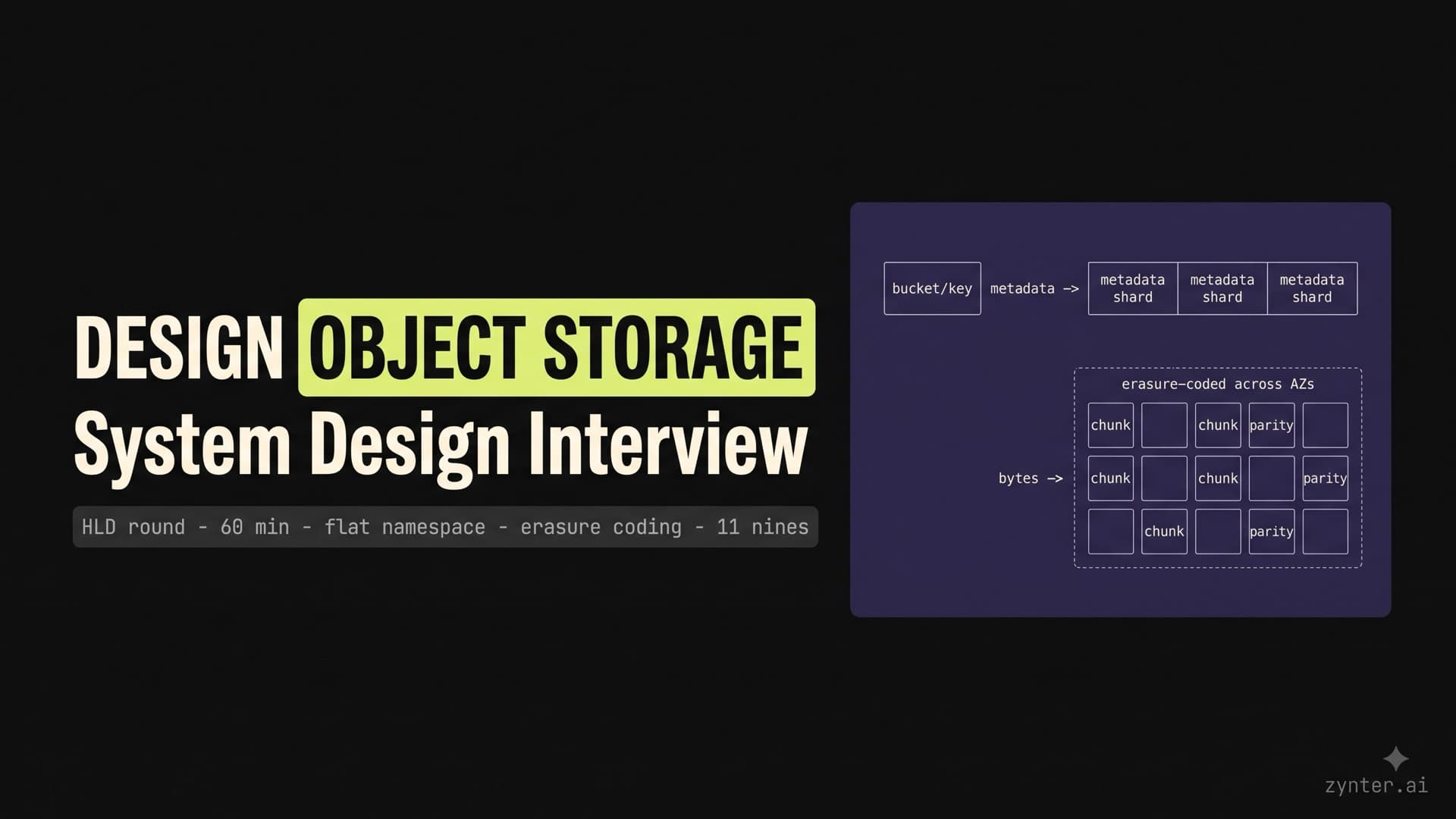
How to design object storage like Amazon S3 in a system design interview, the way the 60-minute storage round is actually run — requirements, capacity estimation, the metadata-plus-data-plane architecture, and the deep dives that decide it: why a bucket is a flat key-to-object map served by a sharded metadata service, how erasure coding reaches eleven nines of durability more cheaply than replication, and how multipart upload and immutable objects give strong read-after-write consistency.
Gowtham PotureddiOct 15, 202620 min read
design system
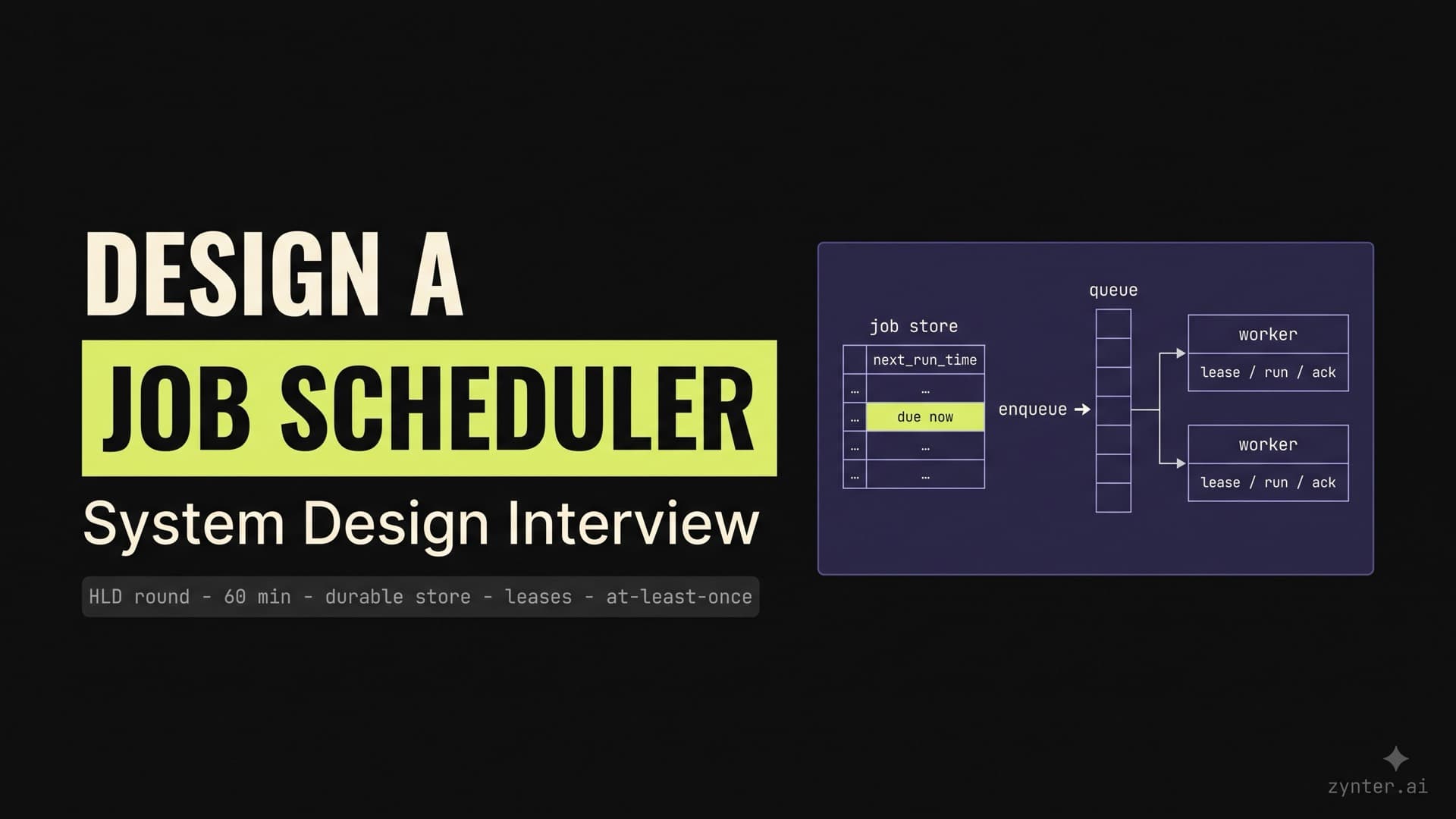
Design a Distributed Job Scheduler: System Design Interview
How to design a distributed job scheduler in a system design interview, the way the 60-minute infrastructure round is actually run — requirements, capacity estimation, the scheduler-queue-workers architecture, and the deep dives that decide it: why a durable job store indexed by next_run_time fires jobs on time, how leases and visibility timeouts give at-least-once execution with idempotent jobs, and how leader election or sharding stops three scheduler nodes firing one job three times.
Gowtham PotureddiOct 15, 202620 min read
design system
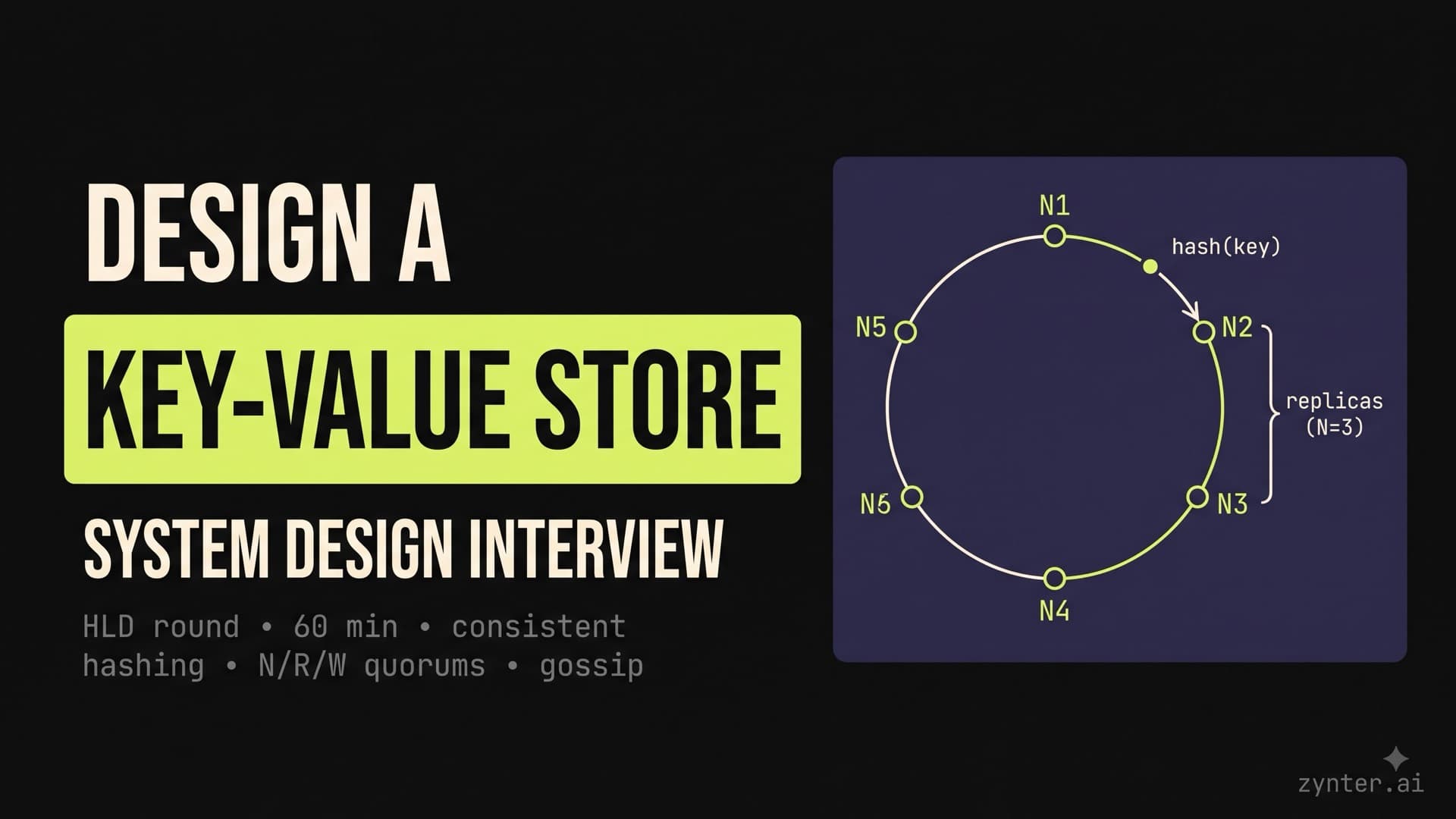
Design a Key-Value Store: System Design Interview Walkthrough
How to design a key-value store in a system design interview, the way the 60-minute storage round is actually run — requirements, capacity estimation, the consistent-hashing ring architecture, and the deep dives that decide it: how partitioning with virtual nodes shards keys across machines, how N/R/W quorums tune consistency against availability, and how gossip, hinted handoff and Merkle trees keep replicas in sync and let the system survive a node dying.
Gowtham PotureddiOct 15, 202620 min read
design system
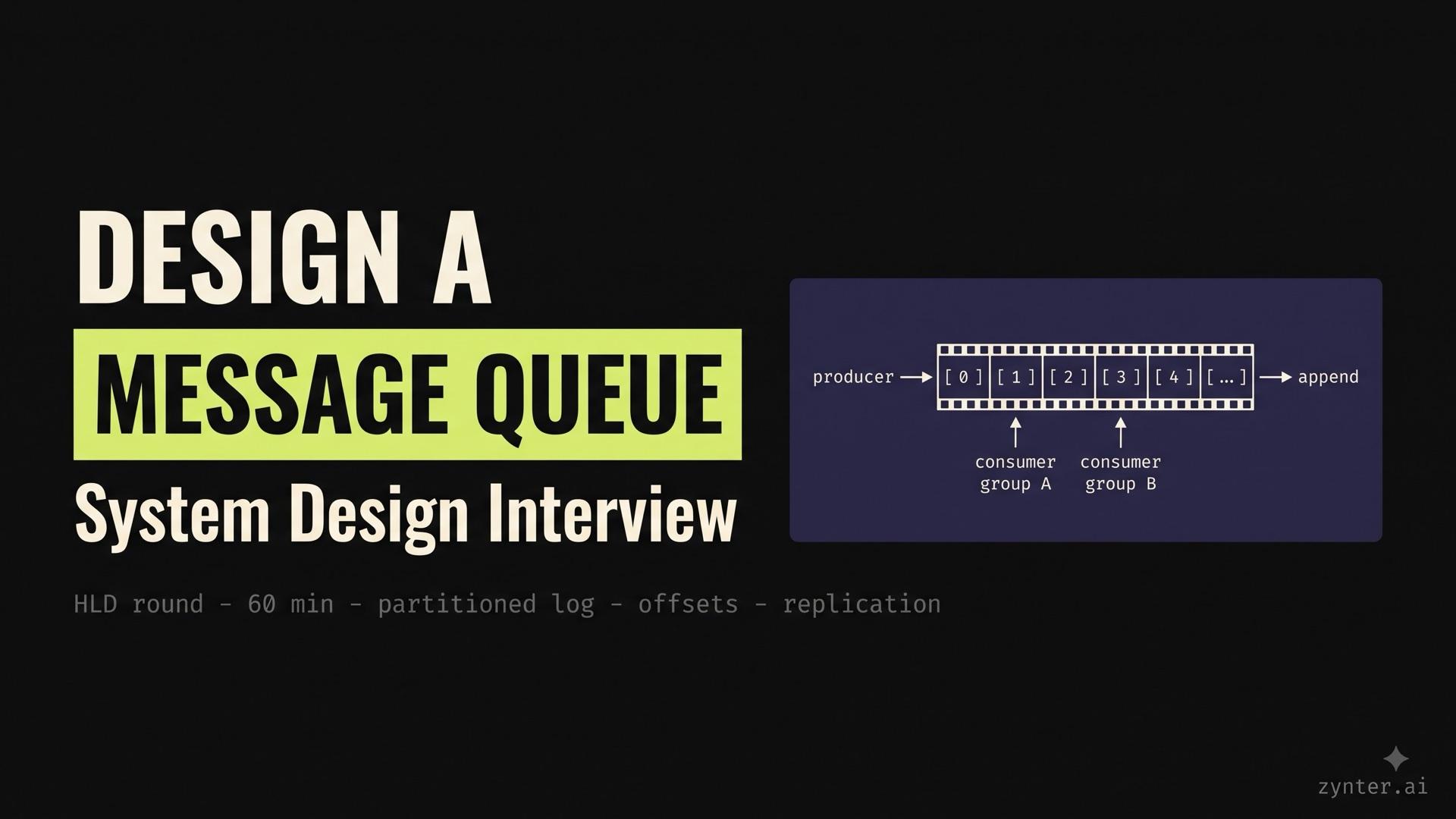
Design a Distributed Message Queue: System Design Interview
How to design a distributed message queue in a system design interview, the way the 60-minute messaging round is actually run — requirements, capacity estimation, the partitioned-log architecture, and the deep dives that decide it: why the system is an append-only log split into partitions, how consumer groups and offsets let readers consume independently, delivery semantics from at-least-once to exactly-once, and how replication with ISR and acks survives a broker crash.
Gowtham PotureddiOct 10, 202617 min read
design system
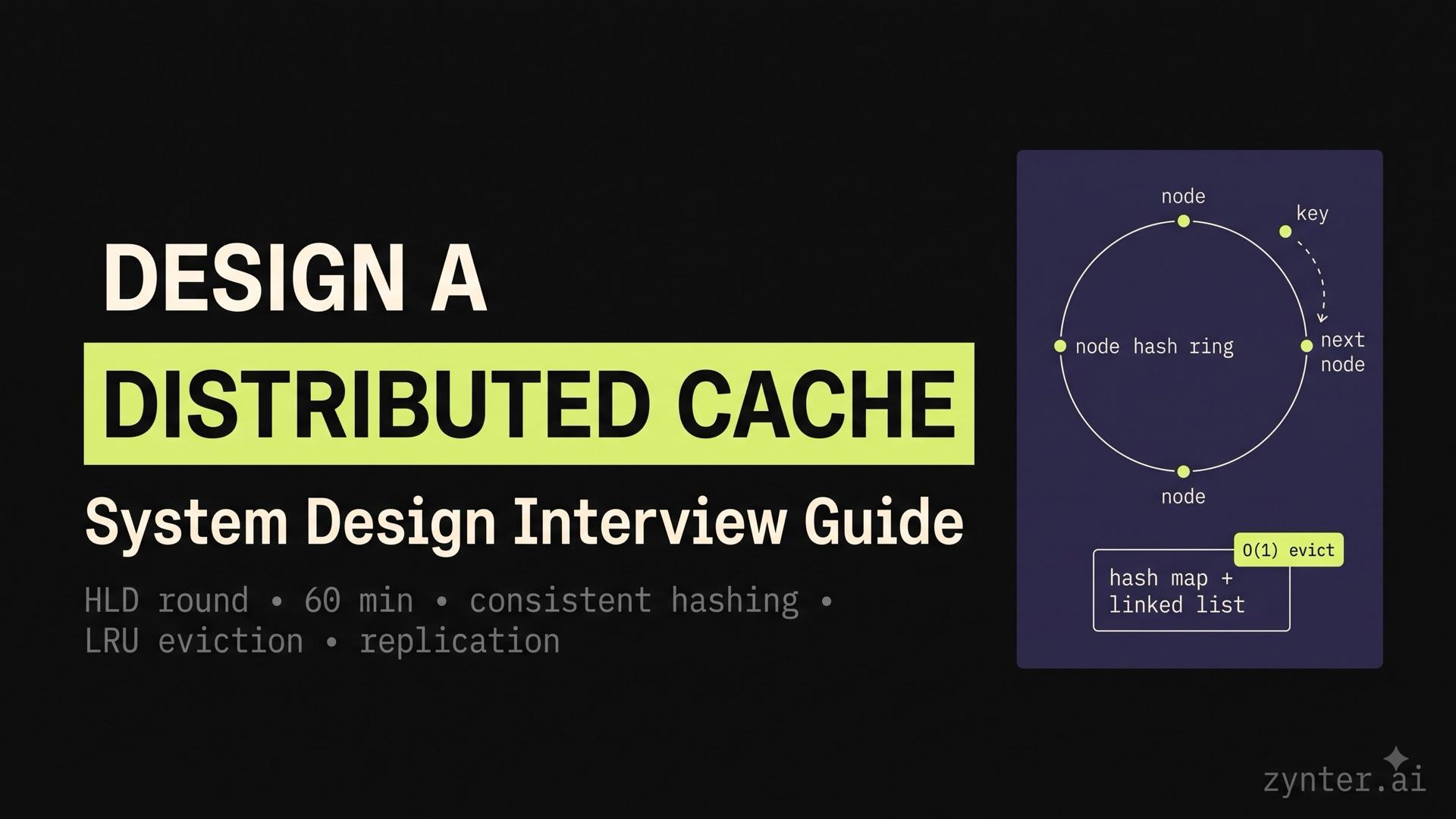
Design a Distributed Cache: System Design Interview Guide
How to design a distributed cache in a system design interview, the way the 60-minute infrastructure round is run — requirements, capacity estimation, the architecture, and the deep dives that decide it: how one node gets O(1) get, put, and eviction from a hash map plus a linked list, how consistent hashing spreads keys so a node join or leave moves only one arc of the ring, and how replication and write patterns trade consistency for availability.
Gowtham PotureddiOct 10, 202619 min read
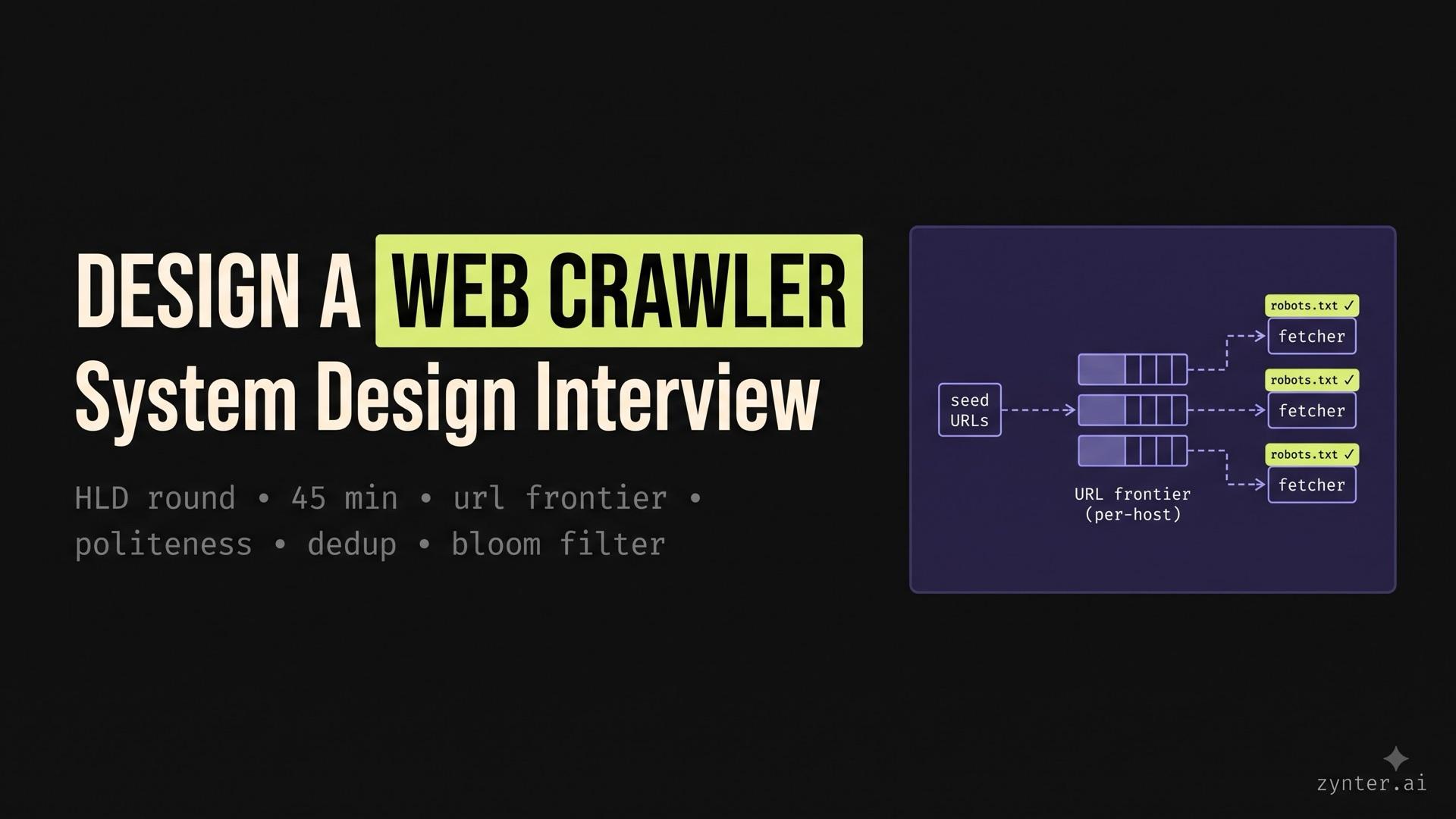
Design a Web Crawler: System Design Interview Question
How to design a web crawler in a system design interview, the way the 45-minute round is actually run — requirements, capacity estimation, the crawl-loop architecture, and the deep dives that decide it: how the URL frontier encodes priority and politeness with front and back queues, how robots.txt, crawl-delay and a seen-URL bloom filter stop re-crawling, and how distributed fetchers and DNS caching close the loop. Built around the follow-ups an interviewer pushes, not a static write-up.
Gowtham PotureddiOct 10, 202618 min read
design system
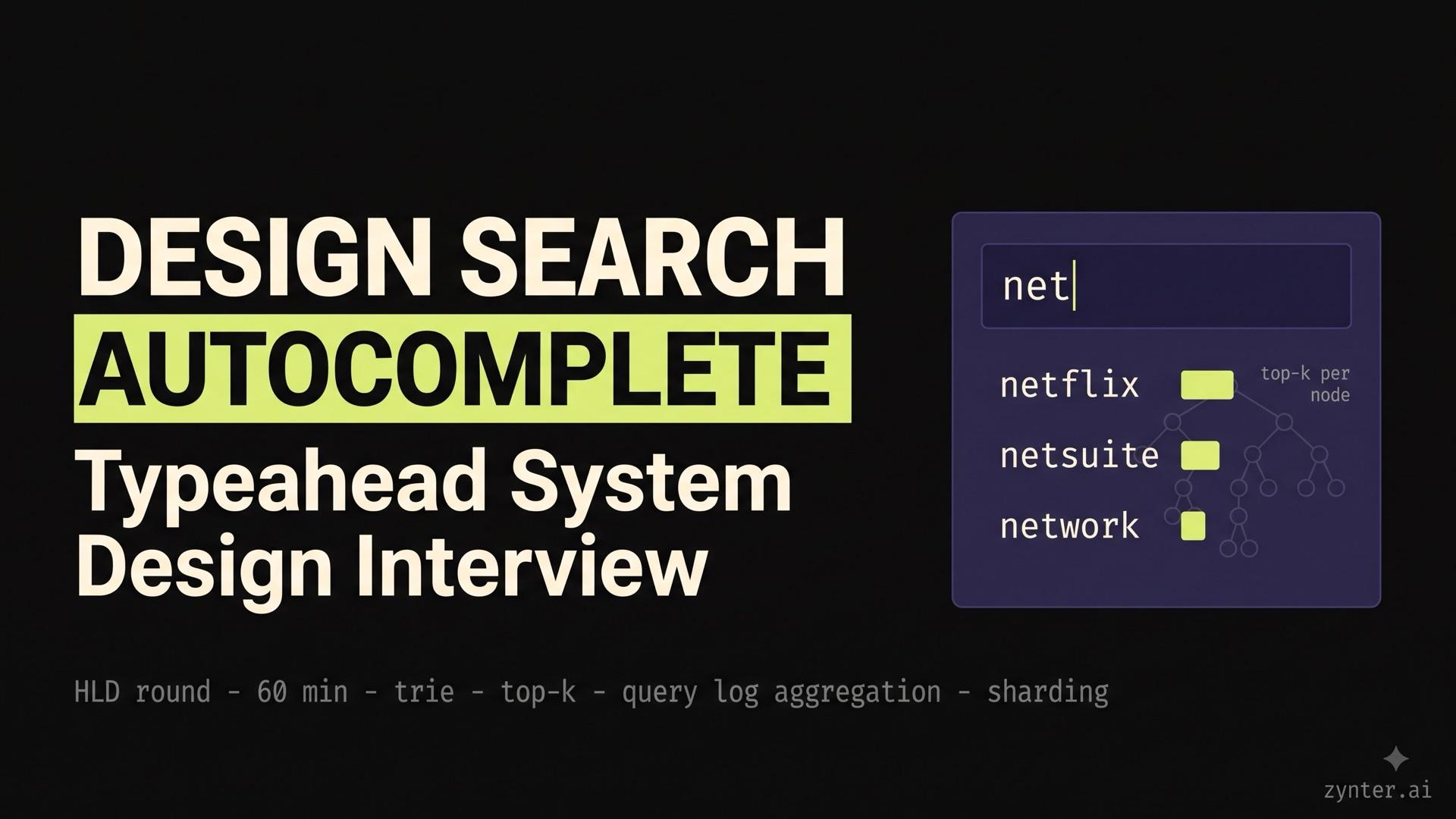
Design Search Autocomplete (Typeahead): System Design Interview
How to design search autocomplete (typeahead) in a system design interview, the way the 60-minute round is actually run — requirements, capacity estimation, the read-optimised trie architecture, and the deep dives that decide it: why you precompute the top-k completions at every trie node, how an offline pipeline aggregates query logs to rebuild the trie, and how you shard and replicate it to serve ranked prefix matches fast at huge read QPS. Built around the follow-ups an interviewer pushes.
Gowtham PotureddiOct 10, 202618 min read
design system
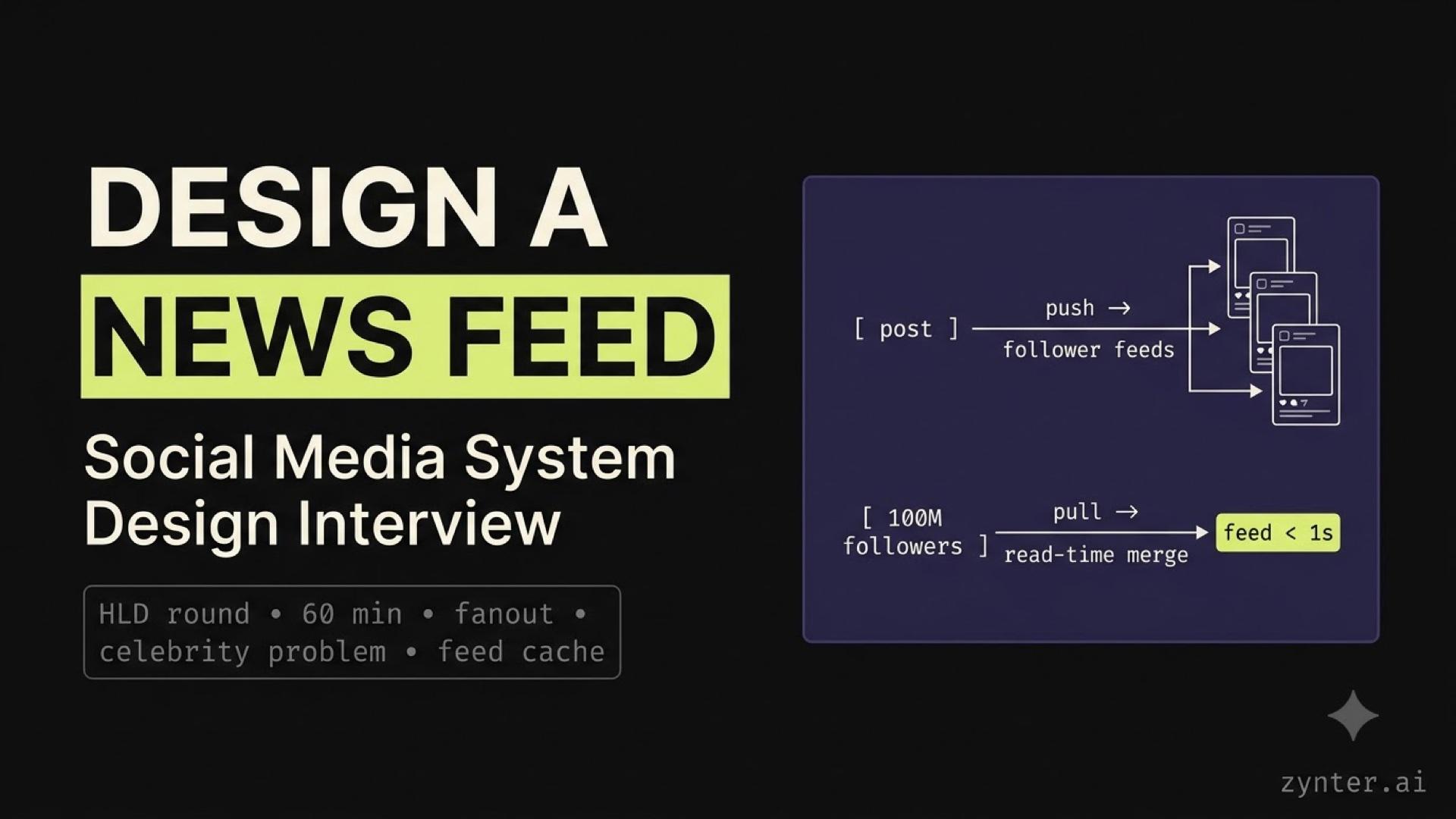
Design a News Feed: Social Media System Design Interview
How to design a news feed in a system design interview, the way the 60-minute social media feed round is actually run — requirements and capacity estimation, the fanout architecture, and the deep dives that decide it: fanout-on-write (push) versus fanout-on-read (pull), the celebrity problem and the hybrid fanout that solves it, and how a precomputed feed cache, ranking, and cursor pagination make the feed load in under a second. A walkthrough built around the follow-ups an interviewer pushes.
Gowtham PotureddiOct 10, 202618 min read
design system
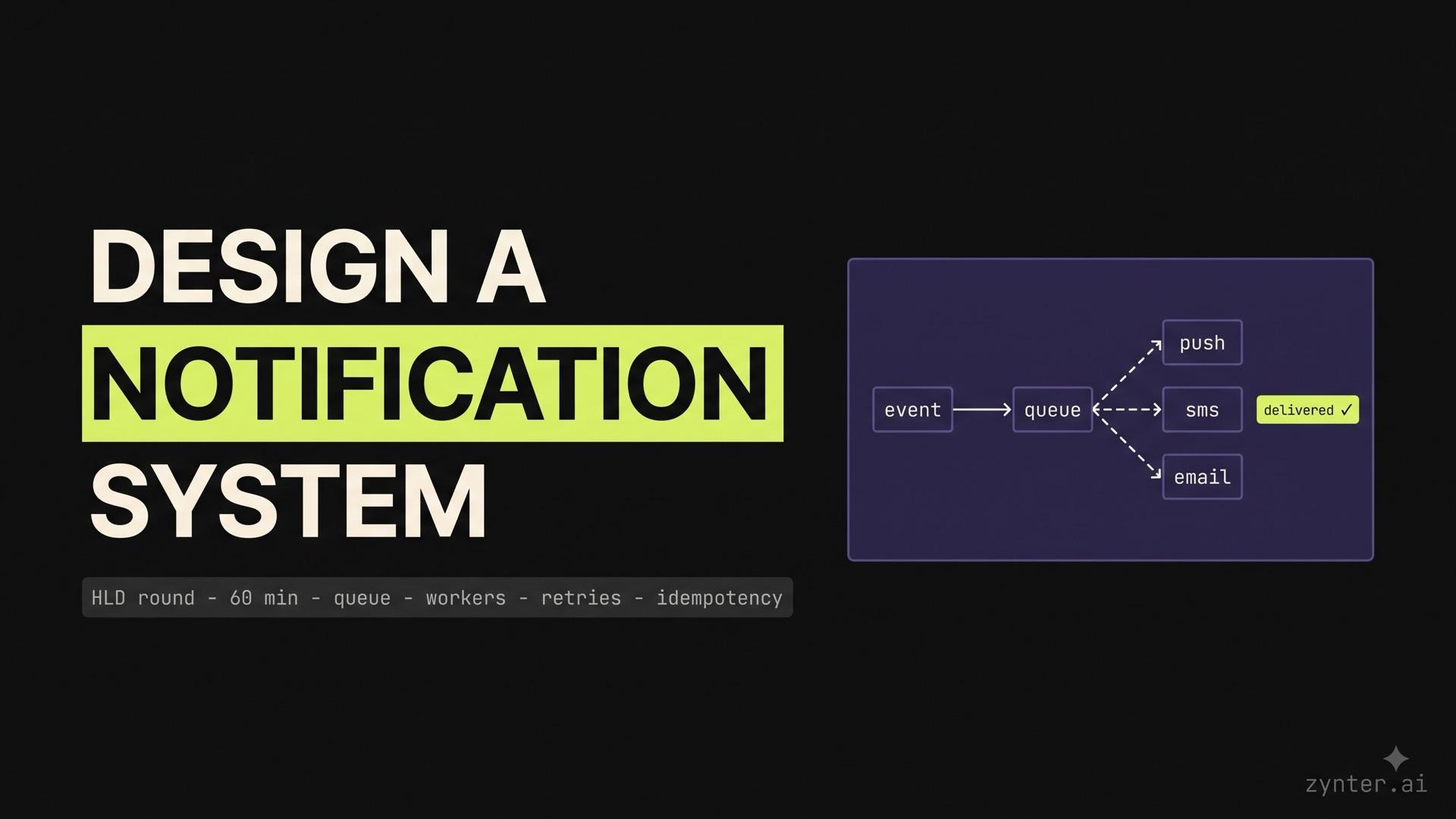
Design a Notification System: System Design Interview Guide
How to design a notification system in a system design interview, the way the 60-minute round is actually run — requirements, capacity estimation, the queue-based architecture, and the deep dives that decide it: why a message queue and channel workers decouple senders from slow providers, how adapters deliver across push, SMS and email, and how idempotency keys, retries and a dead-letter queue make delivery reliable without double-sending. Built around the follow-ups an interviewer pushes.
Gowtham PotureddiOct 10, 202617 min read
design system
Design Uber: Ride-Sharing System Design Interview Question
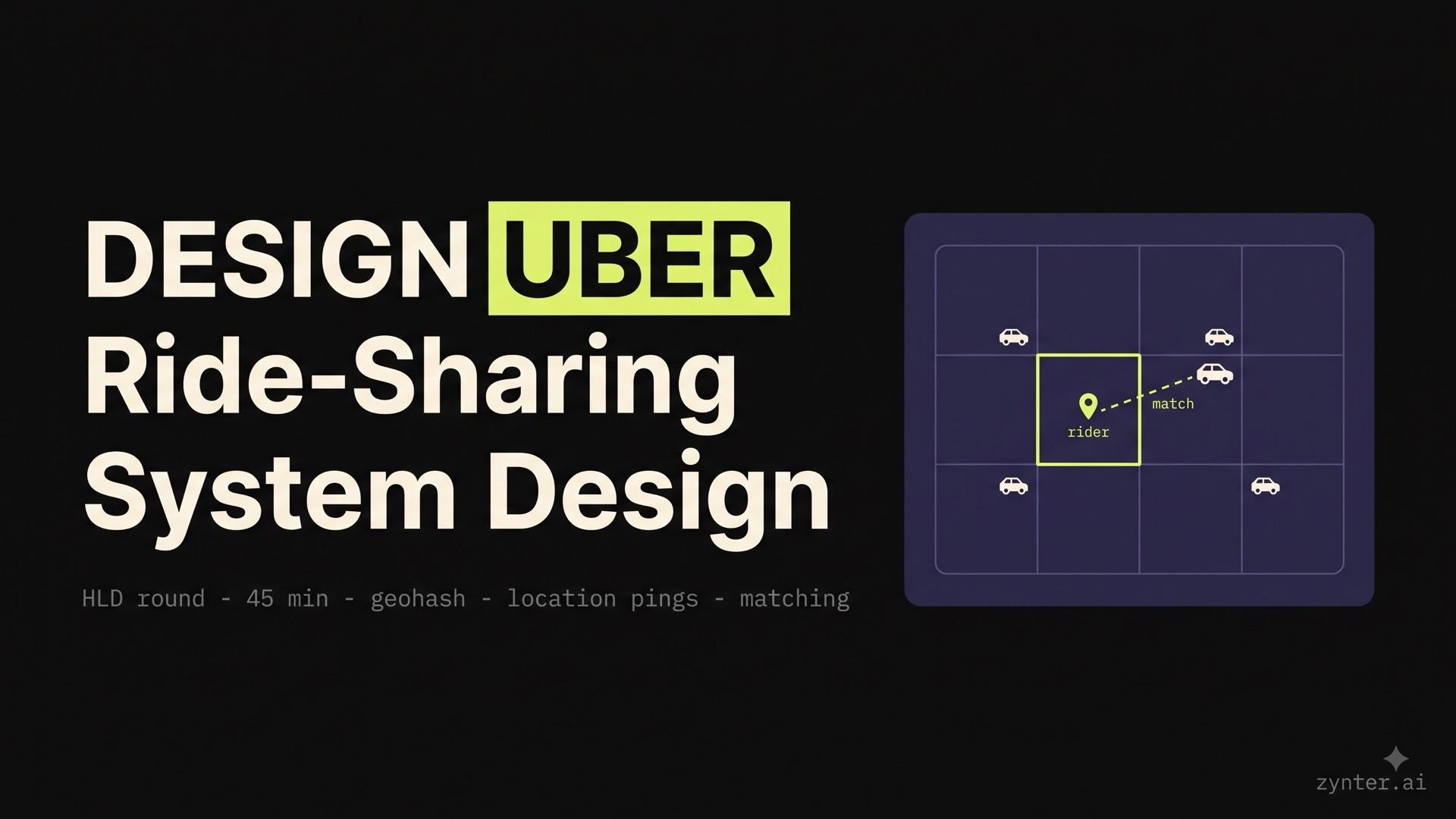
How to design Uber in a system design interview, the way the 45-minute ride-sharing round is actually run — requirements, capacity estimation, the location-service architecture, and the deep dives that decide it: why you cannot query raw lat/long, how a geospatial index (geohash, QuadTree, S2) buckets drivers into cells for millisecond proximity search, and how matching and the trip state machine keep one driver matched to one rider. Built around the follow-ups an interviewer pushes.
Gowtham PotureddiOct 10, 202618 min read
design system
Design Netflix: Video Streaming System Design Interview
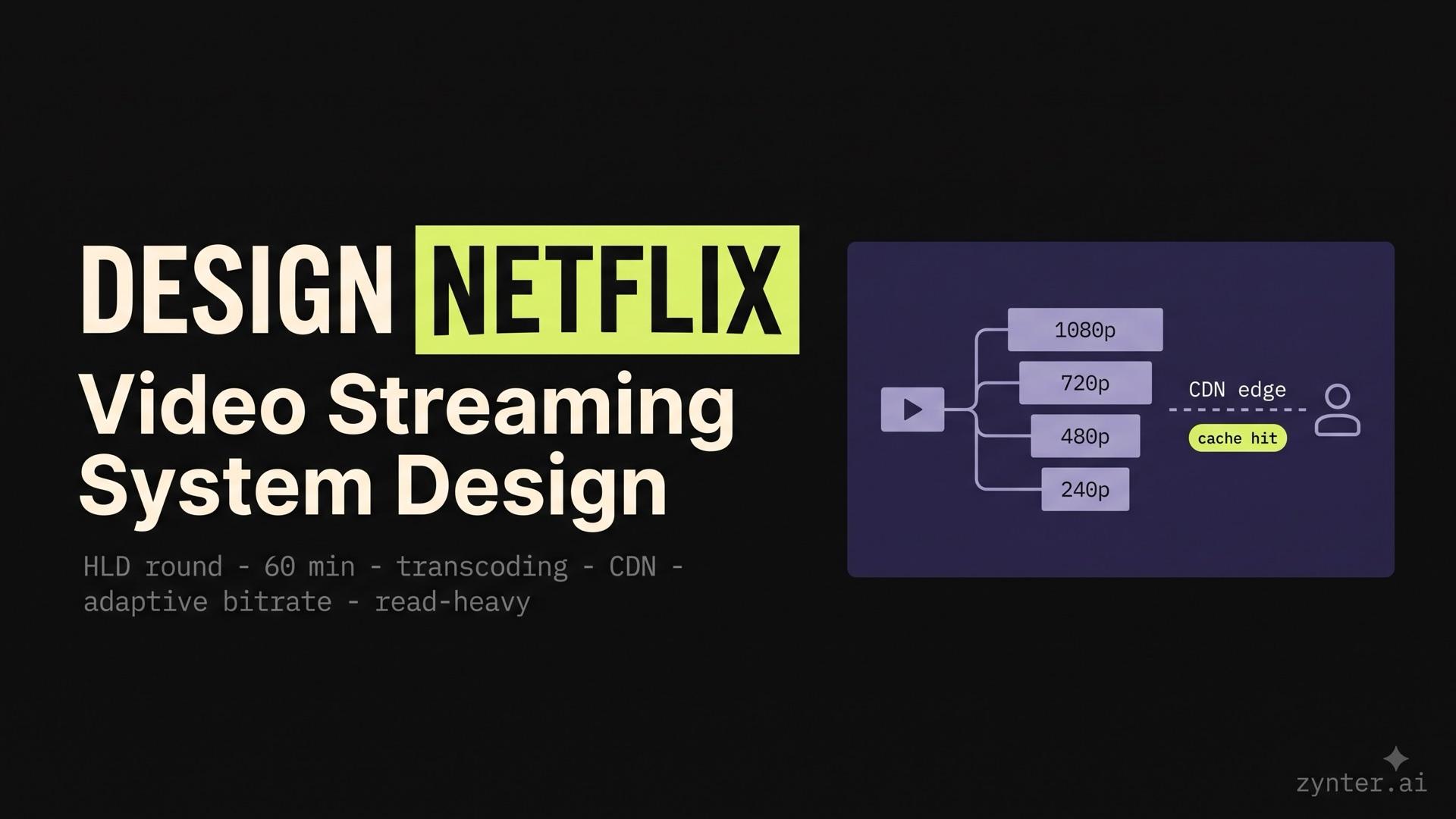
How to design Netflix in a system design interview, the way the 60-minute video streaming round is actually run — requirements and capacity estimation, the CDN-first architecture, and the deep dives that decide it: how the transcoding pipeline encodes every title into an adaptive bitrate ladder, how an edge CDN and Open Connect serve segments close to users, and how cached metadata and resume keep startup latency low. A walkthrough built around the follow-ups an interviewer pushes.
Gowtham PotureddiOct 10, 202617 min read
design system
Design a Payment System (Stripe): System Design Interview Guide
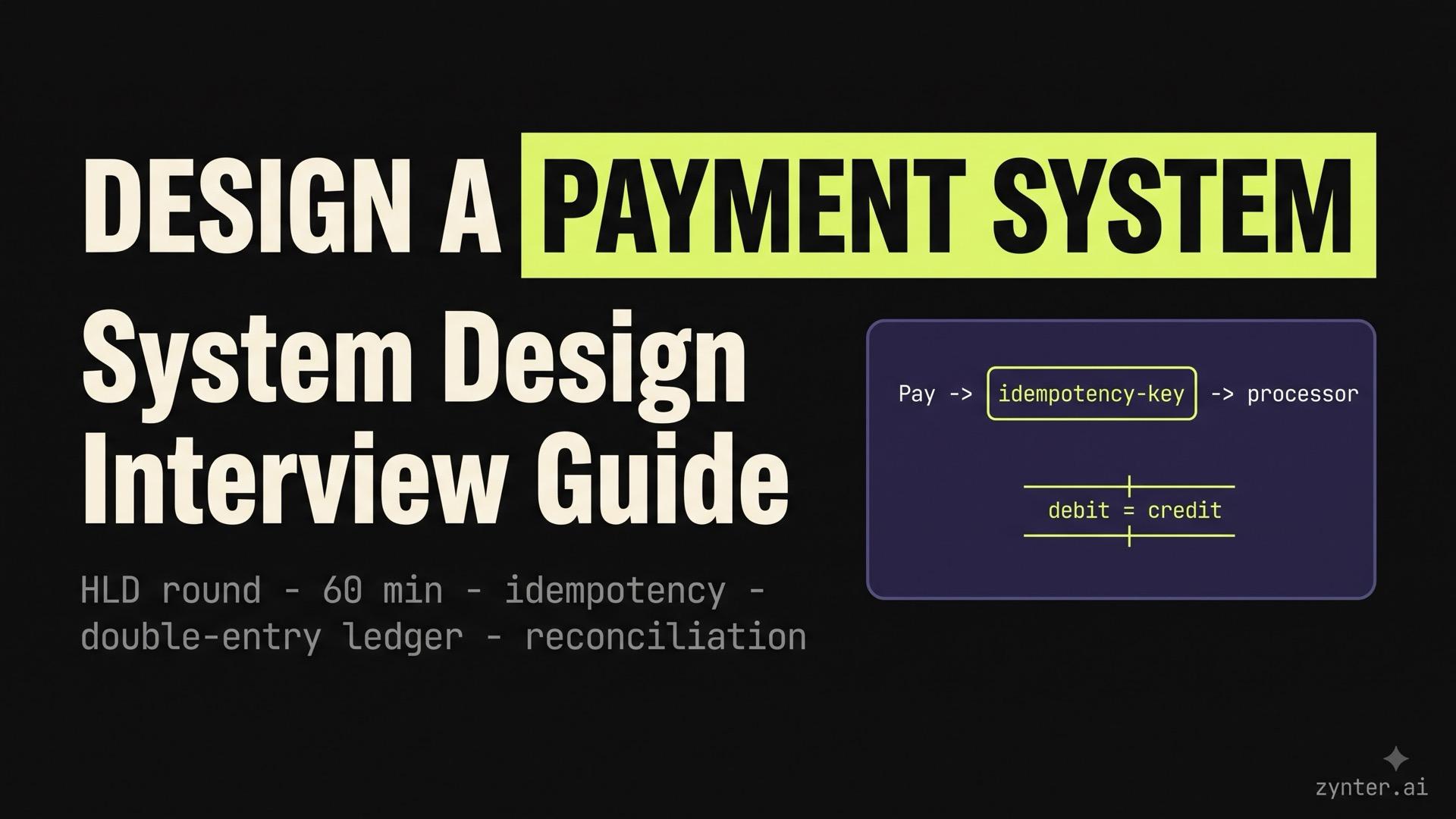
How to design a payment system in a system design interview, the way the 60-minute Stripe round is actually run — requirements and capacity estimation, the payment-service-plus-processor architecture, and the deep dives that decide it: idempotency keys so a retry never double-charges, a double-entry ledger so the books are always provably balanced, and reconciliation against the processor's settlement file. A walkthrough built around the follow-ups an interviewer pushes, not a static write-up.
Gowtham PotureddiOct 8, 202616 min read
Design WhatsApp: Chat System Design Interview Walkthrough
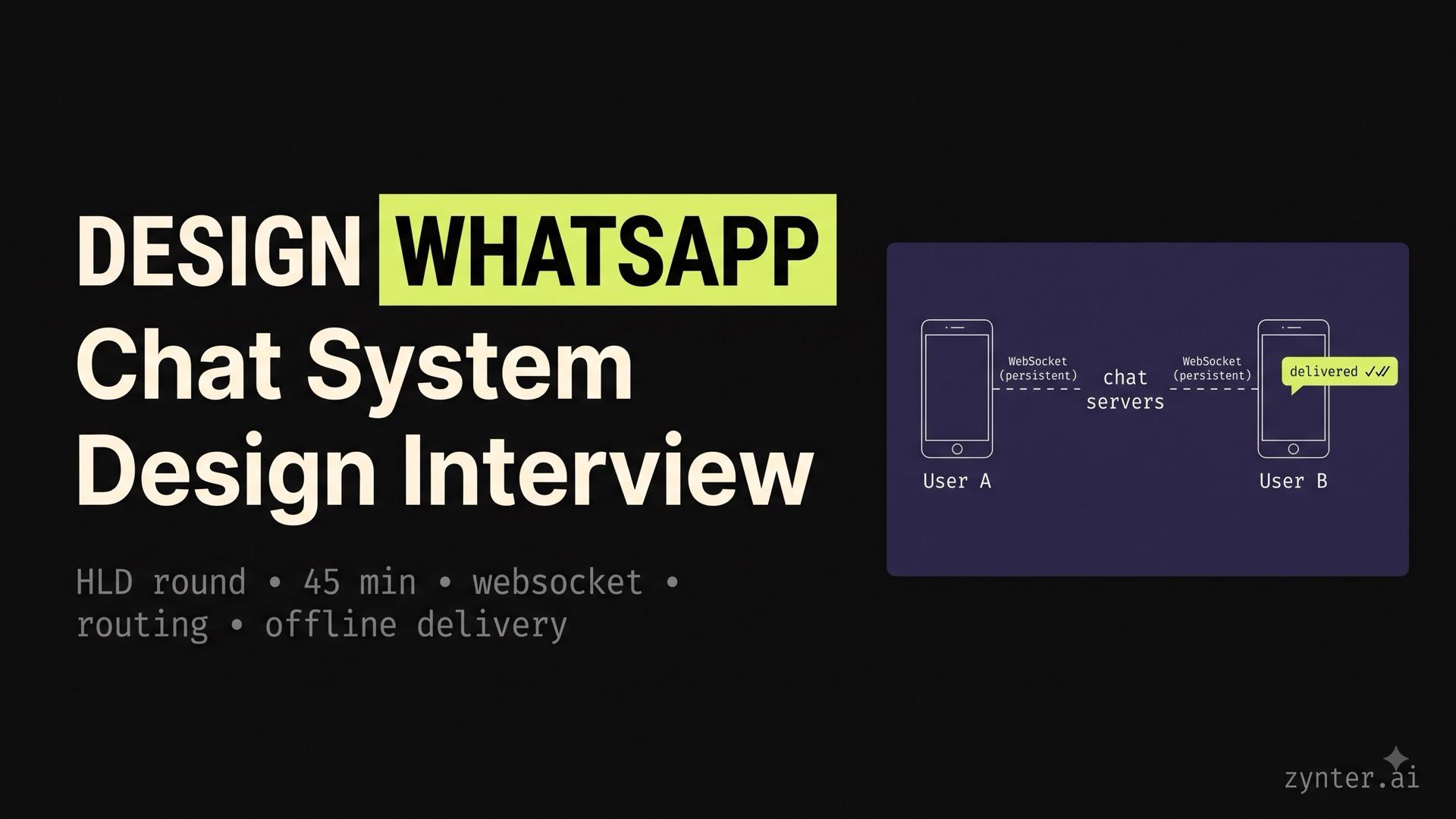
How to design WhatsApp in a system design interview, the way the 45-minute chat system round is actually run — requirements and capacity estimation, the push-based architecture, and the deep dives that decide it: why chat needs persistent WebSocket connections, how a message reaches the exact server holding the recipient's socket, how delivery works when the recipient is offline, and how group fanout scales. A walkthrough built around the follow-ups an interviewer pushes, not a static write-up.
Gowtham PotureddiOct 8, 202616 min read
design system
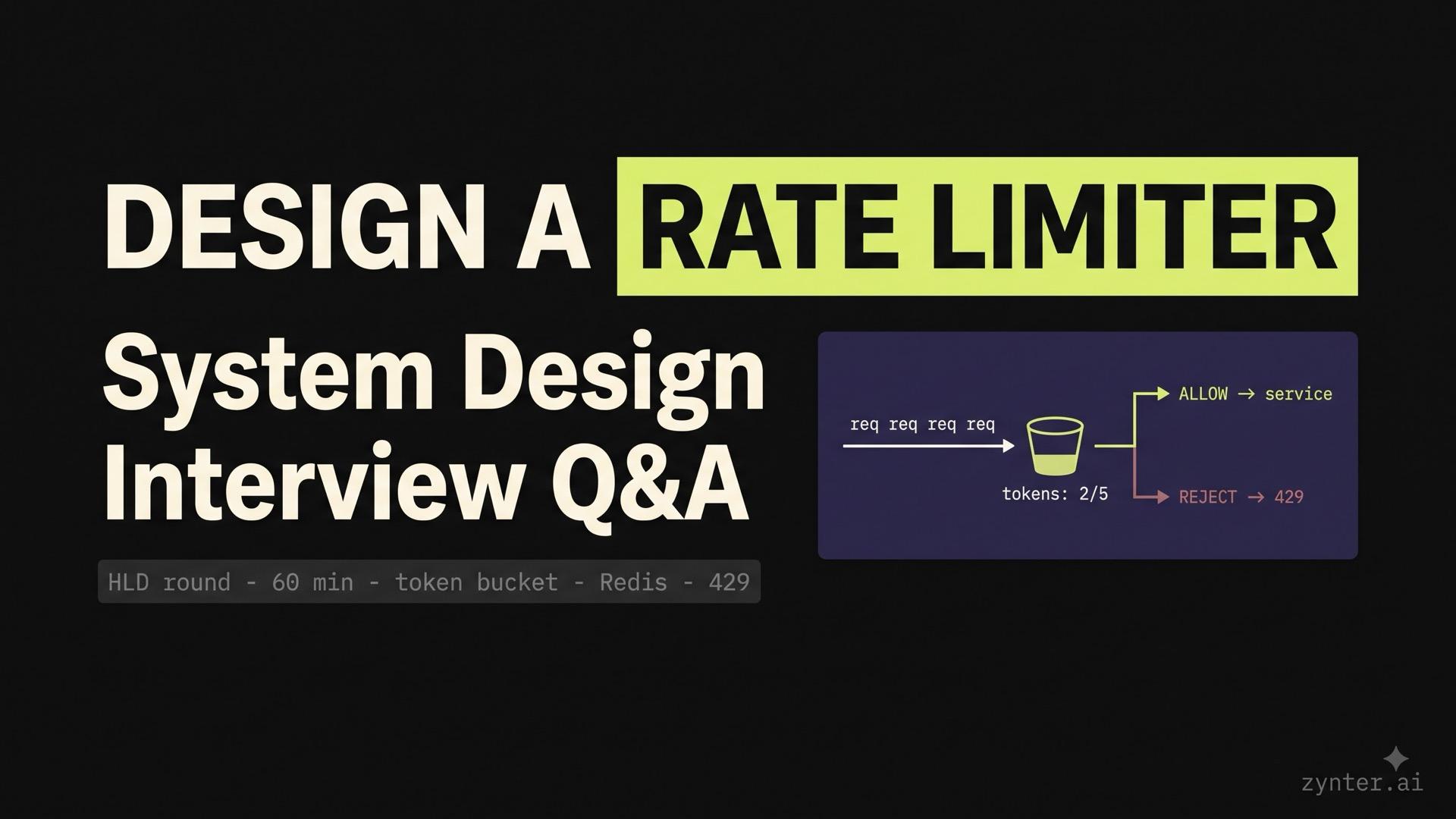
Design a Rate Limiter: System Design Interview Question & Answer
How to design a rate limiter in a system design interview, the way the 60-minute round is actually run — requirements and capacity estimation, where the limiter sits, and the two deep dives that decide it: choosing the algorithm (token bucket vs leaky bucket) and the distributed counter in Redis, where a non-atomic read-calculate-write race lets requests slip through until a Lua script makes it atomic. A walkthrough built around the follow-ups an interviewer pushes, not a static write-up.
Gowtham PotureddiOct 8, 202617 min read
design system
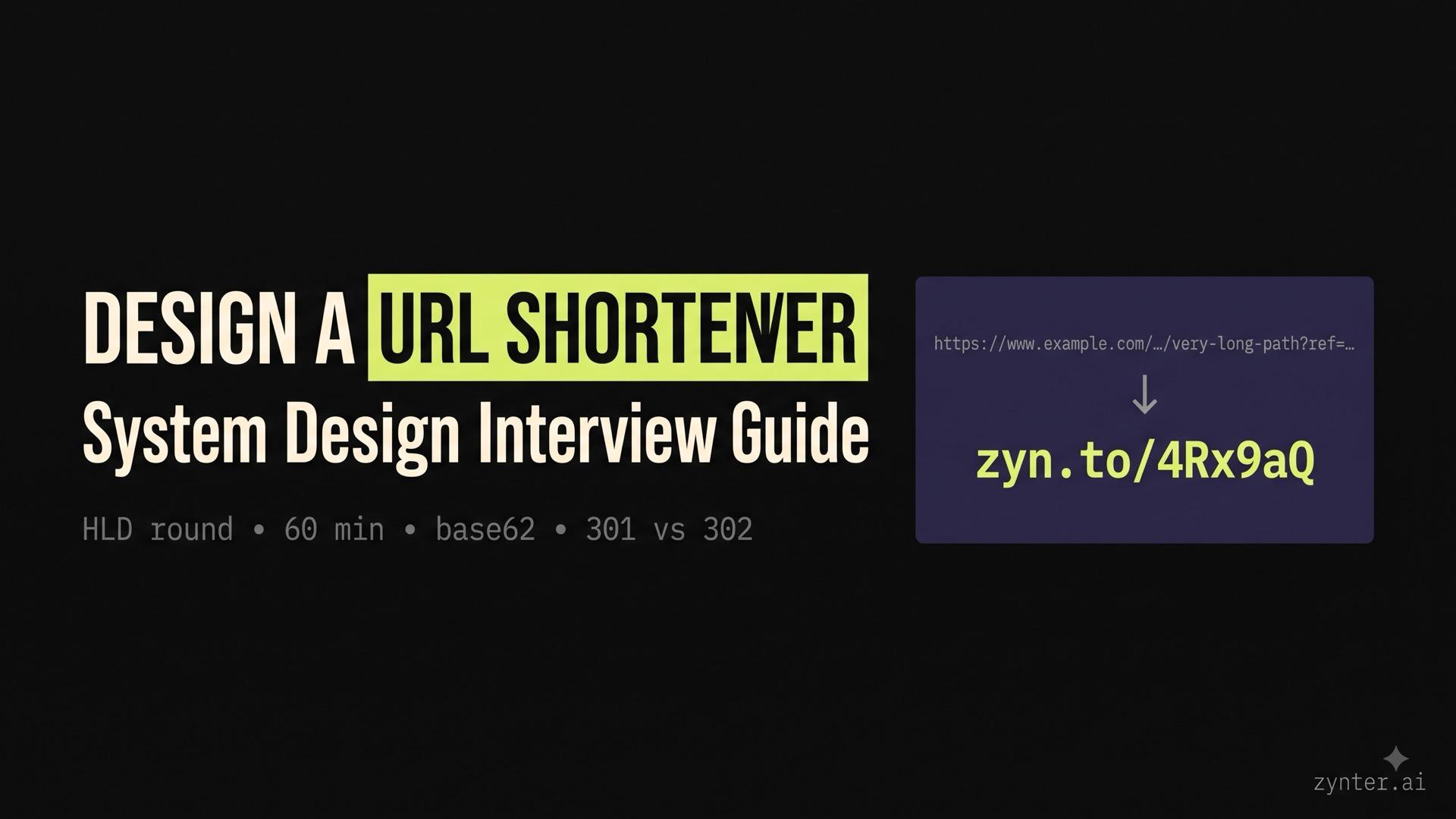
Design a URL Shortener: System Design Interview Guide
How to design a URL shortener in a system design interview, the way the 60-minute round is actually run — requirements and capacity estimation, the API and data model, the read and write paths, and the deep dives that decide it: base62 key generation with a shared counter, 301 vs 302 redirects, caching the redirect path, and SQL vs NoSQL at scale. A walkthrough built around the follow-ups an interviewer pushes, not a static write-up.
Gowtham PotureddiOct 8, 202616 min read
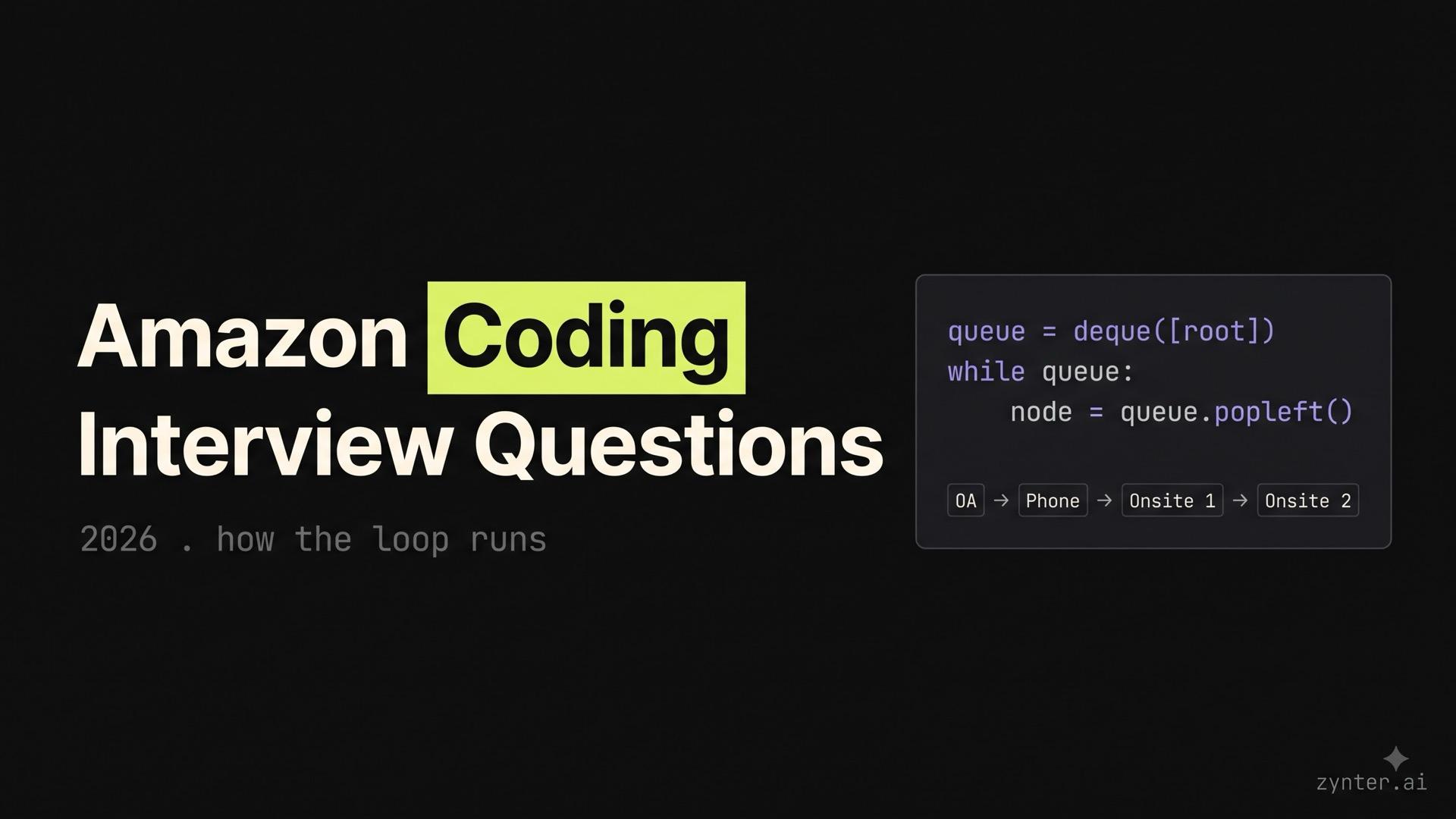
Amazon Coding Interview Questions (2026): Patterns, Problems & Prep
The Amazon coding interview questions that actually decide a 2026 loop — how the Online Assessment and the two onsite coding rounds run, the patterns Amazon leans on (two pointers, sliding window, BFS/DFS, graphs, heaps, backtracking and dynamic programming), what the bar raiser probes, and how Leadership Principles surface inside a coding round — plus a two-week prep plan. A how-the-loop-runs guide built around the follow-ups that decide the round, not leaked questions.
Gowtham PotureddiOct 7, 202615 min read
design systemdata engineering
Behavioral Interview Questions and Answers: Top 25 with Examples (2026)
The behavioral interview questions that actually repeat in a 2026 software engineering loop — the top 25, grouped, each with what it probes and the follow-up that decides it. Plus the STAR method done right (and where STAR answers fall apart), a strong-vs-weak example, the Amazon Leadership Principles mapped to real questions, and a two-week prep plan. A framework-first guide to answering behavioral questions out loud, under pressure.
Gowtham PotureddiOct 7, 202619 min read
SQL Interview Questions and Answers for Data Engineers (2026)
The SQL interview questions that actually repeat in a 2026 data engineering screen, each with a one-line answer and the follow-up that decides it — joins and aggregation, window functions, deduplication, data modeling and the warehouse — plus the concepts every round drills: SQL vs NoSQL, indexing, and partitioning. A framework-first prep guide for data engineers heading into SQL tech screens.
Gowtham PotureddiOct 6, 202617 min read
Pythondata engineeringmock interview
System Design Interview Questions: Top 25 Problems with Answers (2026)
The top 25 system design interview questions for 2026, each with a short answer and the one follow-up that decides it — URL shortener, rate limiter, WhatsApp, Netflix, Uber, news feed, web crawler, object storage — plus the core concepts every round drills: consistent hashing, CAP theorem, SQL vs NoSQL, caching, and sharding. A framework-first prep guide for engineers heading into SDE and system design loops.
Gowtham PotureddiOct 5, 202611 min read
Now say it out loud
Start practisingAlmost nobody freezes on the code. They freeze on the follow-up.
Answer a real round to a voice interviewer that keeps asking why. No scheduling, no subscription, first session ready in under a minute.